A Noh theater transformed into an art museum! An artistic world that makes you smile and contemplate profound themes.
Go, see, and experience the world of art
File.10 Yokohama Noh Theater Special Exhibition: Akira Yamaguchi "Daytime Shura"
Miyuki Inoue (Magcal Editorial Department)
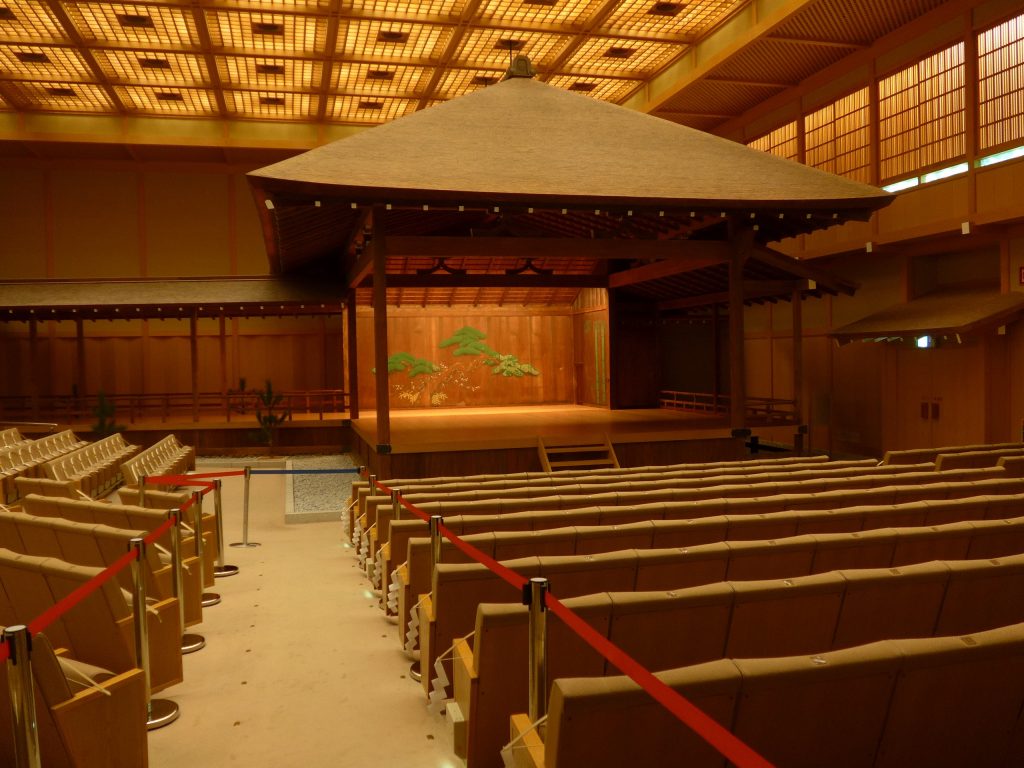
Akira Yamaguchi, who consistently creates works that fuse traditional Japanese painting styles with contemporary motifs, is presenting an installation piece at the Yokohama Noh Theater—this is a must-see! After all, Yamaguchi is a handsome contemporary artist popular with art-loving women not only for his humorous style but also for his cool and laid-back look. What is he planning to do in the Noh Theater, which could be called the temple of Japanese classical arts? I went to check it out with great curiosity.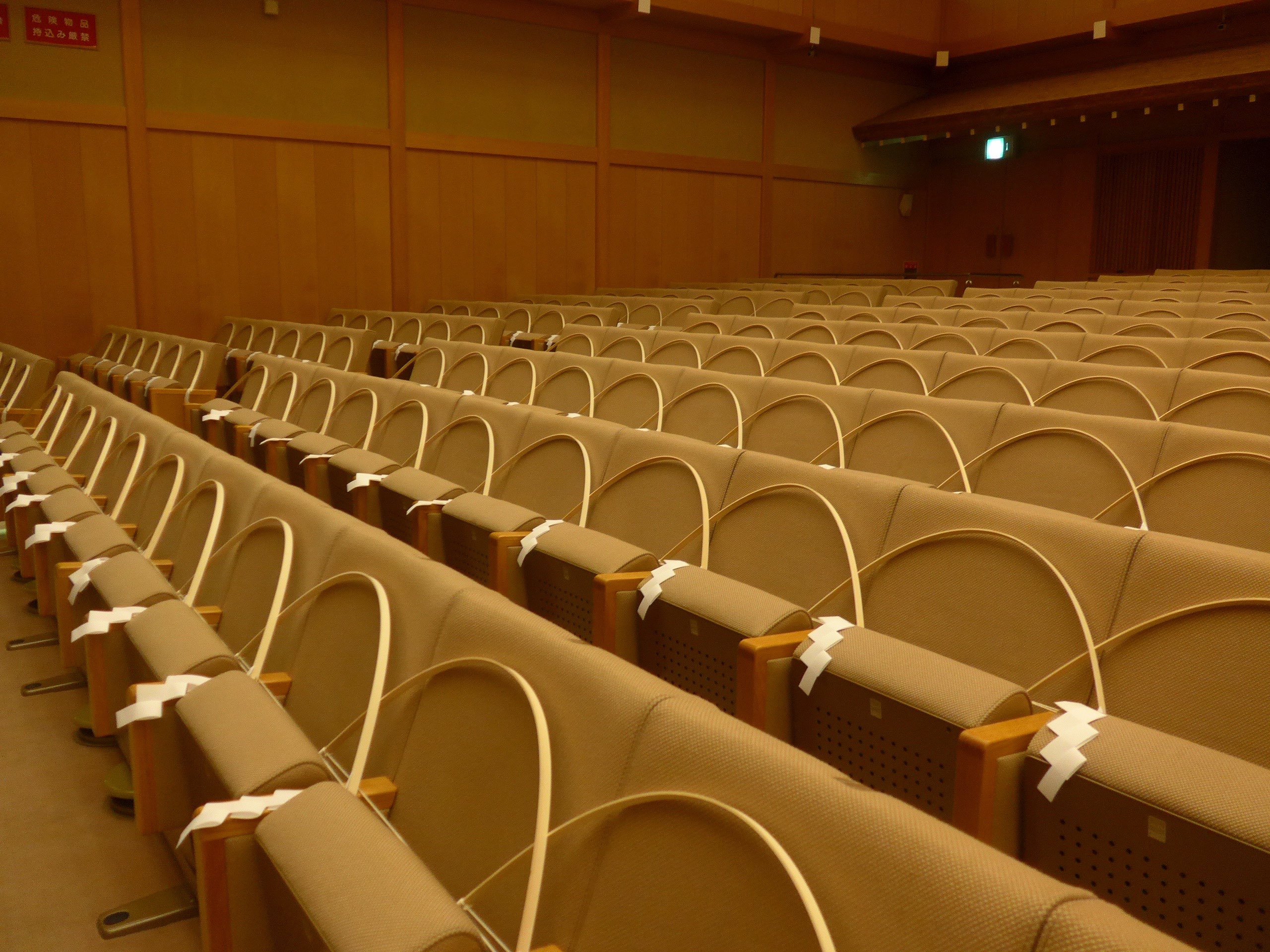
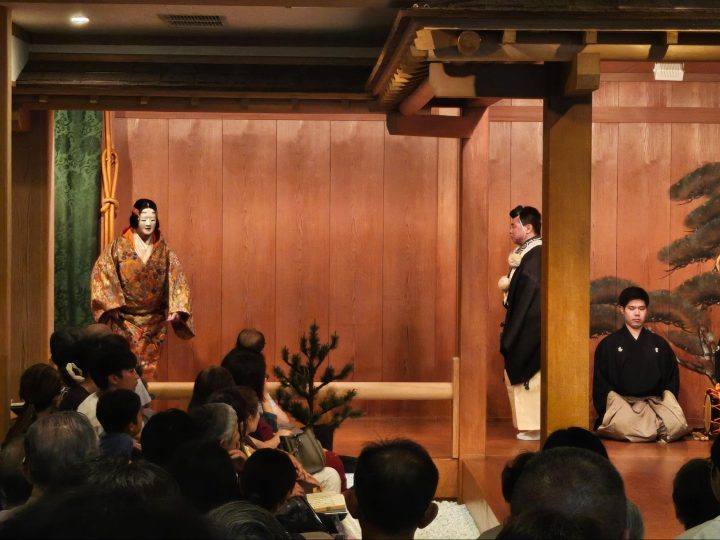
This exhibition is being held in conjunction with the Yokohama Noh Theatre's special performance, "Elegance and Impermanence—The World of Shura Noh." So, it seems to depict the characters and battles of "The Tale of the Heike" while simultaneously exploring a world of impermanence.
I walked through the lobby, which was as usual, and headed to the first-floor seating area. A bow was placed on each seat, and looking around, it resembled the "Seigaiha" (wave) pattern. From backstage, I could faintly hear the sound of flowing water, evoking the world of water where the Heike people perished at Dan-no-ura.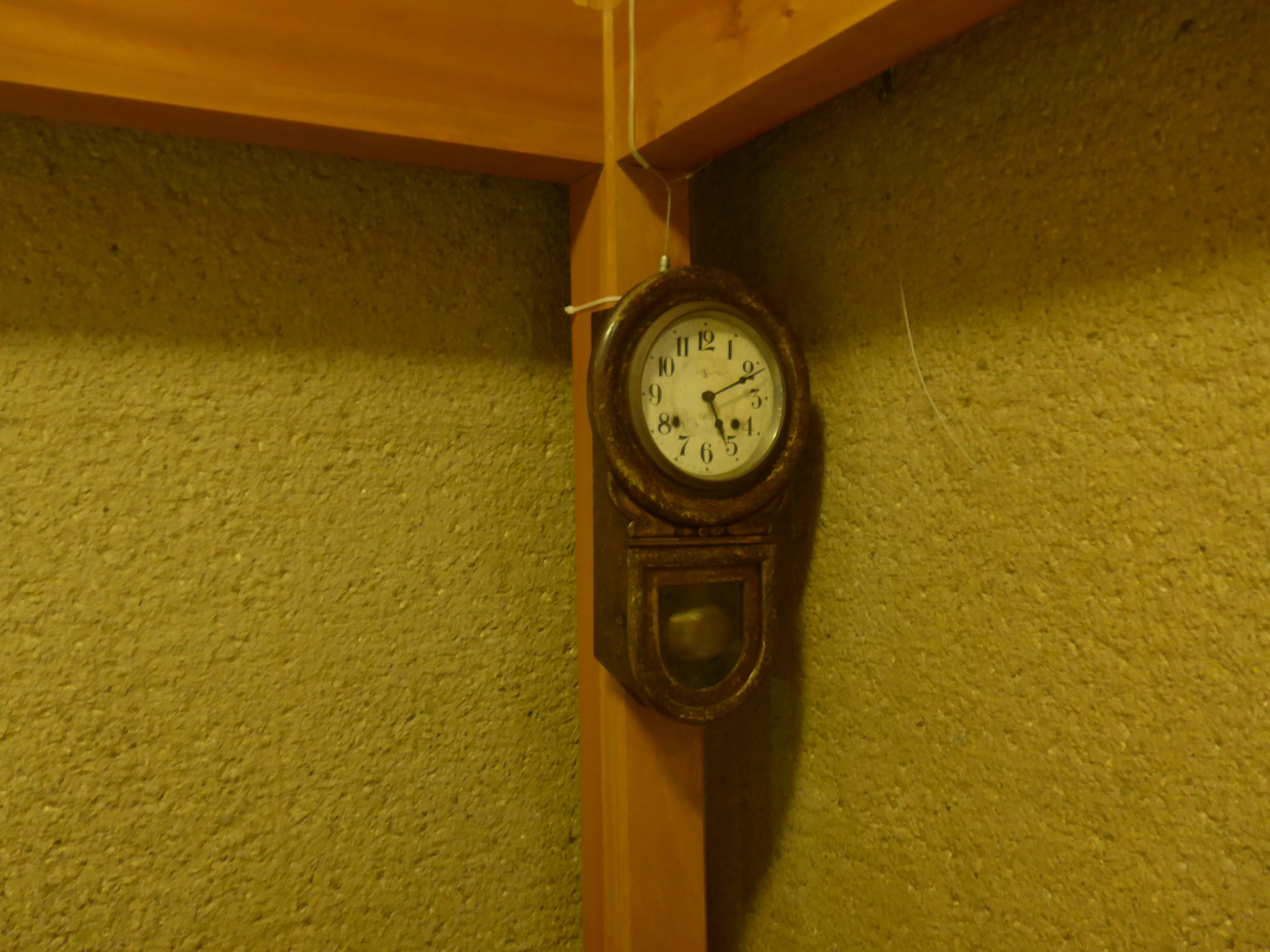
I heard there was an exhibit in the first-floor lobby, so I went back and found an old grandfather clock hanging in a corner. Is this also an installation?
On stage, you feel the passage of time through "water," and in the lobby, you feel the passage of time through the sound of ticking. It seems to be an attempt to let you experience different time axes. Incidentally, the grandfather clock's time is sometimes significantly off, but that in itself is said to connect to a space where time flows in parallel—the world of Noh where the past and present exist side by side.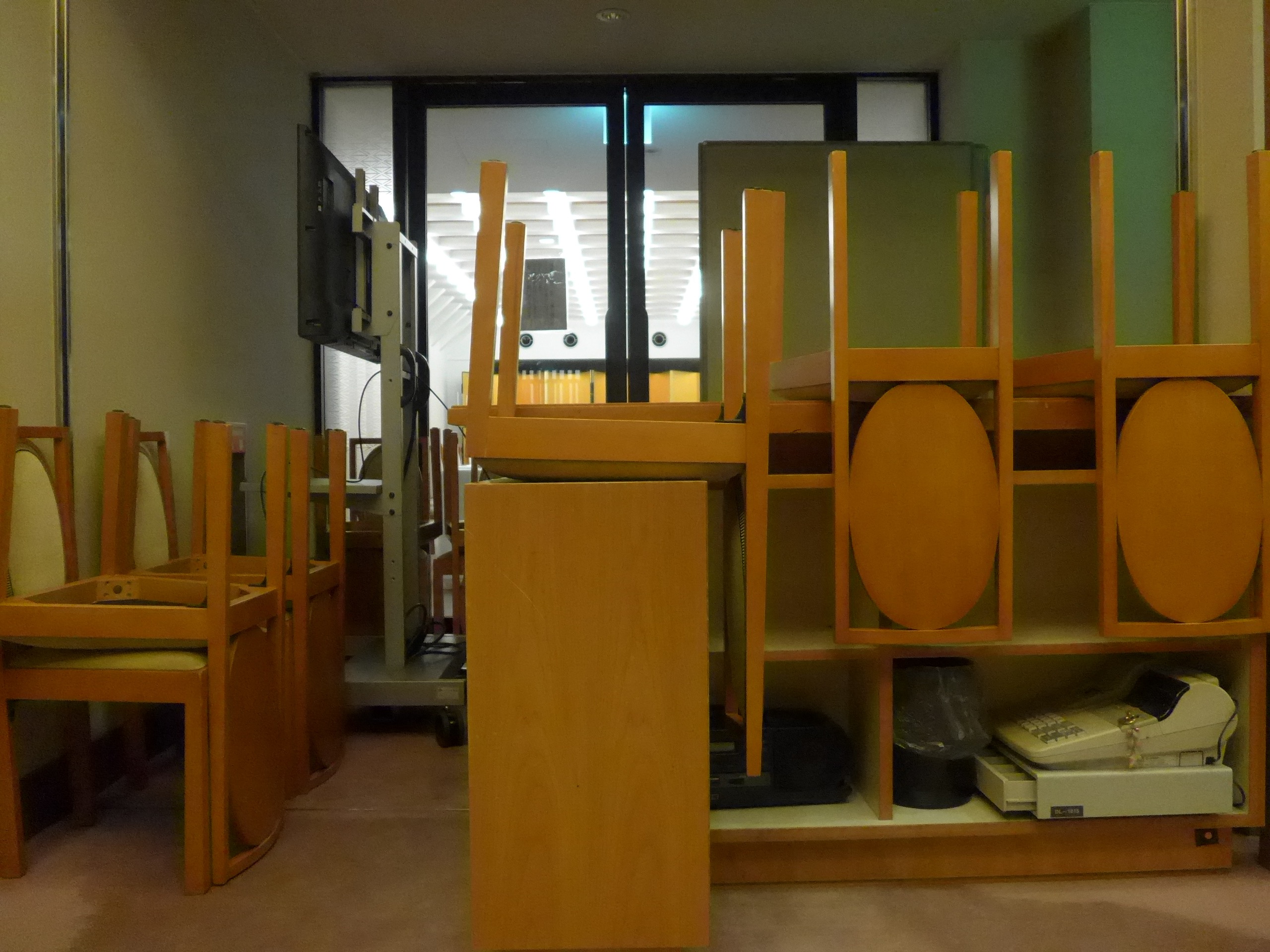
When you go up to the second floor, you'll find chairs and tables piled up in front of the休息室 (rest room). This, too, is of course part of the installation.
The party-style table setting in the back room is said to represent the "phantom feast" to which Hoichi the Earless was taken by the ghosts of the Taira clan. So, does that mean the chairs and tables piled up in the foreground represent the real world, that is, a cemetery?
A world visible to those who can see, and invisible to those who cannot.
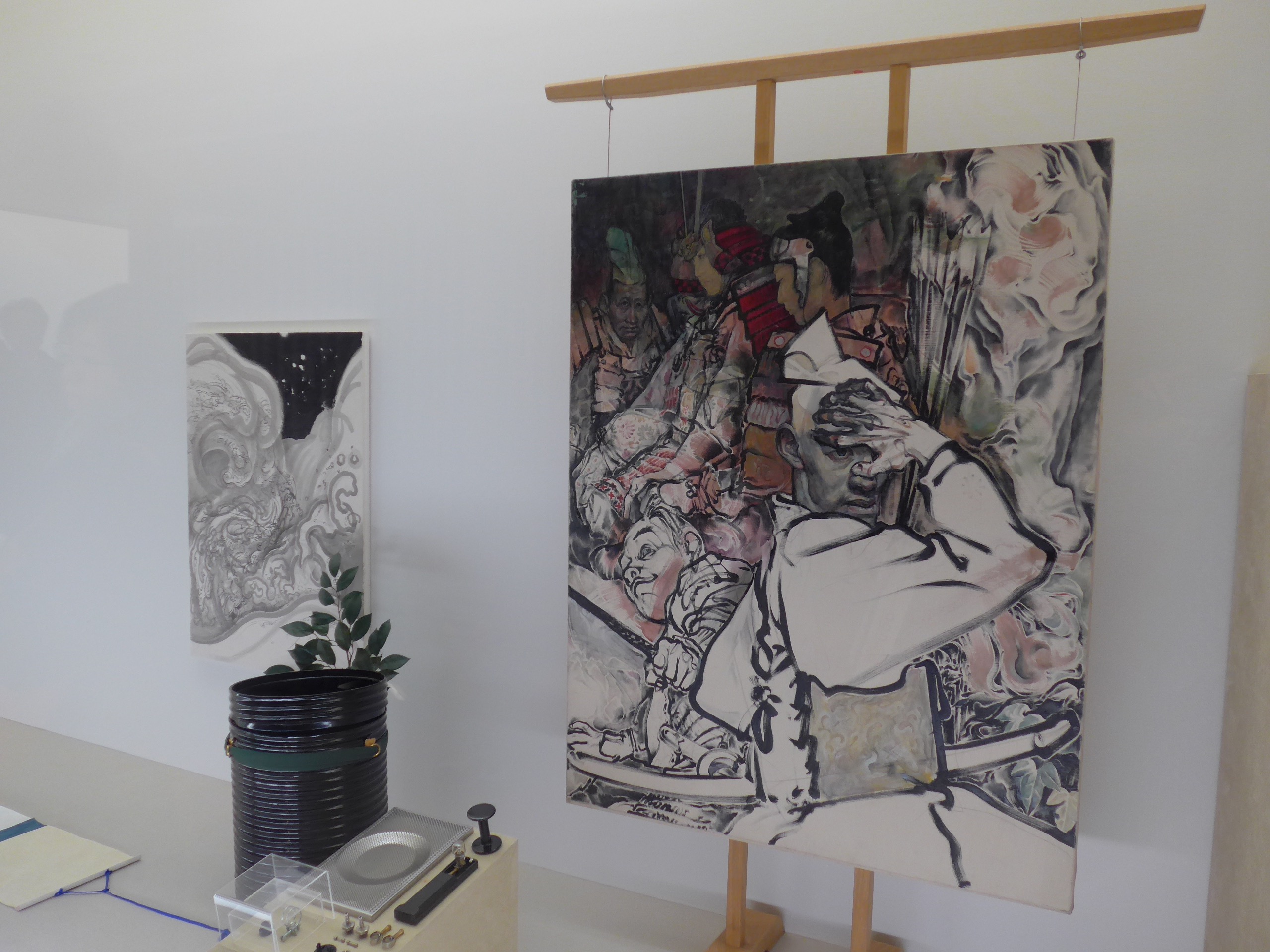
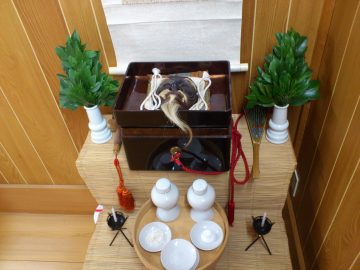
The glass display cases, usually filled with Noh theater materials, now showcase various tools pulled from the Noh theater's storage rooms as "works of art," alongside Yamaguchi's paintings. These include Noh masks, wig boxes used on stage, costume racks, water pitchers from the dressing room, and even screws and nails picked up from a toolbox. Yamaguchi apparently walked around the Noh theater thoroughly, selecting these items and combining them with his own paintings to create the overall display.
Some of the paintings are unfinished at the time of the opening, but according to the artist, "I intend to complete them using the museum's closing days." If you visit several times, you might be able to enjoy the "evolution" of the works.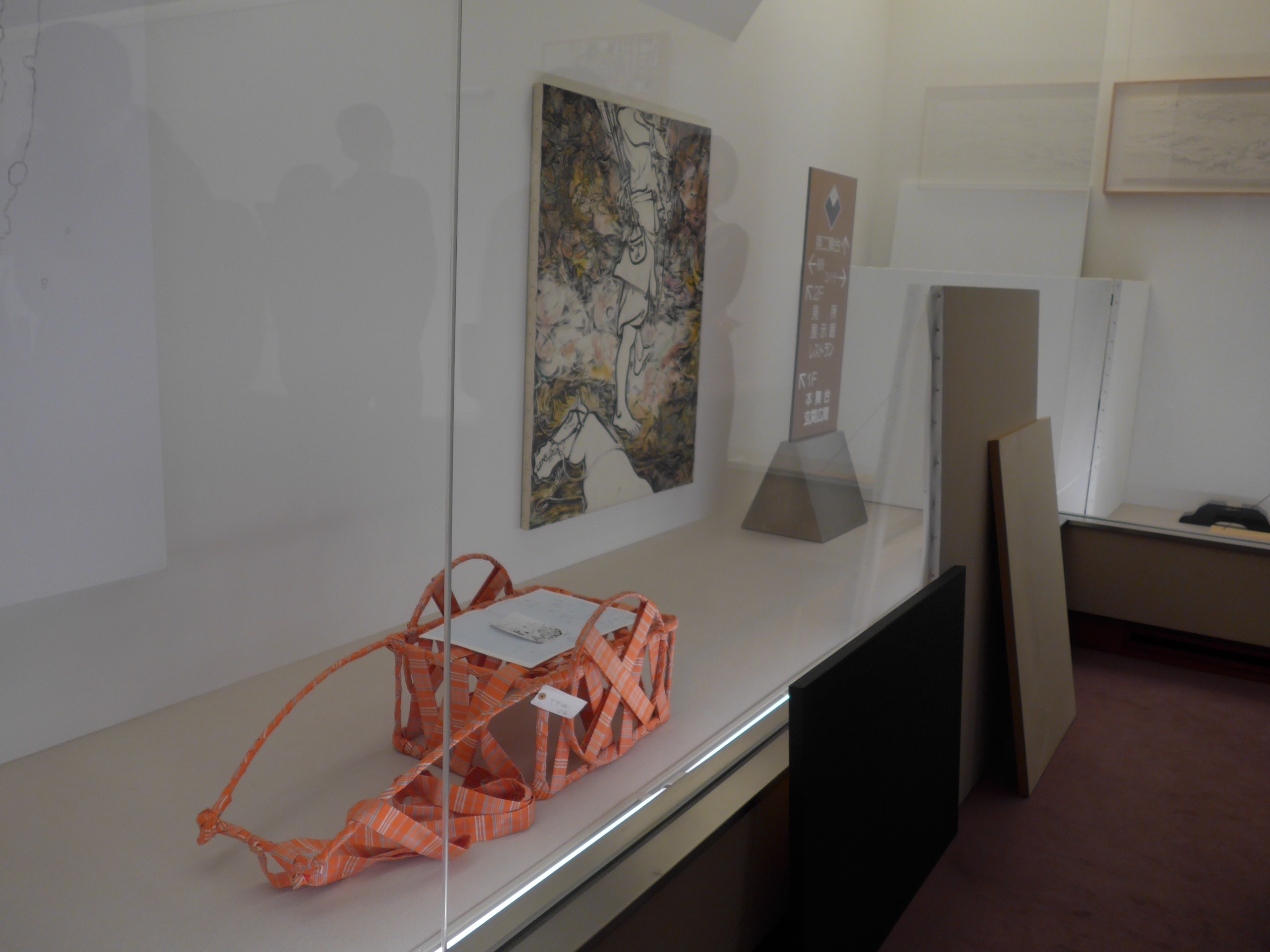
A panel is haphazardly propped up in front of a glass case. You might think it's still under construction, but of course, this is also part of the installation. The fact that the information board is displayed inside the glass case with a prim expression is also typical of contemporary art.
The overarching theme is "the sea" or "waves." This mirrors the rise and fall of the Taira clan and the tragedy that struck the Tohoku region.
Do you understand? Or not?
Instead of overthinking it, maybe it's better to just feel and enjoy it freely...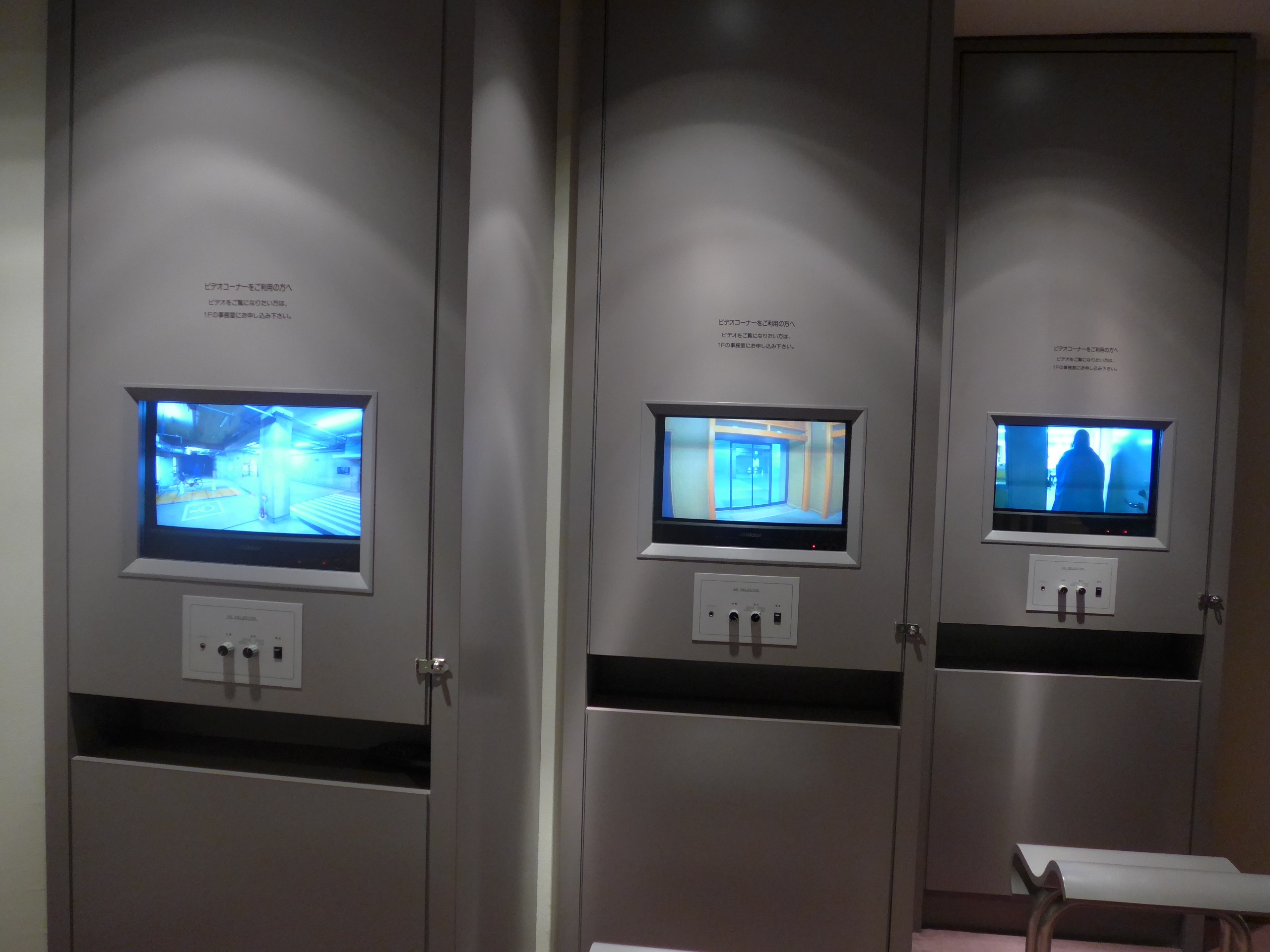
In the video corner, a video featuring Yamaguchi himself (presumably) is playing on an endless loop.
The title of the work is "Hōsha Nō".
I felt like there are messages that artists should convey, and things that only art can do.
This event has ended.
Yokohama Noh Theatre Special Exhibition: Akira Yamaguchi's "Daytime Shura"
[Event Period] Until Saturday, March 23rd, 9:00 AM - 8:00 PM
*The museum will be closed on February 26th (Tue), March 4th (Mon), 5th (Tue), and 6th (Wed).
[Venue] Yokohama Noh Theater
[Admission Fee] Free *If there is a paid event, those without a ticket will not be admitted.
[Inquiries] Yokohama Noh Theatre Tel. 045-263-3055