Libraries are hot right now! We infiltrated a library architecture tour (photography allowed inside)!
Go, see, and experience the world of art
File 6 : Libraries are hot right now ! We infiltrated a library architecture tour ( photography allowed inside ) !
Miyuki Inoue (Copywriter)
With the National Museum of Western Art in Ueno, Tokyo, being registered as a World Heritage Site, attention to architecture is on the rise. Looking around with this in mind, I realized that Kanagawa Prefecture also boasts some magnificent buildings: the Kanagawa Prefectural Library.
The architect, Kunio Maekawa, studied under the architectural master Le Corbusier and was involved in the detailed design of the National Museum of Western Art, which Le Corbusier designed, making him one of Japan's leading architects. I want to emphasize that the Kanagawa Prefectural Library opened in 1954. That's before the National Museum of Western Art (opened in 1959)! Kanagawa Prefecture might be amazing.
A guided tour of this magnificent building was offered. Because it was a special event held on a day the museum was closed, photography inside, which normally requires permission, was permitted. This was an opportunity I absolutely had to go!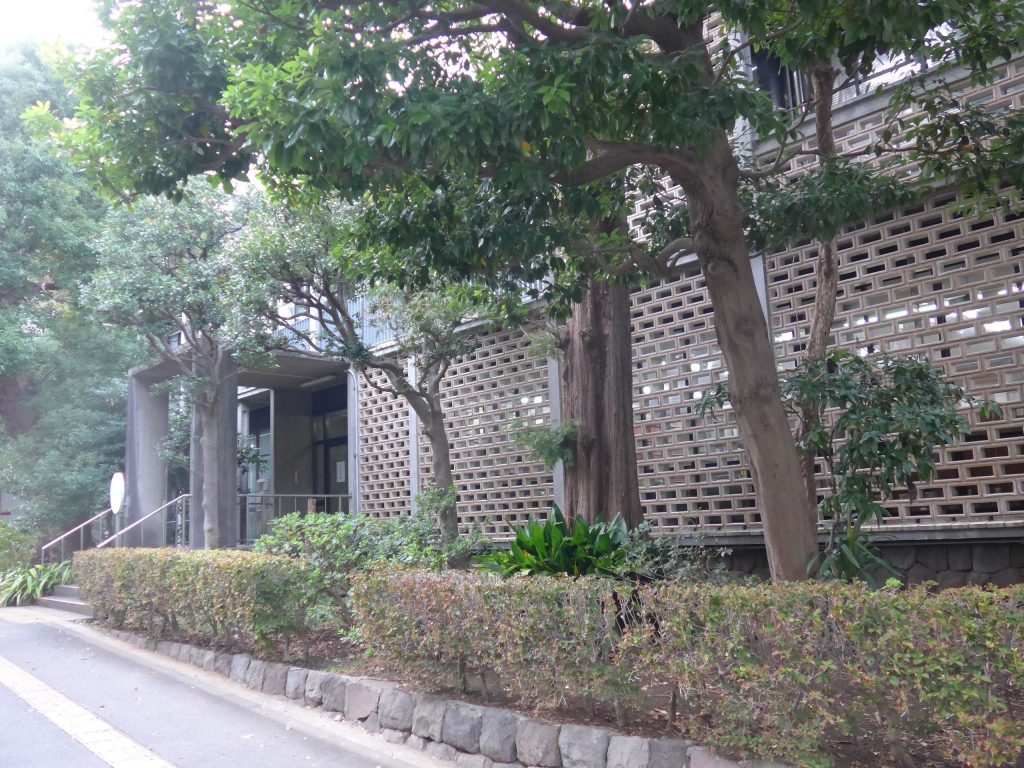
Since the museum was closed on the day of the tour, we headed to the new building entrance on the south side (towards the Youth Center) instead of the main entrance. Along the way, we admired the exterior wall of the main building. Its form, covered with hollow bricks called "hollow bricks," is beautiful.
The current hollow brickwork was updated during renovations in 2011, but apparently, due to budget constraints, it wasn't possible to replace all of it. As a result, unfortunately, the grid pattern is missing beyond the staff entrance shown in the photo.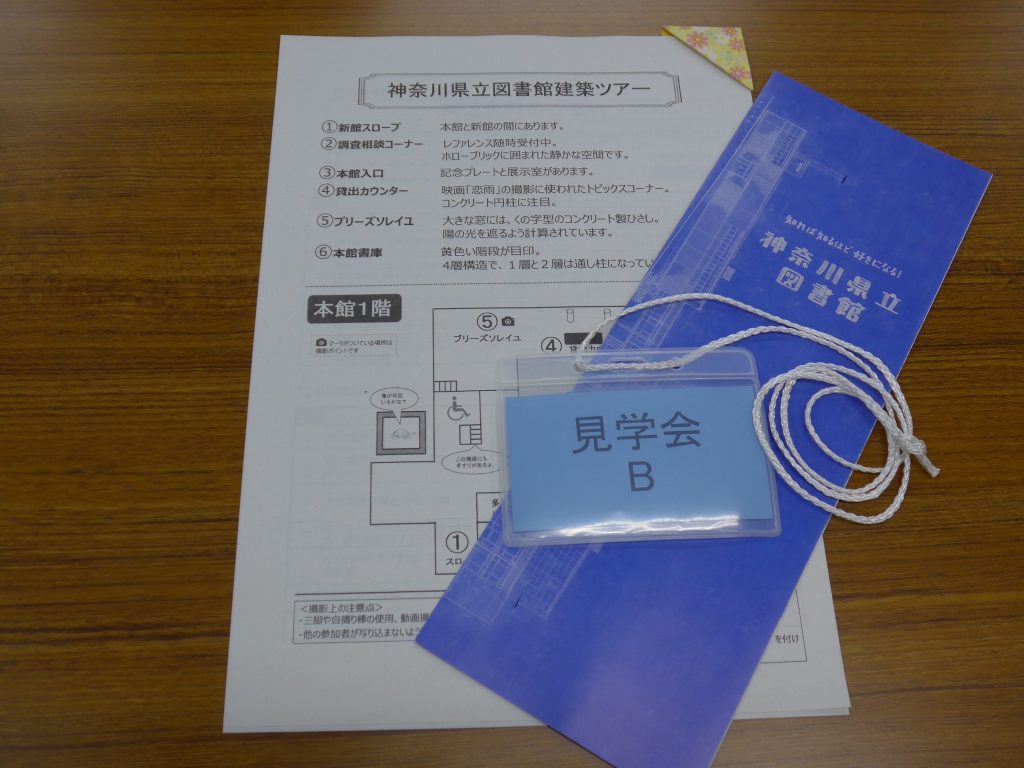
The guided tour begins with watching a valuable film documenting the building's construction. It's impressive to see that, despite being a reinforced concrete structure, it was built almost entirely by hand.
Incidentally, the person who took the lead in designing the library was Azusa Kitou, a staff member of Maekawa Architects. She is known as a pioneer in library architecture, having later designed the National Diet Library, among other things.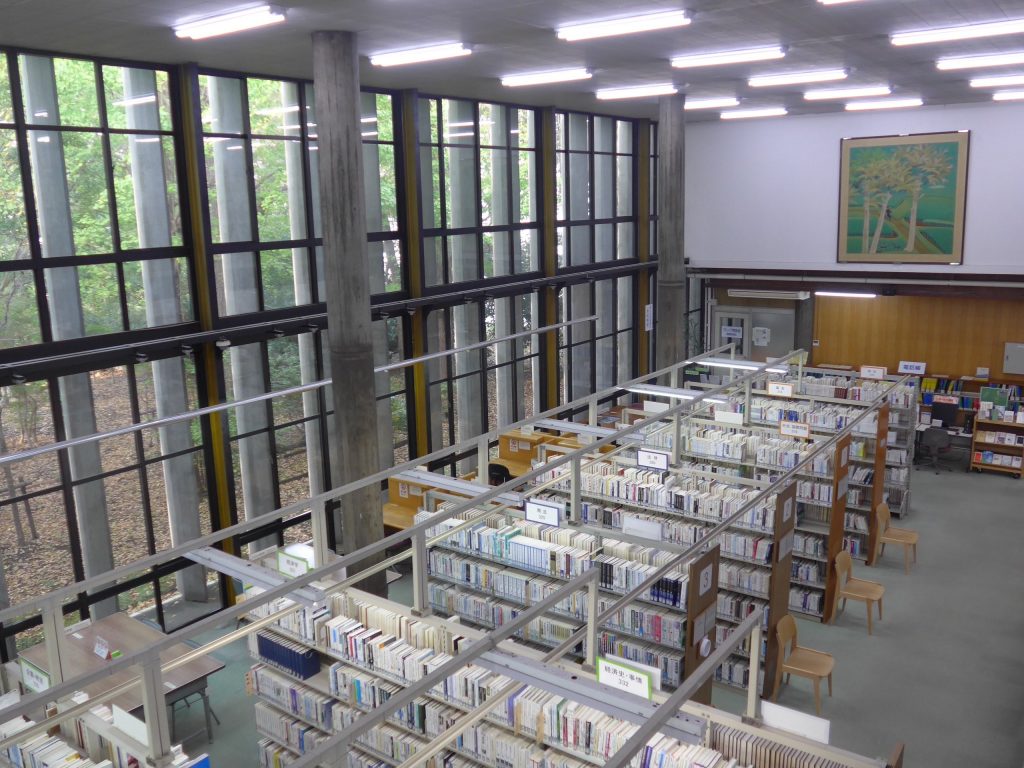
I was guided to the general reading room by a staff member.
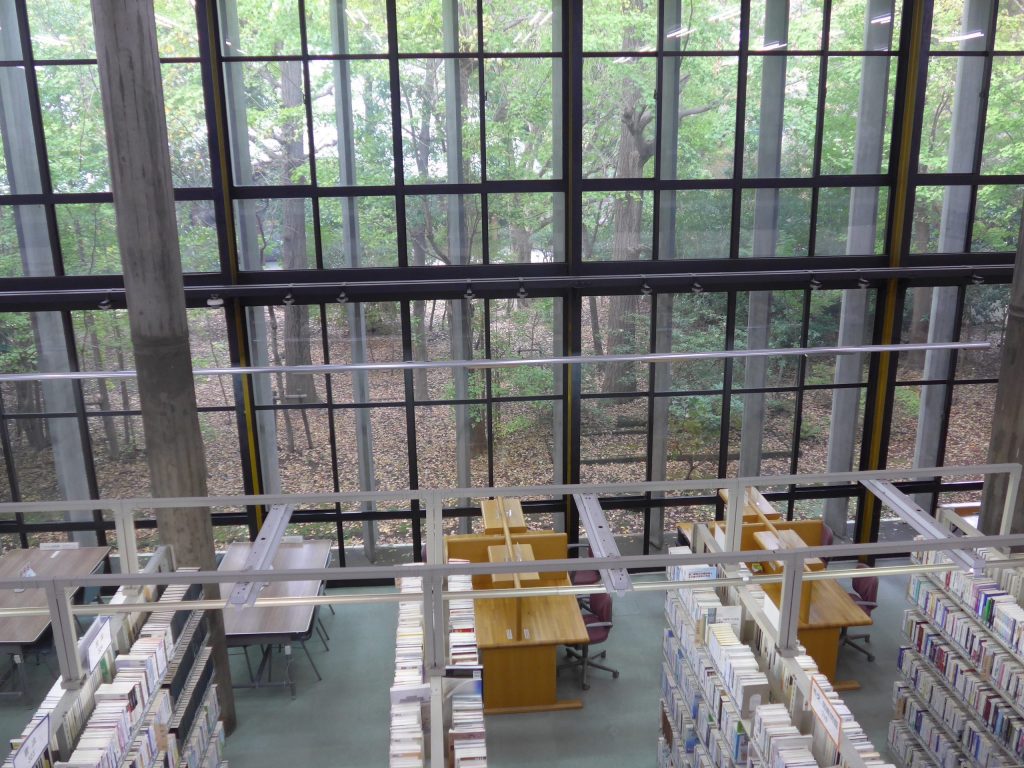
The large open atrium creates a spacious and comfortable atmosphere. It's easy to see why someone described the lush green garden outside the window as being "like Karuizawa."
On the outside of the large glass facade, a neat row of L-shaped louvers supports the building while simultaneously preventing the afternoon sun from entering the interior.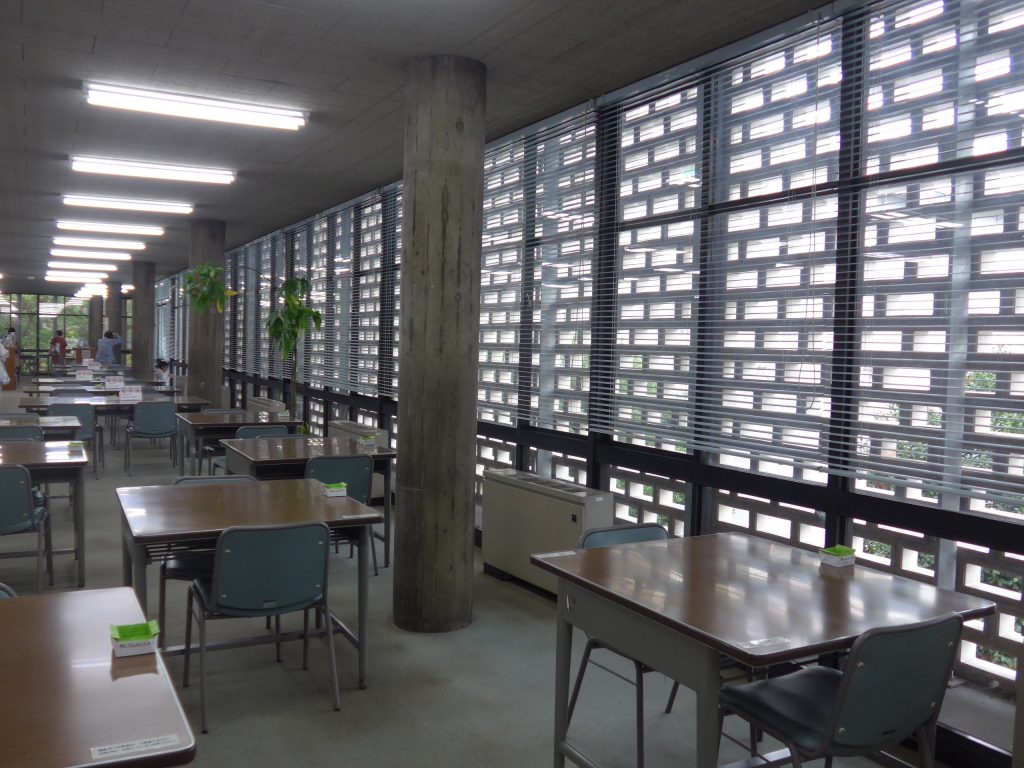
This is the reading room on the second floor. This is what the "Hollowbrick" looks like from the inside. It is designed to block outside views and ensure a certain level of privacy, while blocking sunlight in the summer and letting in warm natural light in the winter.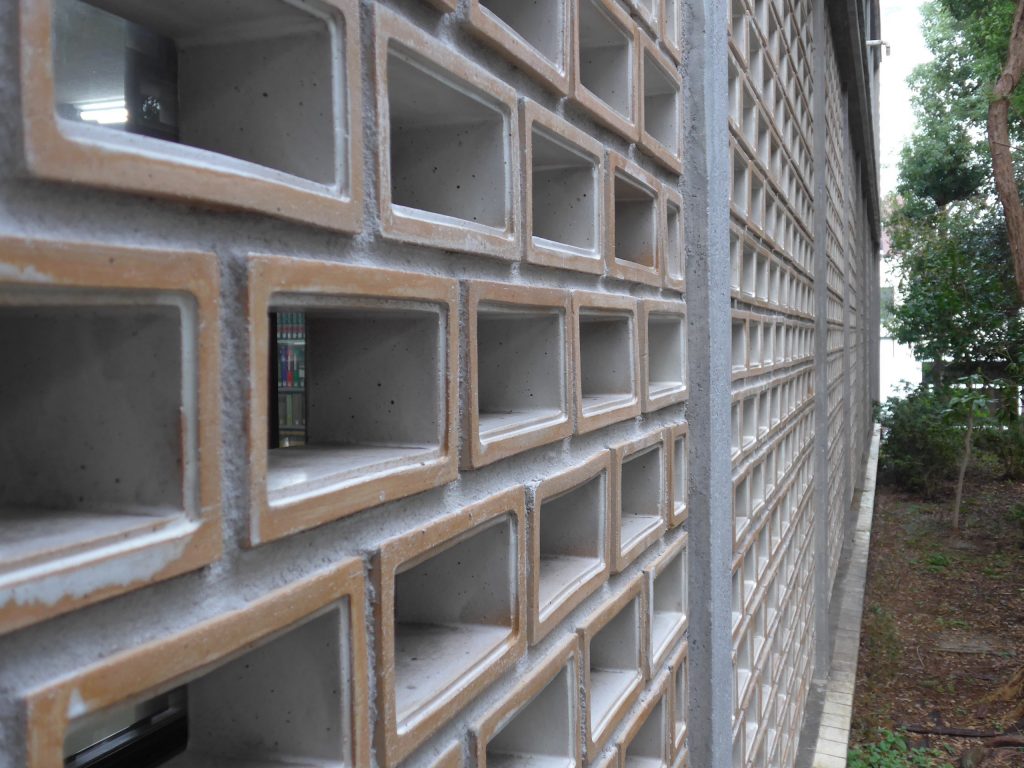
Apply the Hollow Brick again from the outside. Painting the inside white also helps to reflect sunlight and even out the brightness of the room.
The original was apparently fired in a kiln in Aichi Prefecture, but the restored version was fired in Shigaraki. Since neither the clay nor the kiln from that time remained, the restoration and repair involved repeatedly creating prototypes of glazes.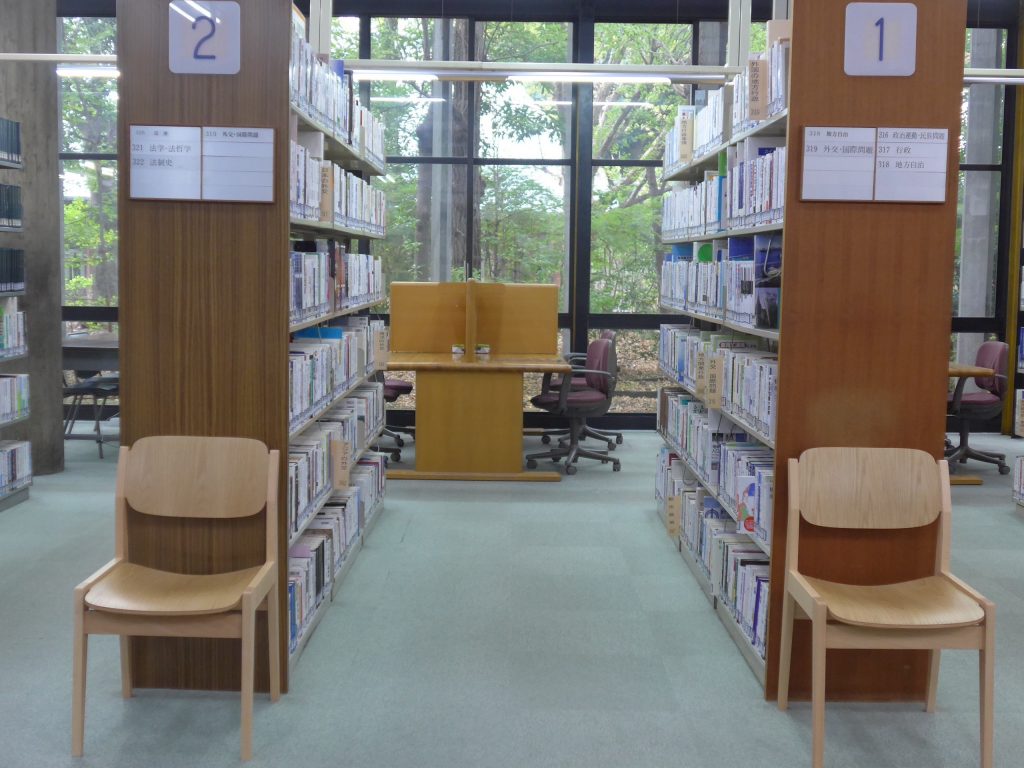
When the library opened, even the chairs were custom-designed. They are said to have been designed to be the most suitable shape for reading, but unfortunately, the originals no longer exist.
The copies currently in the reading room are reproductions based on the original materials. They are said to be faithful reproductions, so please sit down and experience them for yourself.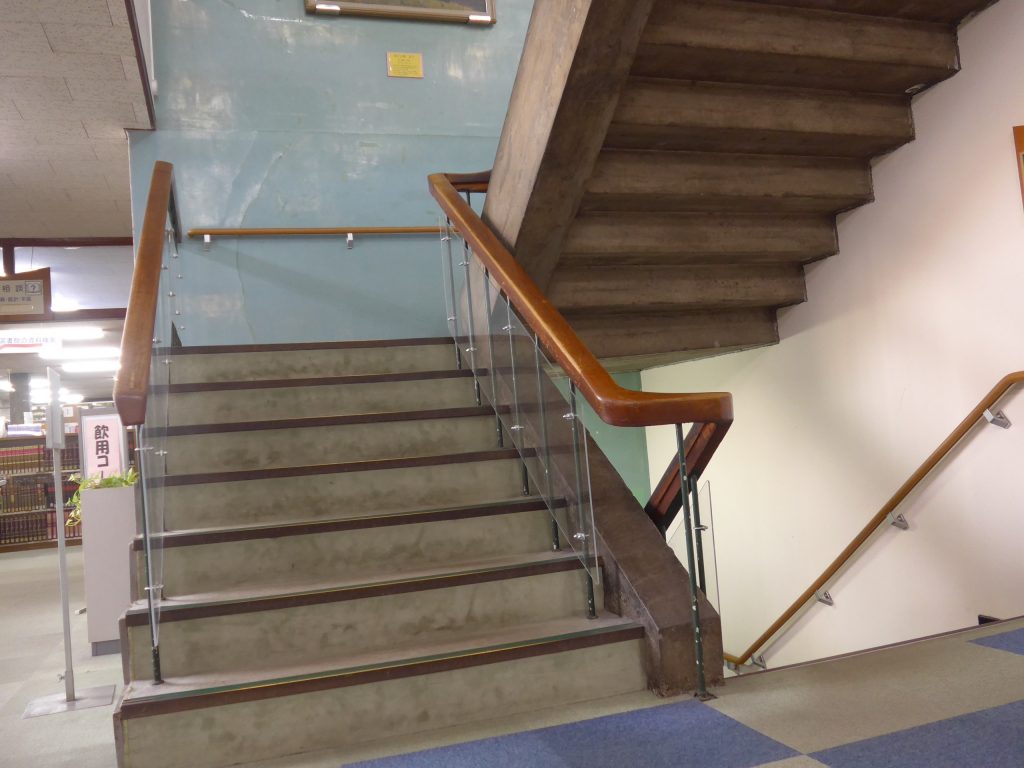
The staircase leading from the main entrance to the second floor. The shape and coloring of the handrail, which is easy to grip, are said to be characteristic of Maekawa's architecture.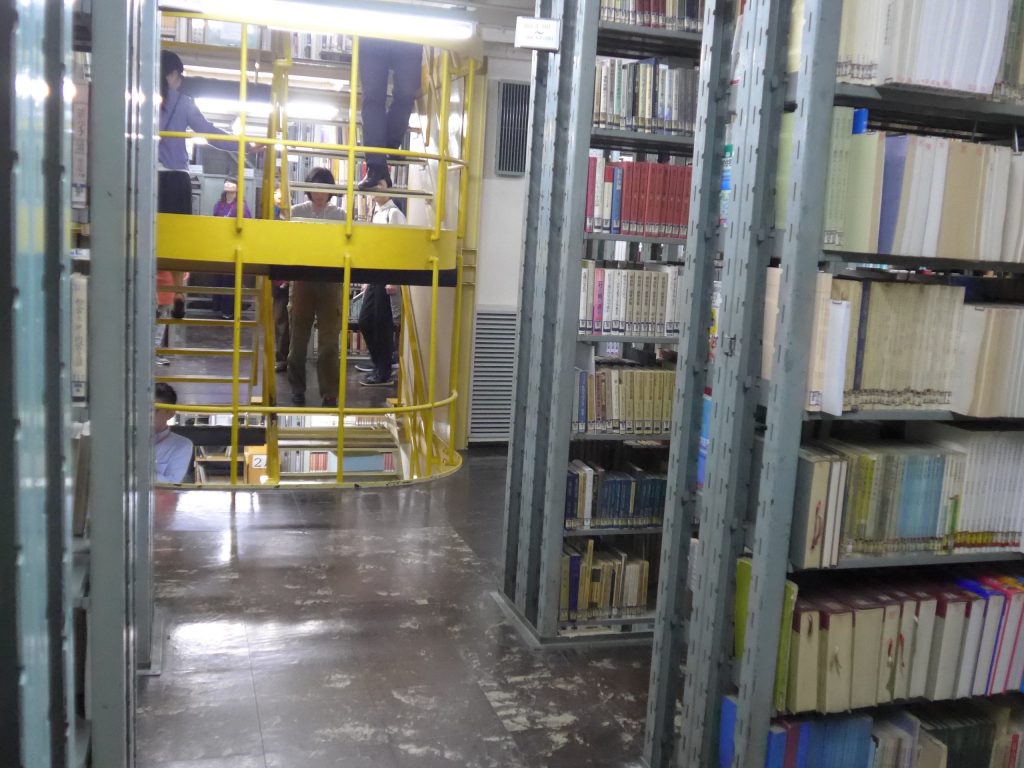
We even managed to sneak into the library, a place you normally can't enter!
The bookshelves are installed continuously across the first and second floors of the library. In other words, the bookshelves extending through two floors also serve to increase the structural strength of the building.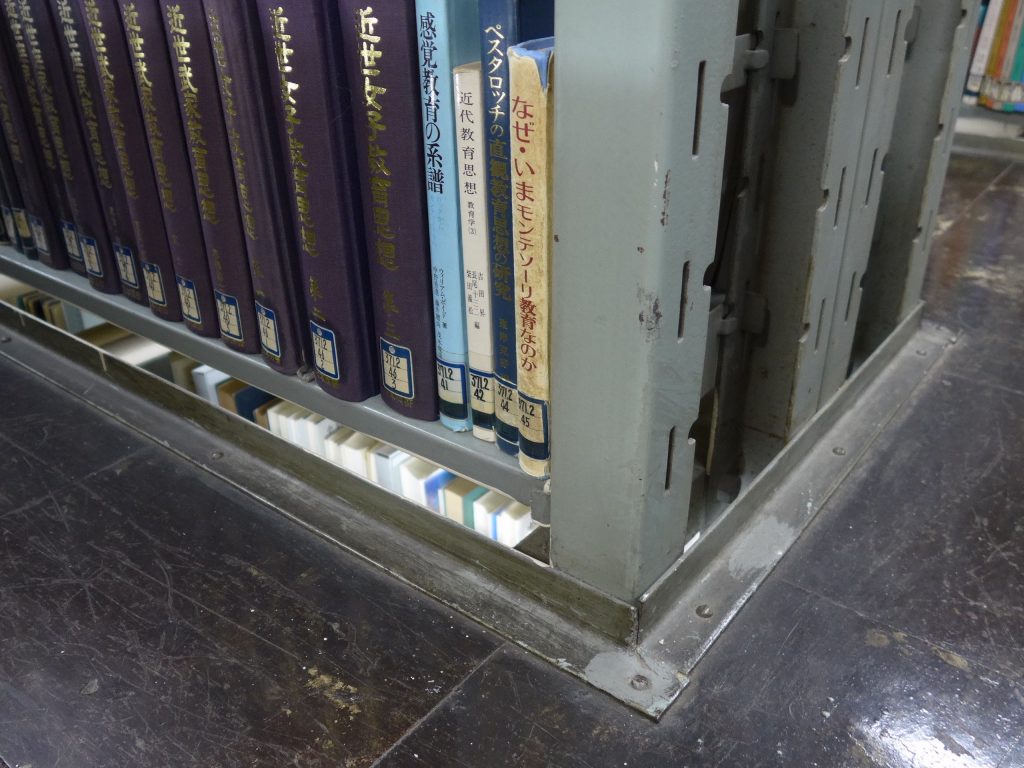
If you try peeking from the top shelf under the bookshelf, you can see the bookshelves on the lower level through the gap. It's kind of strange...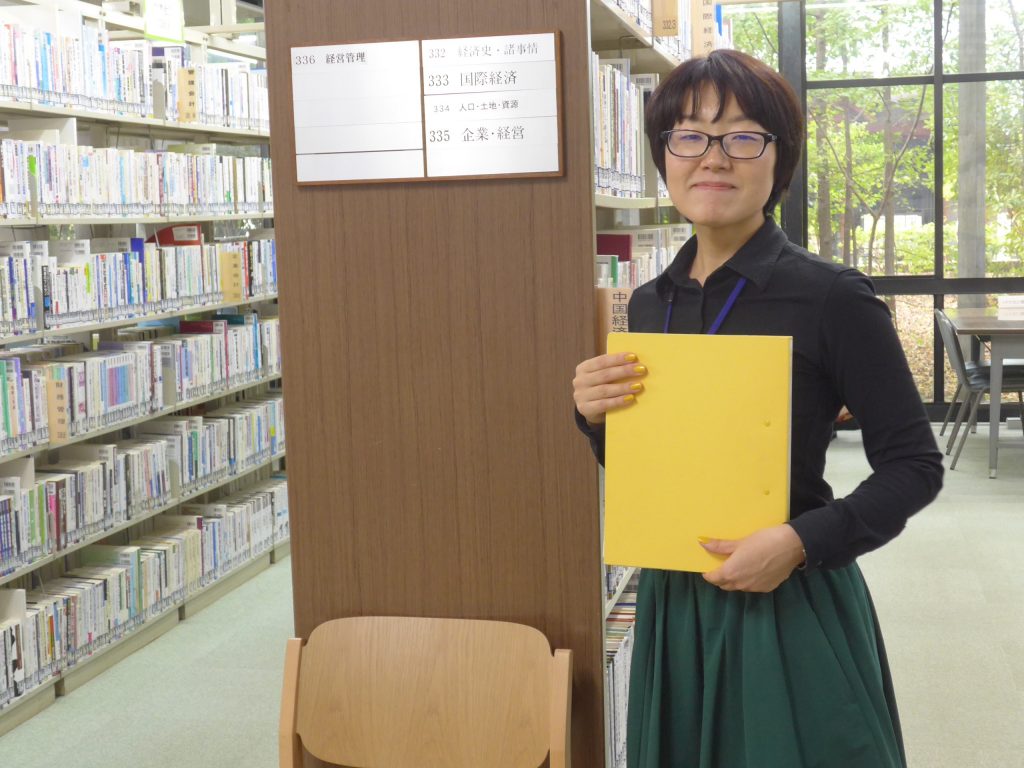
Ms. Yamashita Itsuko served as our guide for the library architecture tour (photography allowed inside). On the day of the tour, she was dressed in the basic colors of library architecture: green, black, and yellow. Impressive!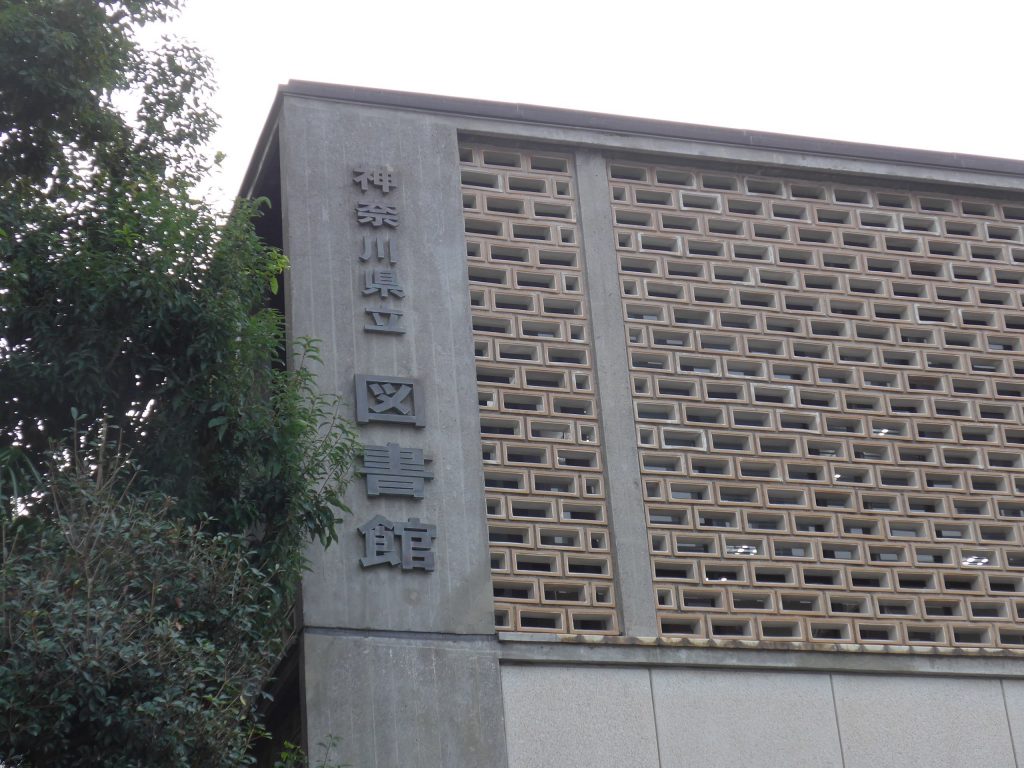
As I was leaving, I turned around from the side of the concert hall and noticed that the building itself had "Kanagawa Prefectural Library" written on it. It was majestic and beautiful.
I've always relied on libraries, but I'm truly impressed by how their comfortable spaces are infused with the ideas and passion of cutting-edge architects.
Incidentally, the concert hall that was built at the same time is currently undergoing renovations, so I'd like to cover that in more detail at a later date.