Let's bask in sounds like the sun. ~A special concert presented this summer by Magcal Ambassador pianist Mari Kumamoto and the Kanagawa Philharmonic Orchestra~

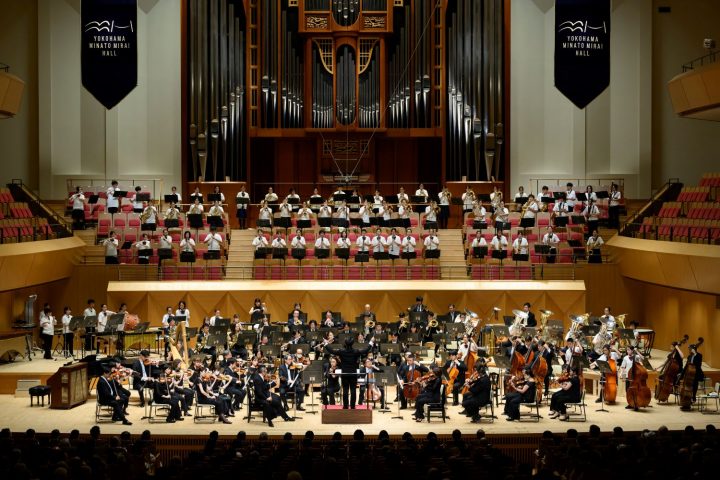
As the gloomy, damp rainy season comes to an end and the dazzling, hot summer is just around the corner in mid-July, the Kanagawa Philharmonic Orchestra will present a concert with a vibrant rhythm that is perfect for this time of year when people's hearts are filled with excitement and energy. The concert will be held on July 17th at the Yokosuka Arts Theatre and on the 18th at the Minamiashigara City Cultural Hall.
The Kanagawa Philharmonic Orchestra, which had temporarily suspended concerts last year due to the COVID-19 pandemic, has gradually resumed activities since last summer and this spring. However, various measures have been taken, such as limiting the number of performers depending on the situation and focusing on popular masterpieces and large-scale works that can make the audience feel somewhat at ease.
Amidst these circumstances, this concert offers a glimmer of hope for overcoming these difficulties, allowing you to enjoy it with a slightly more open and free spirit than usual.
The theme is Eastern European music. Even if you're not particularly knowledgeable about it, Dvořák's "New World Symphony" and Smetana's "The Moldau" are works by Eastern European composers that every Japanese person knows.
Eastern European music is distinctly different from Western music, possessing a melancholic and ethnic character that makes it uniquely captivating. Its rhythms evoke a sense of both sadness and a powerful, almost life-affirming energy, stemming from musicians yearning for their homeland, a place that has forged its own unique culture and traditions after a complex and tragic history. Doesn't this imagery resonate with something of our current world? Especially in these times, I urge you to experience the deeply moving rhythms of Eastern Europe.
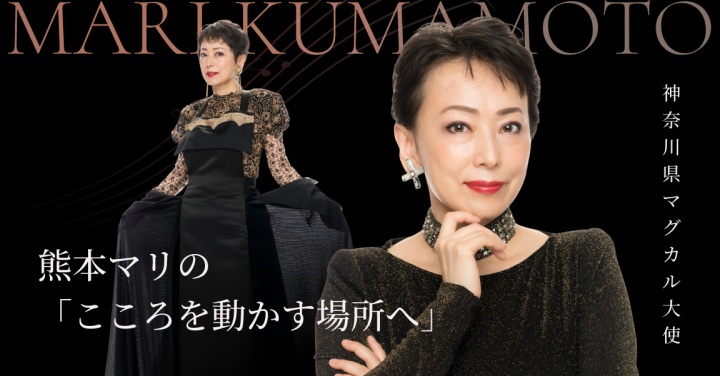
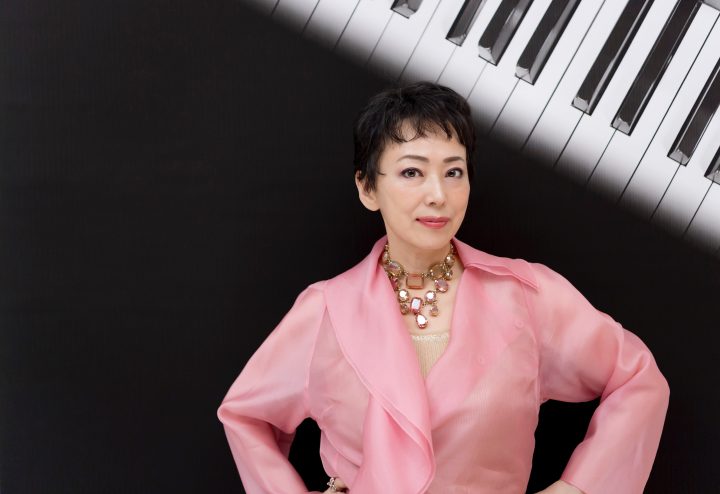
And this time, the one who will be playing wonderful music is pianist Mari Kumamoto, who will be performing with the Kanagawa Philharmonic Orchestra for the first time. Mari, who went to Spain at the age of 10, specializes in Spanish music and Latin piano music full of ethnic flavor, and continues to convey the "sounds" she has experienced and acquired in a foreign country to the audience, making her a wonderful pianist who is perfectly suited to this theme.
And then there's our Magcal Ambassador, Mari Kumamoto. We were fortunate enough to have the opportunity to speak with her directly. Due to the COVID-19 pandemic, the interview was conducted remotely. We were also joined at short notice by Mr. Toru Sakakibara (hereinafter referred to as Mr. Sakakibara), the music director of the Kanagawa Philharmonic Orchestra, making for a very enjoyable and in-depth interview.
I would like to fully convey Mari's feelings about the concert and the power of "music," along with her charm.
Please share your thoughts on this concert, which is taking place under the unique circumstances of the COVID-19 pandemic.
Mari:
"Especially in these circumstances, I want to share the importance of sound and the joy of sound."
Sensitivity is incredibly important for living a healthy life, both physically and mentally. And the concert is in July. Both children and adults are in the mood to really let loose and relax during their summer holidays. But the situation doesn't quite allow for that. The "Hungarian Fantasy" by Hungarian composer Franz Liszt that we will be performing is a fun dance piece with unforgettable folk rhythms. So I hope you will immerse your whole body in the sound, just like soaking up plenty of sunlight! That's my wish.
Sakakibara:
"This time, we've gathered pieces that orchestras don't usually play—pieces that are compelling to listen to, and that have a down-to-earth, somewhat nostalgic feel that resonates with the Japanese heart."
Although it has been Westernized and is no longer even called "Eastern Europe," Eastern European music still retains the rhythms and melodies born from the religion and culture of the land, and a free originality that has not been homogenized. The theme is to deliberately bring that out now. Now that a glimmer of hope is slowly appearing in the world, please listen with a relaxed heart.
We want everyone to enjoy themselves with a free and open mind.
"Surprisingly, this is your first time performing with the Kanagawa Philharmonic Orchestra. How do you feel about it?"
Mari:
"It's really unexpected (laughs). I'm really looking forward to it."
Actually, concertos are often performed with a specific piece in mind, but I'm truly delighted that I'll be able to play "Hungarian Fantasy," a piece I'm particularly attached to, on our first stage collaboration.
And the conductor is the up-and-coming young talent, Yu Kumakura. "It's a double bear name! There aren't many people with 'bear' in their name, so I feel a strong connection!" At this point, the conversation shifted to Minamiashigara, the venue for the concert, which is also the hometown of Kintaro and thus has a connection to "bears."
"Not just 'double bears,' but 'triple bears!'" Mari laughs, "I can only think that we were drawn to them."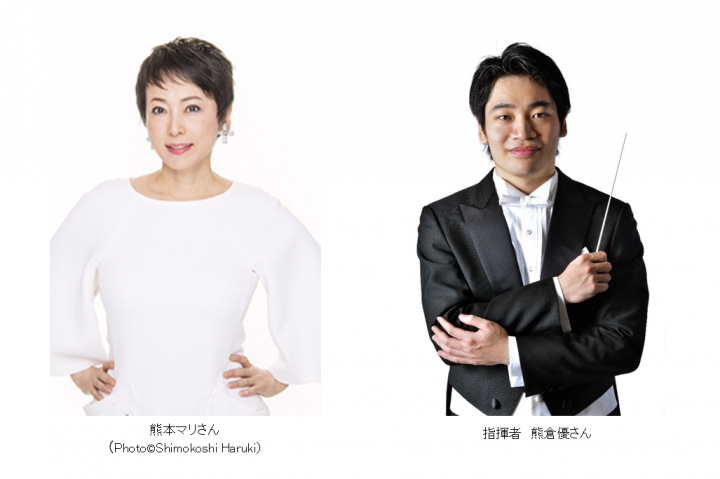
Sakakibara:
"We are very pleased that you will be performing with us this time. Mari, who went to Spain when she was a teenager, has been able to observe and feel a foreign country as a Japanese person, and has been conveying her experiences of its traditions and culture through her music to this day."
Like Dvořák's "Slavonic Dances," which we will be performing again this time, these are richly ethnic pieces that reflect the country's character, viewed from both within and outside, and crafted with various elements such as dreams, aspirations, and even fears. There are sounds that only Mari can produce, and I think she is perfectly suited for this role.
And the conductor of "Triple Bear" (lol), Yu Kumakura, is a highly promising and talented conductor who, at just 28 years old, is active both domestically and internationally. It's a lineup that makes me really look forward to what promises to be a spectacular and wonderful concert.
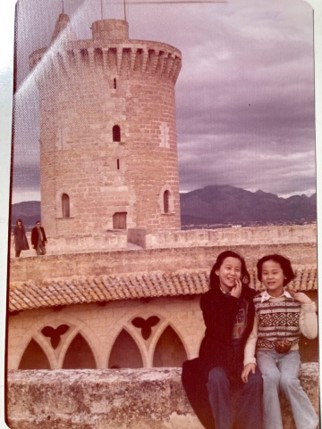
Mari (left), a teenager during her time in Spain.
What does the Hungarian Fantasy mean to you, Mari?
Mari:
"I've been hearing it live since I was about 12 or 13 years old when I was in Spain. It was a really fun song even back then, and it's a song I have a very strong attachment to, as it made me think as a child that I wanted to play it someday!"
Actually, I was asked to perform at the last minute as a replacement for Chinese-American pianist Claire Huangci, who was unable to come due to the effects of the coronavirus. The piece that was originally scheduled to be performed was Franz Liszt's "Piano Concerto No. 1," but when I was asked to perform and heard the theme, I thought "Hungarian Fantasy" was a perfect fit.
This piece isn't performed as often in Japan as it is in Europe, but it's incredibly interesting and fun. I personally find it very enjoyable to play. In Japan, Liszt is often thought of as a technically skilled composer, but his music is actually characterized by dance-like rhythms typical of Hungarian composers, and this aspect deserves more recognition.
Hungarian rhythms are like, for example, "the drums at Japanese festivals" or "the paso doble in Spain." You know those indigenous rhythms that make your heart leap and get excited just by listening to them?
"Also, Liszt was a composer who traveled a lot. He was born in Hungary, traveled extensively, saw many different countries, and experienced the scents of the towns and people, the tempos of those places. Those experiences became part of his blood and were transformed into musical notes. I think that's why his music is so captivating. I really want everyone to know about these fascinating pieces that make you think, 'I want to go to Hungary!'"
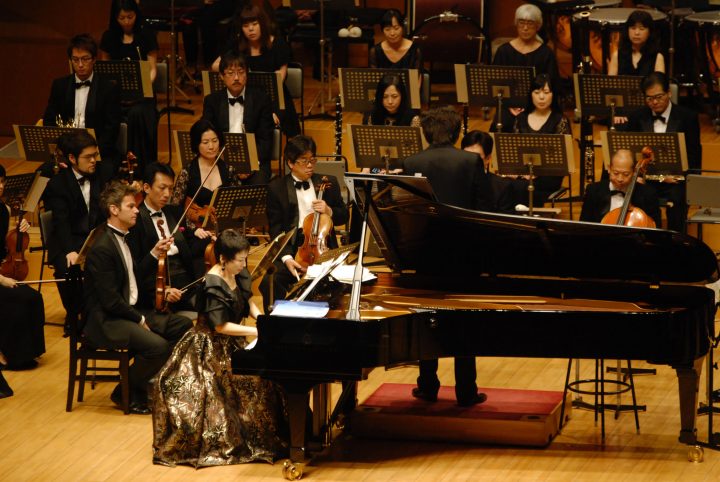
Mari playing the Hungarian Fantasy in Ishikawa Prefecture in 2016, performing with Ensemble Kanazawa.
One last thing. This piece uses a piano technique called glissando. It's not a technique often used in concertos, but it's a very beautiful and interesting way to play, using the back of your fingers to create a flowing, shimmering sound. I think you'll be excited to find out where it appears. Please try to find it! The concert is at a time that's easy to enjoy, so bring your children, friends, or family! I really hope many people will come and soak up the music and get energized!
Mari is incredibly cheerful and charming, yet she speaks with dignity and conviction when expressing her opinions.
Before the concert, Mari will give a pre-concert talk where she will share her thoughts on the appeal of the music.
Mari's sunny smile and performance are sure to lift your spirits and make for a liberating summer day.
Please do come and visit!
Kumamoto Mari will be performing at the Kanagawa Philharmonic Orchestra's regular concert.
Prefectural Masterpiece Series, 11th Installment: Dance! Dances from Eastern Europe and Beyond
[Date] July 17, 2021 (Saturday)
[Start] 14:00 (Doors open at 13:15)
[Venue] Yokosuka Arts Theatre
Kumamoto Mari's Profile
A passionate pianist. Born in Tokyo, currently residing in Yokohama.
He studied at the Royal Conservatory of Music in Spain, the Juilliard School in the United States, and the Royal Academy of Music in the United Kingdom. He is a specialist in Spanish music.
They are actively spreading Japanese melodies to the world.
In addition to performing both domestically and internationally, she also appears on television and radio, and engages in writing activities.
Professor at Osaka University of Arts.
Appointed as a Magcal Ambassador in August 2016.
[Official Website] http://www.marikumamoto.com/index.html