Crazy Ken Band's Ken Yokoyama's View of Yokohama - Part 2
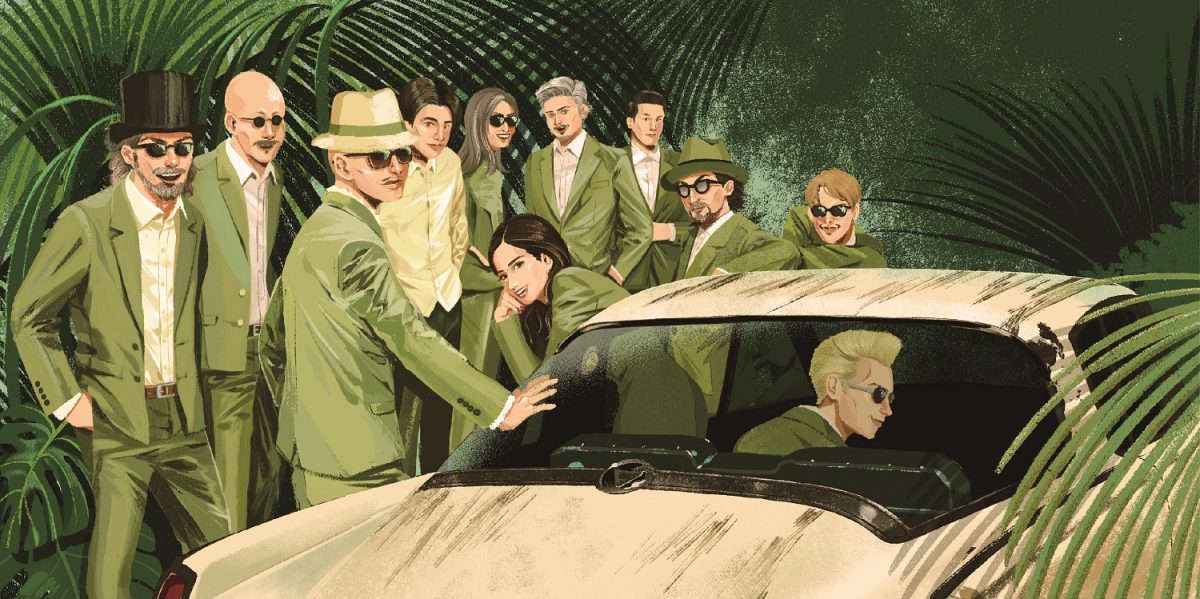
Crazy Ken Band (hereinafter referred to as CKB), known as "the greatest sound machine in the Orient," delivers a wide range of sounds. Now celebrating their 25th anniversary, they continue to evolve and are currently in the midst of their nationwide tour, "CRAZY KEN BAND TOUR Jūei 2022-2023," in support of their 22nd album, "Jūei." When discussing Ken Yokoyama, the man who leads CKB and creates such diverse music, the city of Yokohama is inseparable. In the first half of the interview, we asked him about his impressions of the ever-changing city of Yokohama and how Kanagawa Prefecture has influenced CKB's melodies and lyrics, along with CKB's activities to date. In the second half, we will focus on their community-based activities, their thoughts on the new album "Jūei," the ongoing tour, and CKB's future.
◆ Production of songs closely tied to the local community, such as the theme song for "Yokohama is G30" and the school song for Minato Sogo High School.
-- Mr. Yokoyama, you have also composed songs related to Yokohama, such as the school song for Minato Sogo High School and the theme song for "Yokohama is G30."
Yokoyama: Yes, I was asked to (laughs).
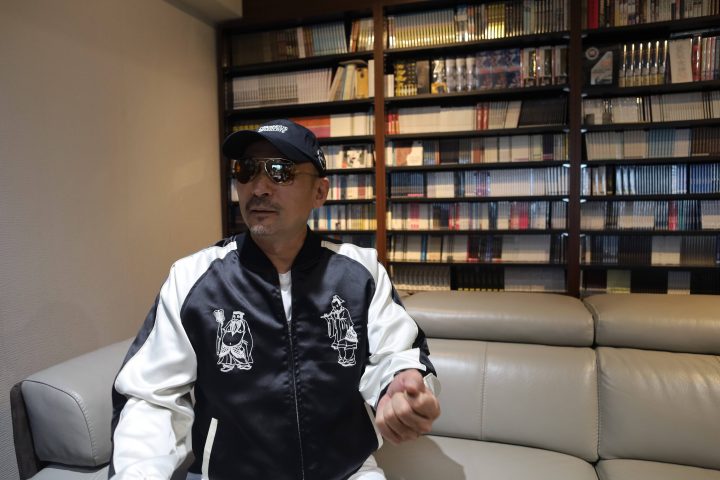
-- Could you tell us how you felt when you were asked to create a song that is so closely tied to the local community?
Yokoyama: When we did the zero-waste campaign, Mr. Nakata was the mayor, right? At that time, the city of Yokohama asked us to "create a melody, a song, with this theme in mind." They solicited lyrics from all over the country, and asked us to write the lyrics first and then compose a melody for them. I thought, "Oh, that's a good idea." I chose from several sets of lyrics and composed a melody for the one I selected. The person who wrote the lyrics was from Nara Prefecture, not Yokohama (laughs).
—So you received applications from all over the country?
Yokoyama: That's right. And then there's Yokohama Minato Sogo High School. This was also a request from the school. Originally, there was a part-time high school called Minato High School that I was supposed to go to. I was supposed to go there, but the time between my work and school didn't match up, so I gave up on it as soon as I transferred. And that was the predecessor of Minato Sogo High School. Later, when it changed to Minato Sogo High School, it was a newly established school, or rather...the name changed, and they decided to change the school song as well, so I was asked to do it. This was also a melody to lyrics written by a student who was a graduate. In both cases, the lyrics came first, both the Zero Waste song and the school song. It functions as a school song, but I also aimed for it to be something that could be done with a band to sound a bit gospel or soulful. I thought that if you put a rhythm to it it would become quite funky and cool. I had a chance to play the keyboard and sing at the graduation ceremony, so I did a sample then to show that it could be sung in this way as well.
—That must have been a great memory for the students!
Yokoyama: Among those students, there is one incredibly talented musician. I was moved when I heard that he sang the school song. He's an incredibly talented creator, a singer-songwriter named TENDRE. He's a graduate, and I heard that he sang my song. I thought, "Such a genius came from here." I was so happy.
◆A city where you can "gradually adjust to your daily routine" when you return from overseas.
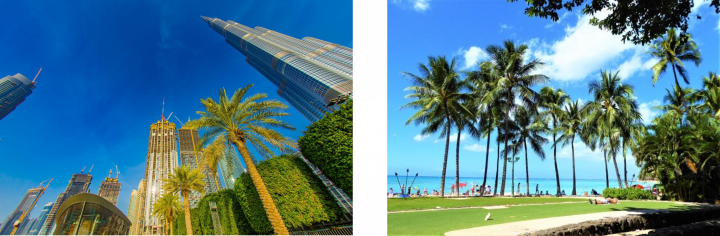
──Your latest album, "Jūei" (Tree Shadow), uses the titles of cities from various countries, such as "Dubai" and "Waikiki." You yourself enjoy traveling both domestically and internationally, but compared to cities around the world, what do you think are the unique charms of Yokohama?
Yokoyama: When you return home from an overseas trip, you feel a little sad, right? But Yokohama has Chinatown, so for example, if you go to Chinatown as soon as you return from Hong Kong, you can still feel like you're on a trip to Hong Kong. That's something that's also in the lyrics of the song "Operation Chinatown" ("Crazy Chinatown Operation!"), and I think that's part of Yokohama's charm. Just like divers who have been underwater gradually get used to the environment in a recompression chamber to avoid decompression sickness, Yokohama is a place where you can get used to everyday life and your routine.
— "Not feeling lonely" is a good thing.
Yokoyama: Yes. And then, I switch my mindset again, not thinking of it as returning from an overseas trip, but rather as "I'm going on a trip to Yokohama now." I change my mindset in this way. It's exciting. There's nothing forced about it. Especially the bus on the Bayshore Route from Haneda. I really want it to go to Honmoku, but it doesn't stop there so it goes to Yokohama Station (laughs). There is a bus, the Keikyu bus. Or you can take a taxi or your own car. When you come back from overseas and cross the Bay Bridge and see the night view of Minato Mirai, it's exciting. It's not like, "Ah, I'm back in Japan."
—That scenery is amazing, isn't it?
Yokoyama: Yes, that scenery kind of reminds me of Singapore. It's really nice.
──So, if you were to convey the charm of Yokohama to people from overseas, how would you do it?
Yokoyama: That's right. When I meet Italians, I tell them it's like the Naples of Japan (laughs). Naples has been Americanized in some ways...there's a US military base there, you know. And it's a port city, and there are people there who aren't delinquents but are a bit funky (laughs). I know a guy named Girolamo and we often talk, and he says that Yokohama, Yokosuka, and Naples are very similar, in terms of feeling. It's not so much that the cities are similar, but the atmosphere, the mood is very similar. I tell Italians that, and if it's England, I say it's the same island nation, and it's also adjacent to the sea. I say something like, "Maybe it's like Dover or that area," or something like that (laughs). Anyway, I think it's easy to get along with people when you say it's a port city. It's a port city, and it's welcoming. It's a place with a lot of coming and going, so they don't reject those who come and don't chase after those who leave. They don't interfere too deeply in people's private lives, and they treat you with a little tact. I once heard someone say, "The vibe of port cities is the same all over the world," and I think that's probably true. It's a mix of crazy people, normal people, delinquents, people with troubled pasts, free spirits, mysterious people—all sorts of different personalities are jumbled together (laughs). So I don't know if it's easy to live here, but once you're hooked, you can't leave.
—Yes, it really is a city with all sorts of people.
Yokoyama: All sorts of things. Even though I'm in a band, there isn't much prejudice against me, and it's not particularly considered unusual. In that sense, it's easy to live a normal life. People leave you alone in a good way.
◆ "Because of this opportunity," let's expand our imagination and go to Dubai with VR goggles.
── As CKB's 22nd album overall, what kind of album has "Jūei" become for CKB?
Yokoyama : With COVID-19, there's this frustration of wanting to go here, wanting to go there, wanting to go abroad, but I've turned that into the opposite... I've seen this crisis as the greatest opportunity, in a paradoxical way. It's precisely at times like these that you need a bit of adrenaline to shine. One of those hints was, "Why not put on VR goggles and go to Dubai?" Well, I don't even own VR goggles (laughs). For example, you know. Dubai, or even VR goggles, is just a fantasy, but I thought that fantasizing, expanding my imagination, is a good opportunity, especially now. It might get tough if it's like that all the time, though. I haven't been to Hawaii at all either, but in Honmoku, there's a Hawaiian local food called Honmoku Chow Mein at 'Boogie Cafe'. And then there's 'Mooneyes', the one with the eyeball logo. At 'MOON Cafe' there, they have loco moco and things like that, like a drive-in in Hawaii. There's also Honolulu Chow Mein, so there are two kinds of the same chow mein in Honmoku. Chow mein is something exotic, like a mix of Chinese and Hawaiian cuisine. "Waikiki Night" is a song that gives you the feeling of, "If I eat that, I can warp to Hawaii." So I tried to suggest a way to turn negative feelings into something fun with just a change in mindset or way of thinking.
-- Listeners can enjoy the feeling of traveling the world, too.
Yokoyama: That's right, it's like traveling the world from the comfort of your home.
──It's like you can travel through your ears. CKB is currently on tour with this album, "Jūei" (Tree Shadow). I imagine there was a period when you couldn't tour due to the pandemic, but could you tell us about your enthusiasm for this tour?
Yokoyama: The tour will span across the new year and continue until March of next year. This tour is in support of our new album, "Jūei," so we'll be playing about 10 songs from the album, but since we've released 22 albums in the past, I'm a little unsure which ones to bring (laughs). For example, if we go to Fukuoka, I might play this song that has "Hakata dolls" in the lyrics, or if we go to Yokosuka, I might play a song related to Yokosuka. I'm thinking of changing things up a bit depending on the venue. Also, we released a cover album last year, but there were some songs that we didn't get to play at all during last year's cover album tour, so I thought I'd try playing some of those songs this year.
── Have there been any changes during the pandemic, such as the enthusiasm of the audience during live performances?
Yokoyama: Actually, there are various restrictions, like not being allowed to shout. But there's a huge difference in the "energy" between just streaming a performance with only a camera and having an audience right in front of you. Even if you can't shout, the same energy and vibrations are transmitted, and you're exchanging energy with each other. That's the real thrill of live performances, so I never feel like anything is missing.
◆The 22nd album is a "next-level debut" album.
──Finally, could you tell us about your future plans and anything you'd like to try next?
Yokoyama: At this age, there are three of us who are over 60, and one is currently on a break... but our goal is to stay active and continue for life. Every year, we're like, "Wow, we've made an album like this this year," and it just comes out if we leave it alone. The results come out before we even have a chance to think about our goals, so after it's done, we think, "What kind of concept should this be?" We realize the concept afterward. It's the same when we travel, for example, when we go to Korea, we get off at a random station, and then when we get back to our hotel room, we think, "Oh, this is where I went today." It's like we jump into the moment before we even look at it. I think that's a theme that will never change.
── For this album, "Jūei," did you discover the theme of "travel" after seeing the finished product?
Yokoyama: Now that you mention it, I guess so (laughs). Anyway, ideas just keep coming out. When we decided on the title "Jukage" (tree shadow), I felt a bit... "Jukage" is the name of a coffee shop that was in Honmoku 2-chome. That coffee shop was a very creative place for me, a place where I could think creatively, come up with ideas, imagine, write lyrics and so on, so I returned to that feeling. The band has been around for 25 years, and this is our 22nd album, but it feels like our first album. First year at the next level. Like going from the third year of junior high to the first year of high school, it's like the first semester after moving up a grade. I approached it with the feeling that it's the first at the next level.
Now in their 25th year since formation, Yokoyama has described their 22nd album as a "next-level debut." This is surely the reason why CKB, and Yokoyama himself, continue to evolve. The "CRAZY KEN BAND TOUR Juei 2022-2023," which began in Tokyo this September, will allow fans to enjoy their evolving new sound as well as their beloved songs. Performances in Kanagawa Prefecture are scheduled for November 19th at Kanagawa Prefectural Hall, December 4th at Yokosuka City Cultural Hall, and March 4th of the following year at Atsugi City Cultural Hall.
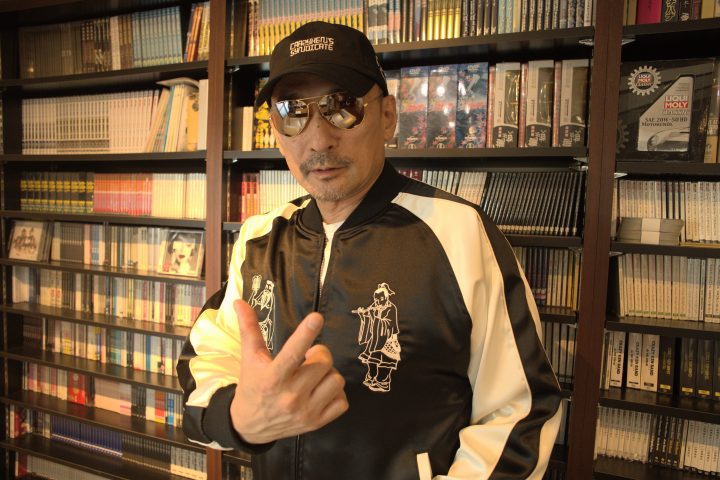
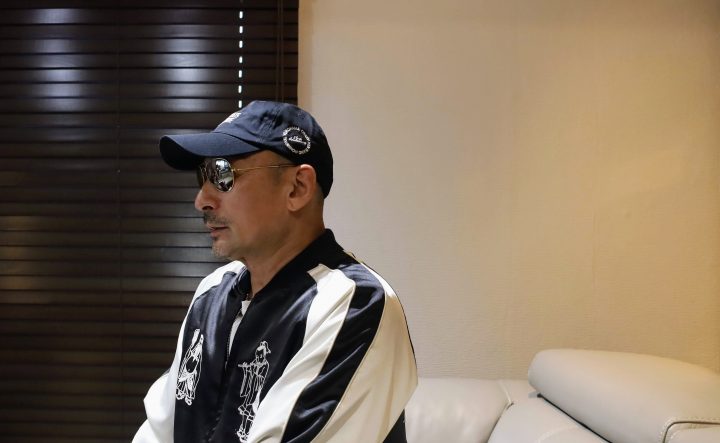
Ken Yokoyama
Born in July 1960 in Yokohama, Kanagawa Prefecture. He is the representative director of the music agency "Double Joy Records". In 1997, he formed Crazy Ken Band at "Italian Garden" in Honmoku and has been the band's lead vocalist ever since. While releasing a wide variety of hit songs, he also provides songs to many other artists. This year, marking his 25th anniversary since his debut, he is currently on the "CRAZY KEN BAND TOUR Juei 2022-2023" nationwide, promoting his 22nd album "Juei" (tree shadow), which was released on August 3rd. For more details, please visit the official website .