Me and Here - Miura City -
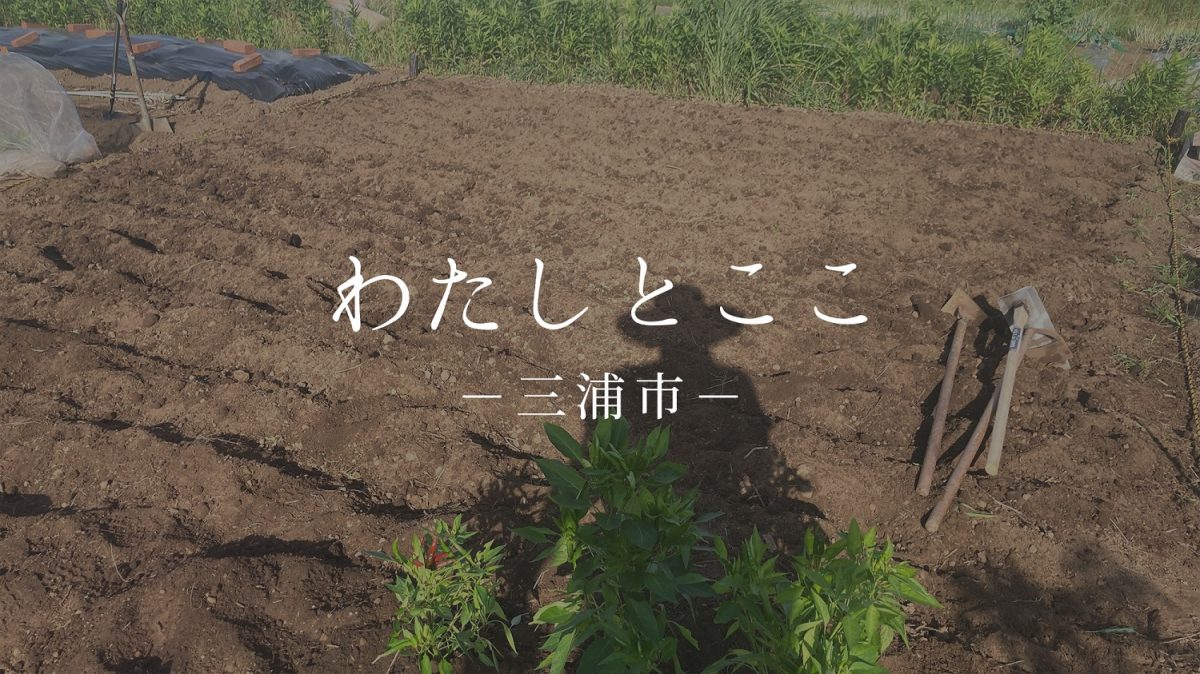
"Me and This Place" is a series in which people with ties to Kanagawa Prefecture talk about themselves and the towns and places within the prefecture.
The first person to be featured is this person.
◆SAM Tachibana◆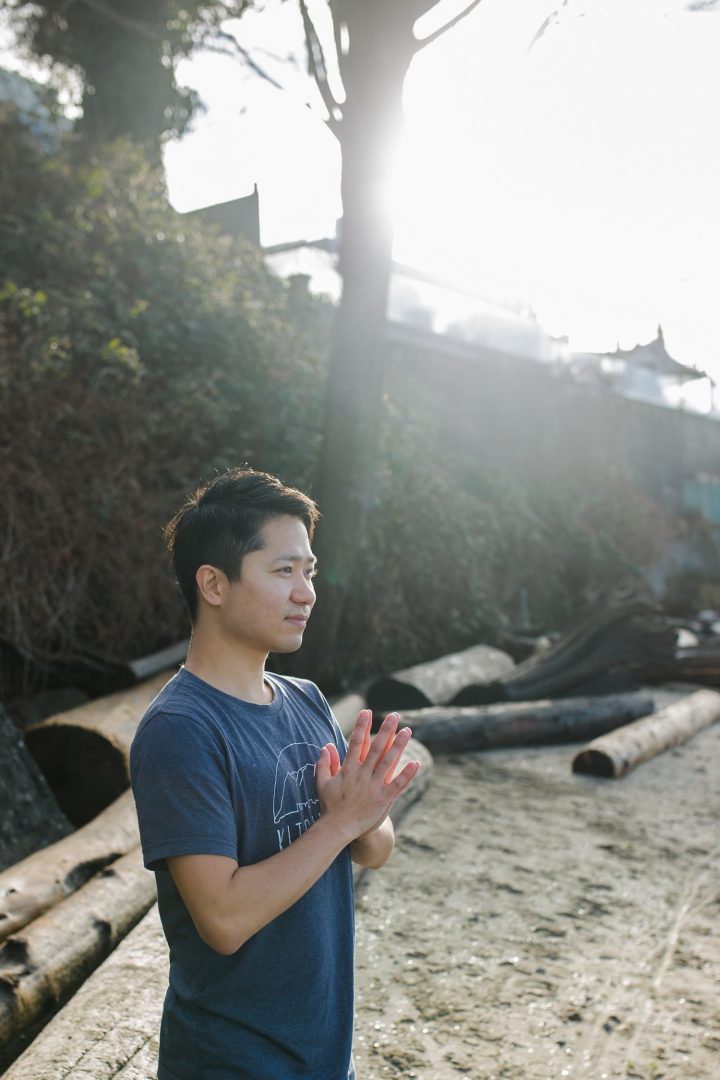
Born and raised in Miura, she lived in Yokohama, Meguro, and Vancouver, Canada after graduating from high school, before returning to her hometown of Miura in 2023 to open an administrative scrivener's office. Her main focus is on revitalizing Miura and improving the quality of life for its citizens. She also shares information about Miura on Instagram and participates in environmental beautification activities through volunteer groups. While living in Vancouver, she organized "Veggie Yoga," which connects food and yoga. She currently works as a yoga instructor.
Me and Miura City.
hello everyone!
My name is SAM Tachibana, and I work as an administrative scrivener and yoga instructor in Miura City.
Today I'd like to talk about Miura City, where I was born and raised.
Miura City, located in the southeasternmost part of Kanagawa Prefecture, has a population of 40,442 (as of July 2023), making it the second smallest city in the prefecture.
The city's population peaked at 50,350 in 1993, and has been declining ever since, making it the only city in the prefecture designated as a "city at risk of extinction."
Looking at this data alone, you might think that Miura City is a difficult place to live, but in reality, that's not the case at all.
Miura is a truly charming city, but my impression is that it hasn't been promoted effectively, and therefore hasn't reached the people who would find Miura appealing.
In this article, I'd like to share the true charm of Miura, something I can only understand because I was born and raised there and have since lived in other cities.
Before I talk about the charms of Miura City, let me mention some of its downsides.
Listing only the advantages would seem suspicious, and just like with people, cities always have both good and bad aspects.
① Poor transportation access
The biggest drawback is undoubtedly the lack of transportation. While it's advertised as "nature just 90 minutes from the city center" for tourists, 90 minutes in real life is quite a long time.
② I can't buy clothing items.
There are no shopping malls in Miura. It's quite difficult to dress stylishly there.
These are the only two things I can think of that are disappointing about Miura.
However, in today's world, I think many people wouldn't mind this unfortunate aspect.
This is perfect not only for those who work entirely remotely, but also for self-employed individuals, and even for commuters, you can be guaranteed a seat if you depart from the first station.
When it comes to shopping, I use online shopping for everything except high-end items where size is crucial, and I'm able to live a reasonably stylish life.
Now, let's get down to business! I'll be talking about Miura's charms.
I'll introduce four points about its appeal.
① Mount Fuji
Those unfamiliar with the area might wonder, "What's this about Mount Fuji in Kanagawa Prefecture?" But you can enjoy a spectacular view of Mount Fuji from Miura.

I go for an early morning walk every day, and on sunny days, I'm greeted by the magnificent view of Mount Fuji.
In addition, the rare phenomenon known as "Diamond Fuji," where the sun aligns perfectly with the summit of Mount Fuji, can be witnessed twice a year, making it quite famous among Mount Fuji enthusiasts.
② Fresh and abundant ingredients
I used to organize an event called "Veggie Yoga" in Vancouver, Canada, which connected yoga and food. I also hold a chef's license.
Even from my perspective, the ingredients from Miura are truly fresh and inexpensive!
First, let's talk about fish.
Because Miura City is surrounded by the sea, a wide variety of fish are landed there.
Apparently, about half of the total fish catch in Kanagawa Prefecture is handled by Misaki Fishing Port in Miura City!
Misaki tuna has long been famous, but they also have some very famous mackerel, known as "Seki mackerel in the west, Matsuwa mackerel in the east." In addition, you can get a wide variety of other seafood, including splendid alfonsino, horse mackerel, squid, octopus, raw whitebait, wakame seaweed, turban shells, and abalone.
You can buy fresh local fish at reasonable prices even at regular supermarkets.
Children from Miura grow up without knowing that things like splendid alfonsino and turban shells are considered luxury items.
I was actually like that too.
Next, vegetables.
In addition to its mild climate, Miura boasts well-drained soil rich in minerals from the sea, resulting in the cultivation of wonderfully delicious vegetables.
While radishes, cabbage, and watermelon are well-known, you can also buy Western vegetables such as Swiss chard, beets, and romanesco, which are trending because they are fashionable and rich in nutrients.

Moreover, not only are they sold in supermarkets, but farmers also sell their produce at direct sales outlets, so you can get fresh vegetables picked that morning for 100 to 200 yen.
I also make it a habit to go for a walk and buy vegetables from farmers about three times a week. It makes cooking more enjoyable!
In addition, I recently rented a plot of land and started growing my own vegetables.
Growing vegetables is hard work, but it deepens my appreciation for farmers and for the vegetables themselves.

③ Nature activities
To the east of Miura City lies Tokyo Bay, and to the west, Sagami Bay. The distance from east to west is approximately 6 km, and it takes about 15 minutes to cross by car. There are very few places in the country where you can enjoy both the sunrise over the sea and the sunset over the sea.
Miura Kaigan is a famous beach on the Tokyo Bay side, and it's conveniently accessible, just a 5-minute walk from Miura Kaigan Station. Plus, because the coastline is really long, you can enjoy playing there without feeling the crowds compared to other beaches.
I also work as an instructor for early morning beach yoga, hosted by the cafe "THE POP-UP" (https://thepopup.jp) located on Miura Beach.
Doing yoga while listening to the sound of waves is incredibly relaxing and makes for a fantastic weekend experience.
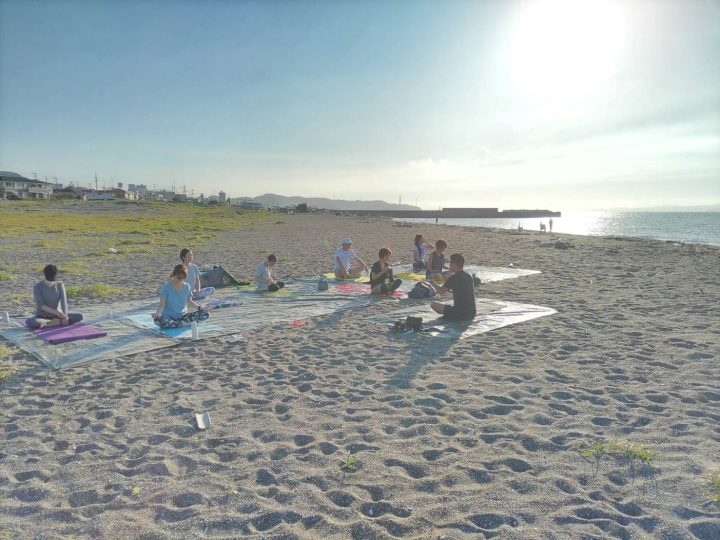
Activities aren't limited to the sea. You can also enjoy well-maintained hiking trails like those in Jogashima Park and Koajiro Forest, or venture further to the neighboring city of Yokosuka and take the Takeyama hiking route to admire "Miura Fuji."
The fact that you can experience a variety of nature activities, from the sea to the mountains, just 15 minutes after leaving home is truly appealing.
To prevent the destruction of the natural environment of Miura, I belong to a volunteer group and participate in activities such as mowing grass in parks and along the beach, as well as regular cleanups.
The other day, while cleaning the beach, we were able to discover a flower that can only be found on the Miura Peninsula. Many endangered plant species in the prefecture also grow in Miura.

④Population density
As I mentioned in the section about the unfortunate aspects, Miura has poor transportation access, which is why its population continues to decline.
However, or rather, thanks to that, there are also advantages. One of them is "population density." When you live in a city, you can get tired of being surrounded by people everywhere you go. Miura City's population density is 1326 people/km², which is less than one-sixth of Yokohama City's (8567 people/km²).
If you go for a walk or run early in the morning, you might not even encounter a single person. Even McDonald's is less crowded than in the city, and best of all, the McDonald's at Miura Coast has an ocean view. You should definitely visit.
I highly recommend Miura City to anyone who is tired of crowds.
Upon hearing this, some people might think, "A low population density means closer relationships with neighbors, making life more difficult."
But thankfully, that's not the case with Miura.
Of course, there aren't as many people as in a city, so you can't be completely indifferent to your neighbors, but I think that helps with crime prevention and deters selfish behavior.
Compared to living in the city, I experience far fewer unexpected attacks from others, allowing me to live a stress-free life.
It's the perfect place to live comfortably, with relationships that are somewhere in between—not as restrictive as in the countryside, and not as indifferent as in the city.

First, I hope you'll come visit Miura a few times, and if you like it, I'd love for you to consider living here.
The fact that you can visit multiple times before settling down, and that you can easily plan a short-term relocation by trying it out, are advantages of living in Miura, a rural area within the Tokyo metropolitan area.
Many people around me live a dual-location lifestyle, spending weekdays in the city center and weekends in Miura, so I think it's a good idea to consider that kind of flexible lifestyle.
It's great to live in an environment that isn't too crowded, but Miura is experiencing a severe aging population and there aren't many young people. When I think about the future of Miura, my honest wish is that more and more young people will move here.
I run an administrative scrivener's office in Miura City, focusing on revitalizing the city (including supporting startups), improving the lives of residents (acting as a bridge with the government), and supporting people who are moving to the area.
Please feel free to contact us at the following address for any inquiries or questions regarding Miura, not just administrative scrivener services!
Let's work together to liven up Miura City!
Administrative Scrivener Office NIJICO
SAM Tachibana
For inquiries: info@office-nijico.com
Homepage: Click here