[Pianist Yurie Matsumoto] What I want to convey through the joyful musical experience
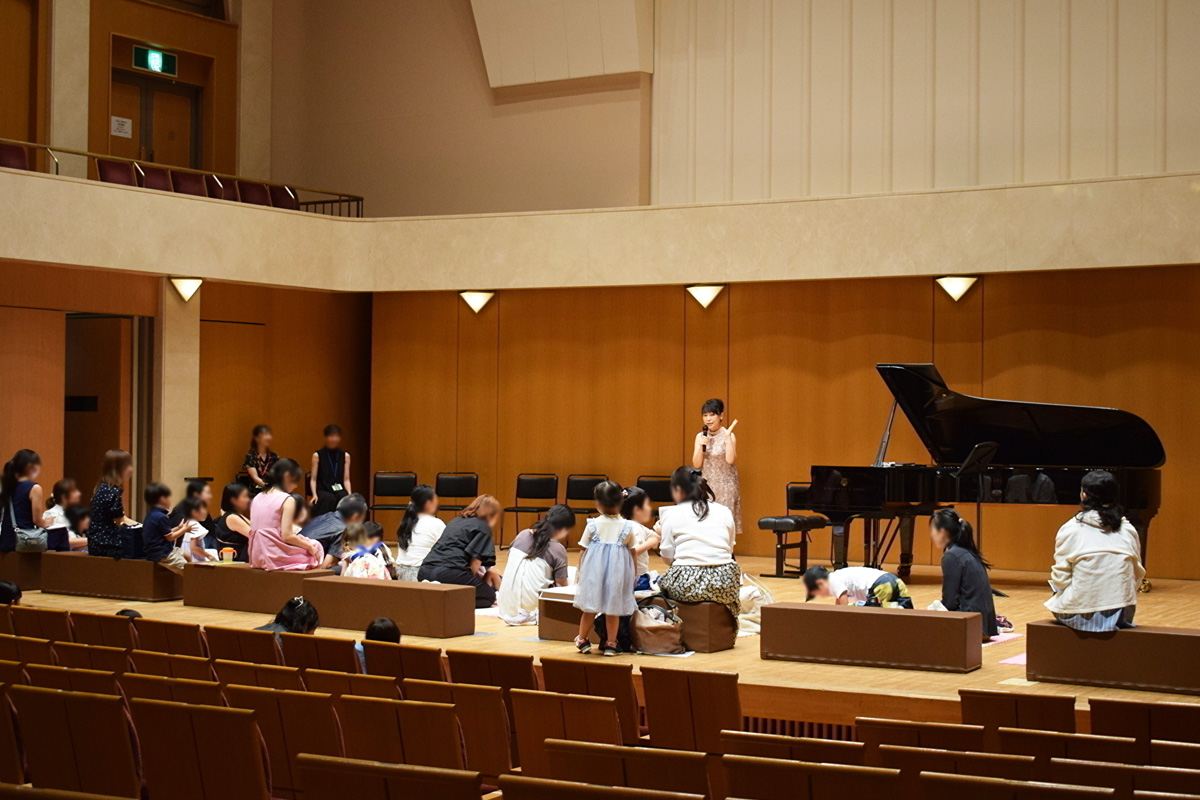
"Yuon" is an organization that provides musical experiences that everyone can participate in, regardless of age, nationality, or disability. Yuon's projects are unique, including barrier-free concerts for children as young as 0 years old where they can go on stage and watch the performers up close, and concerts held at temples. This time, we bring you an interview with Yurie Matsumoto, the pianist who heads Yuon.
Above all, I loved playing the piano during my childhood.
Yurie Matsumoto, the founder of Yuon, graduated at the top of her class from the Kunitachi College of Music Junior and Senior High School, and then from the Kunitachi College of Music and its graduate school. After further studies in Hungary, she moved to Vienna in 2012 and returned to Japan in 2018. While continuing her performance activities while getting married, having children, and raising a family, she established Yuon.
—At what age did you start playing the piano, Yurie?
She loved playing the piano from a young age. However, she didn't start taking lessons seriously until before she entered elementary school. Her first piano lesson was with a teacher in Sanjo City, Niigata Prefecture. Because her father was transferred frequently for work, she changed elementary schools three times, and her mother found a piano teacher for her each time. Since there was no internet like there is today, it seems it was quite difficult for her.
—What motivated you to take the entrance exam for a junior high school with a music course?
When I was in fourth grade, I met a piano teacher who had studied in Germany, and she was someone I deeply respected. That encounter was the catalyst that made me decide that I wanted to become a pianist in the future. Around that time, in sixth grade, there was talk of another transfer and school change, and on the recommendation of my homeroom teacher, I decided to take the entrance exam for the National College of Music Affiliated Junior High School. My mother told me, "If you don't get into the music junior high school, you'll have to give up piano," which made me even more engrossed in piano lessons.
—After graduating from graduate school, why did you choose to study in Hungary?
When I was in junior high school, I watched a TV program featuring Hungarian pianist András Schiff, which sparked my desire to study piano abroad. After graduating from graduate school, I went to Hungary to study and fulfill that dream, studying under Ferenc Rados, Schiff's teacher.
—I imagine living in a foreign country must have been difficult.
Back then in Hungary, only a limited number of homes had telephones, but I even enjoyed the inconvenience. The Hungarian people treated me like family when I came alone from Japan to study piano. I never had time to feel lonely. In Hungary, I spent four years surrounded by wonderful teachers and kind people, and it even changed my perspective on music.
I want to deliver a great experience to the first concert I attend.
—What kind of child was your daughter, Hiroka, the violinist?
Because I played the piano at home, she would often touch it as if she were playing. However, she was still too young to start playing the piano, and her hands were too small. So, before she turned four, I gave her a fractional violin that even toddlers could start with, and she loved it. Since the violin is an instrument that can be carried around, she would practice it without fail, even when we traveled. It seems that Hiroka loved the violin from a very young age.
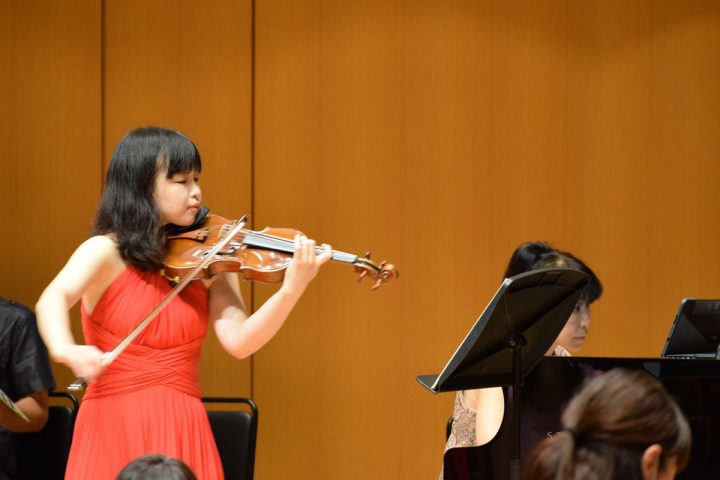
Hiroka Matsumoto (violin) and Yurie Matsumoto (piano)
-- There are time slots in Yune's concerts where babies as young as 0 years old can attend. What was the reason for starting this?
After finishing my six years of work in Vienna and returning to Japan, I thought about what kind of musical activities I should pursue here. While there are many concerts for children, there are still very few classical concerts where babies can attend. In Aoba Ward, where I live, there is a wonderful concert hall called Philia Hall, so I started classical concerts there where people can listen to the music up close to the performers.
—There were wheelchair users among the guests. Was there anything you were particularly conscious of?
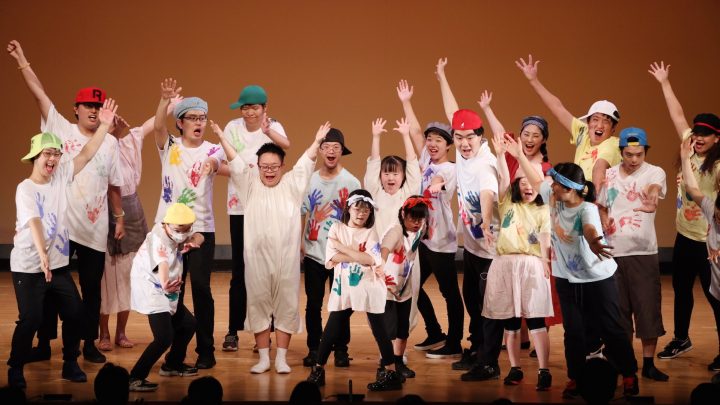
I had the opportunity to speak with parents of children with disabilities at the ward office, and they supported the concert. As we incorporated their requests to include children with disabilities in the audience, the concert gradually became barrier-free.

Image provided by: Yune
—I was surprised by the variety of performers and projects you've put together. Is there anything you keep in mind?
We invite performers who share our vision and who deliver performances that convey the true essence and charm of music, and the positive energy that music possesses.
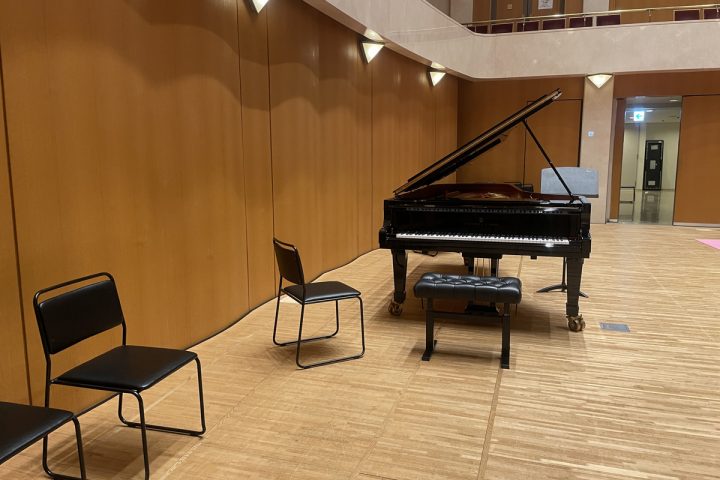
By watching the performance from the same stage and at close range as the musicians, you can experience the music with your whole body.
—Are there any particular things that are unique to Yuon?
Does that mean that you won't choose easy-to-listen-to pieces just because the audience consists of young children? We want to deliver a sincere and high-quality performance even to babies as young as zero years old, and we also want the concert's structure to satisfy adult classical music lovers.
Connecting people in the community through music
Yurie Matsumoto, inspired by the kindness she received from those around her during her time studying in Hungary, organizes concerts that anyone can participate in. Her activities began in Aoba Ward and have since spread to Kanagawa Prefecture and neighboring prefectures.
In recognition of their continuous performance activities, they received grants from the "Tokyu Children's Support Program" in 2022 and 2023, allowing them to hold "Mikke! Fun Music - Rice Field Club" and "Mikke! Fun Music - Field Club." They hold approximately 10 events annually, inviting 150 parent-child pairs free of charge.
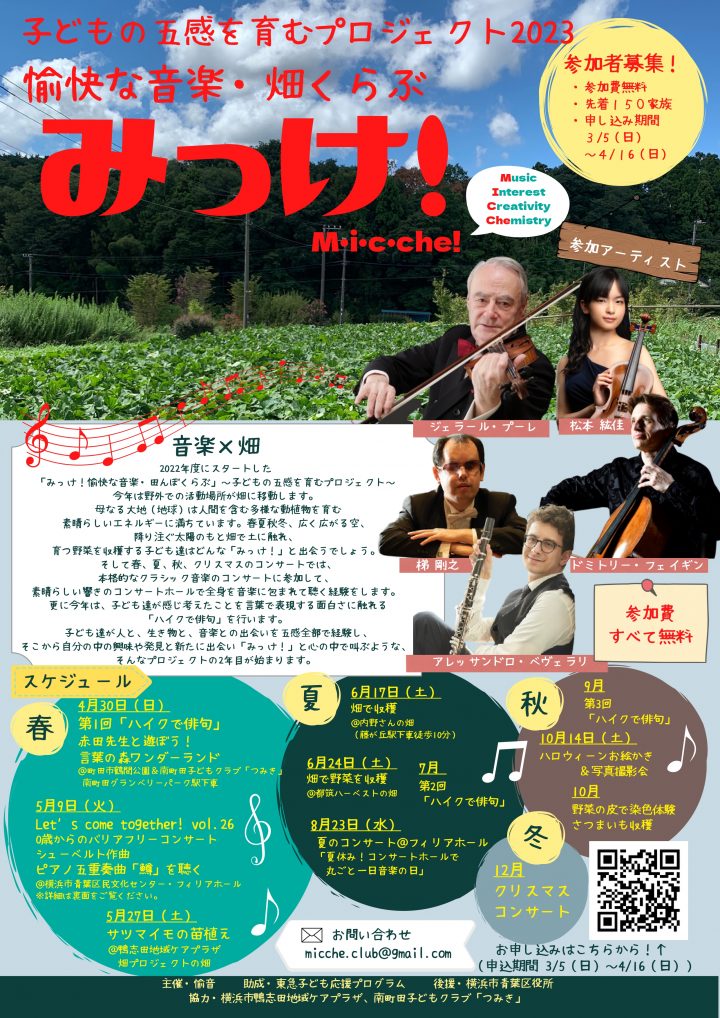
Image provided by: Yune
The classical concert series "TERA CONCERT," which started this year with the idea of "being able to experience music at a local temple without having to travel far," has been a great success. The driving force behind the activities is the desire to provide a relaxing time for elderly people, those with babies, and others who find it difficult to go out, by listening to music at their local temple. Surprisingly, Yurie handles everything from researching and negotiating with the temples to conducting site visits.
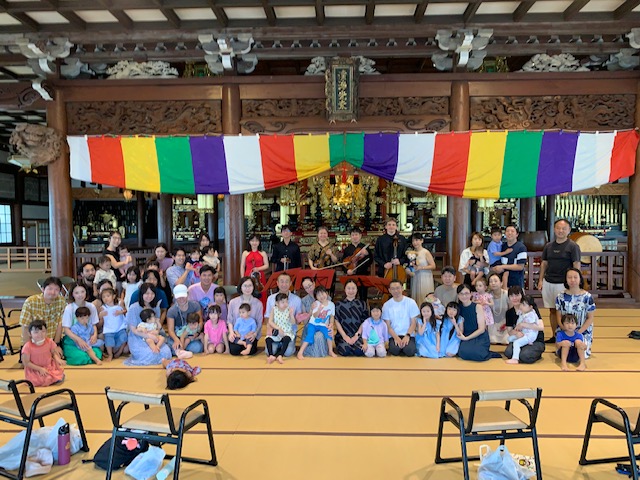
Image provided by: Yune
Yune's 2023 concerts have always fostered a growing circle of people connected through music in Aoba Ward, with attendees becoming acquainted with each other through concert participation, and children who were babies when they first came now growing up.
The venues for "TERA CONCERT" are all famous temples, and "Let's come together!" is venturing beyond Kanagawa Prefecture to Takasaki City, Gunma Prefecture. Pay attention to this fun music that will spread the power of music from Kanagawa Prefecture to the whole country!
Yuon Homepage
Based on the principles of the SDGs (Sustainable Development Goals) and STEAM education, Yuon aims to provide barrier-free, participatory music experiences that foster lifelong physical and mental health and strengthen community ties.
■ 2023 TERA CONCERT
Third session: November 11, 2023 (Saturday), Engaku-ji Temple, Nyoi-an (Kamakura City, Kanagawa Prefecture)
The 4th event will be held on November 23, 2023 (Thursday, national holiday) at the main hall of Toshōji Temple (Fujisawa City, Kanagawa Prefecture).
■2023 Let's come together!
Friday, December 22, 2023, Art Forum Azamino (Yokohama City, Kanagawa Prefecture)
March 9, 2024 (Saturday), Takasaki Arts Theatre Music Hall (Takasaki City, Gunma Prefecture)