The world of Kyogen: enjoy watching, and deepen your understanding by teaching.
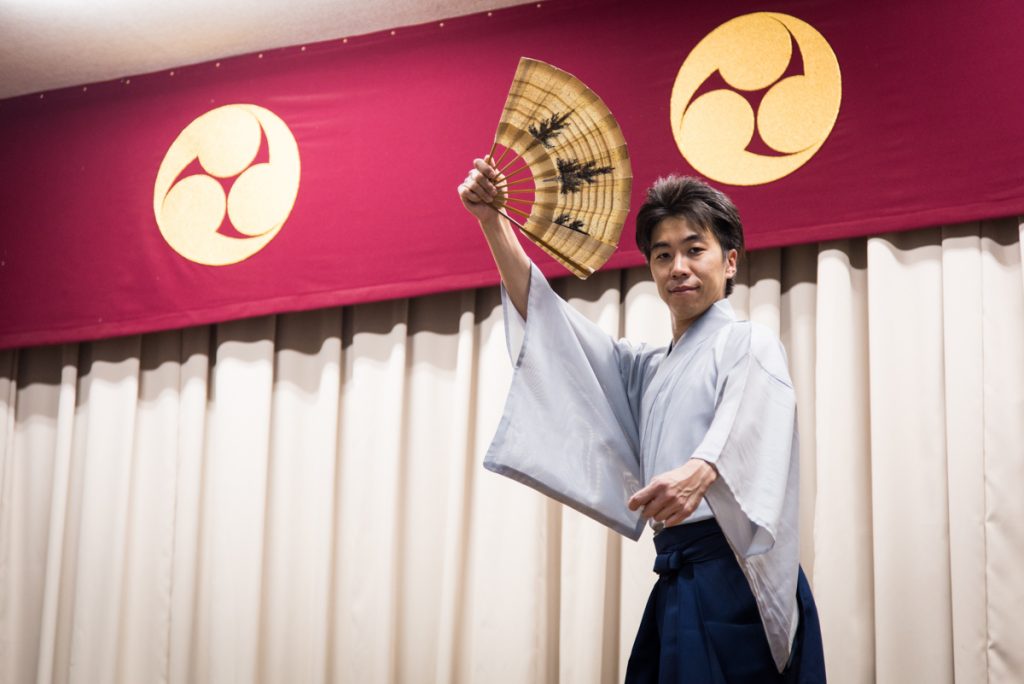
The grand stage for Kyogen performers living in the 21st century
Vol.3: Enjoy watching, learn, and deepen your understanding of the world of Kyogen.
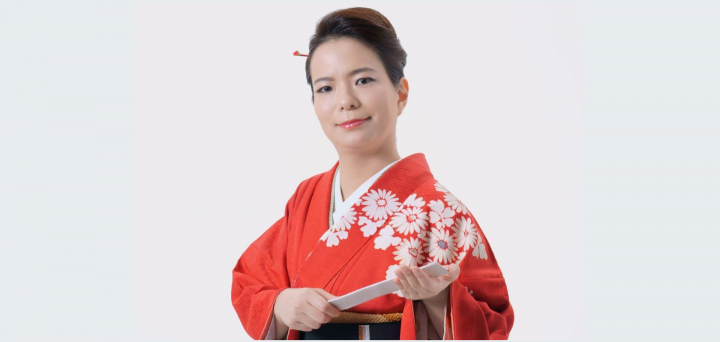
Ozo doctrine (Noh performer Kyogen style Ozo school)
Did you know that even ordinary people can learn Kyogen (traditional Japanese comic theater)?
Both my father and grandfather ran what you might call a dojo, a kind of training hall, and worked to popularize Kyogen (traditional Japanese comic theater). Many people of all ages learn Kyogen there, and I also trained with them from a young age.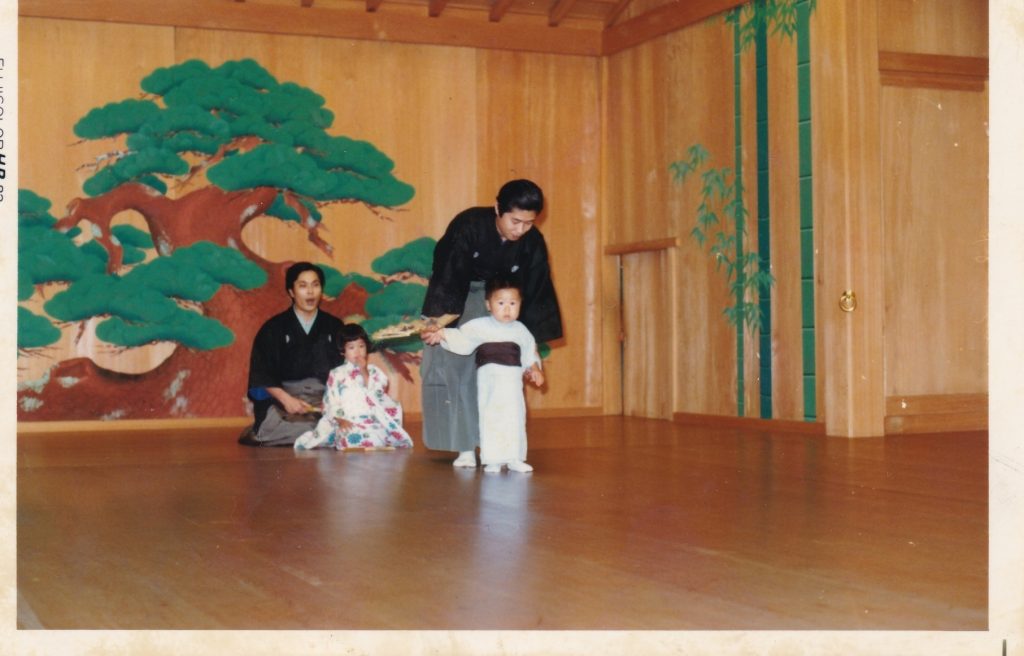 * Age 2. First time practicing on the Noh stage.
I've been asked, "Is Kyogen something you learn rather than just watch?" I could simply say, "My father and grandfather both taught it," but there have been times when I've reflected on myself and wondered, "Why am I teaching it?"
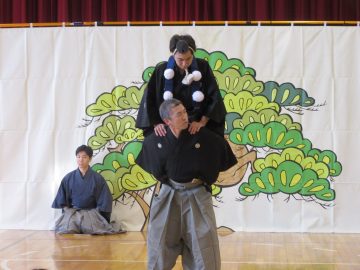
In the past, figures like Oda Nobunaga, Toyotomi Hideyoshi, and Tokugawa Ieyasu performed Kyogen themselves, and various daimyo also learned it. The Okura family also taught Kyogen to town actors and performed in events such as fundraising Kyogen, so there is no doubt that "teaching" has been a part of their tradition since ancient times.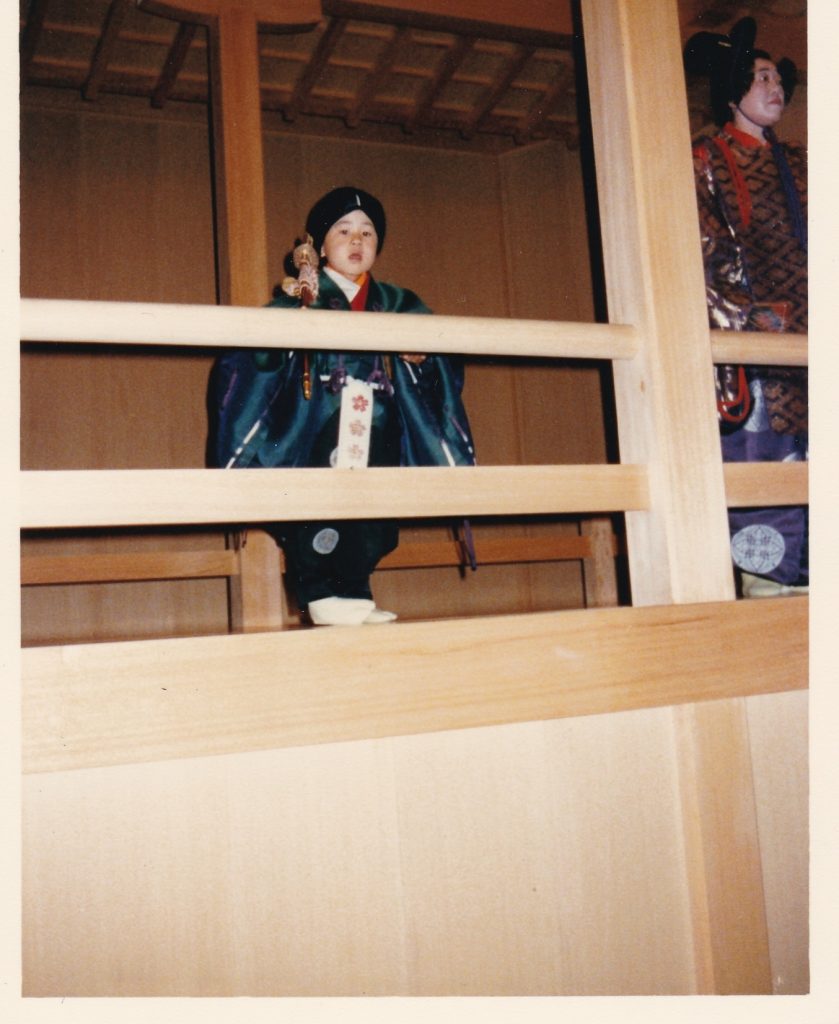 *Age 4. First stage performance. Co-starred with his grandfather's apprentice in "Narihira Mochi."
Kyogen has a repertoire of 180 pieces, but it may be impossible to learn and pass them all on to the next generation without forgetting. However, teaching others can revive your memory and help you remember what you've learned. Also, by teaching repeatedly, you can gain a deeper understanding of the piece and refine your form. There are many "Ah! So that's what it means!" moments of discovery while teaching. Furthermore, since practice is conducted without using sound sources, meaning you're constantly using your voice almost all day, it also leads to the improvement of your own performance and vocal training. You could say that "you are being taught by teaching."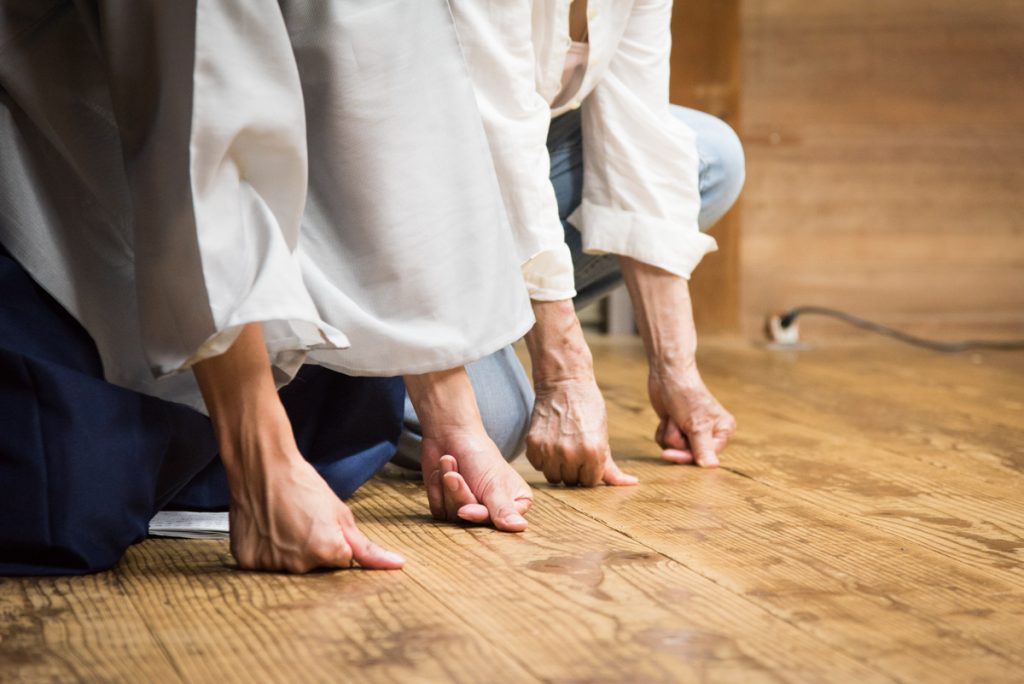
On a personal note, I got married and moved to Nakanojima (Tama Ward, Kawasaki City). Since this coincided with the birth of my child, I went to visit Nakanojima Inari Shrine, our local guardian shrine, and there I found a Kagura-den (sacred dance hall) there.
Kyogen (traditional Japanese comic theater) can be performed here.
With that in mind, I immediately called the Shinto priest, who kindly agreed to provide it.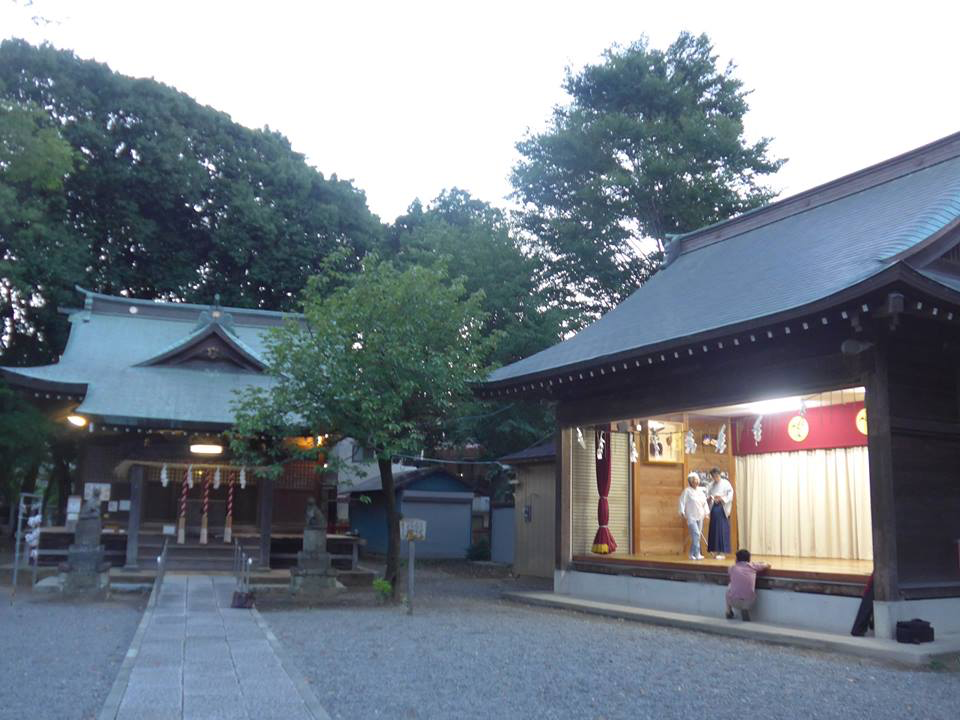
It was around the time of the Great East Japan Earthquake. Many of the people who participated in "Kyogen LABO," a Kyogen event I organized independently, were involved in activities rooted in their local communities. These keywords came together, and I began to think about the concept of "community."
The word "region" can refer to a place, but I think it also means "to live" in the "land." It's about cherishing and enriching the place where you live now. By improving the environment, I believe that the circle of people will expand, and the town will become a more livable place.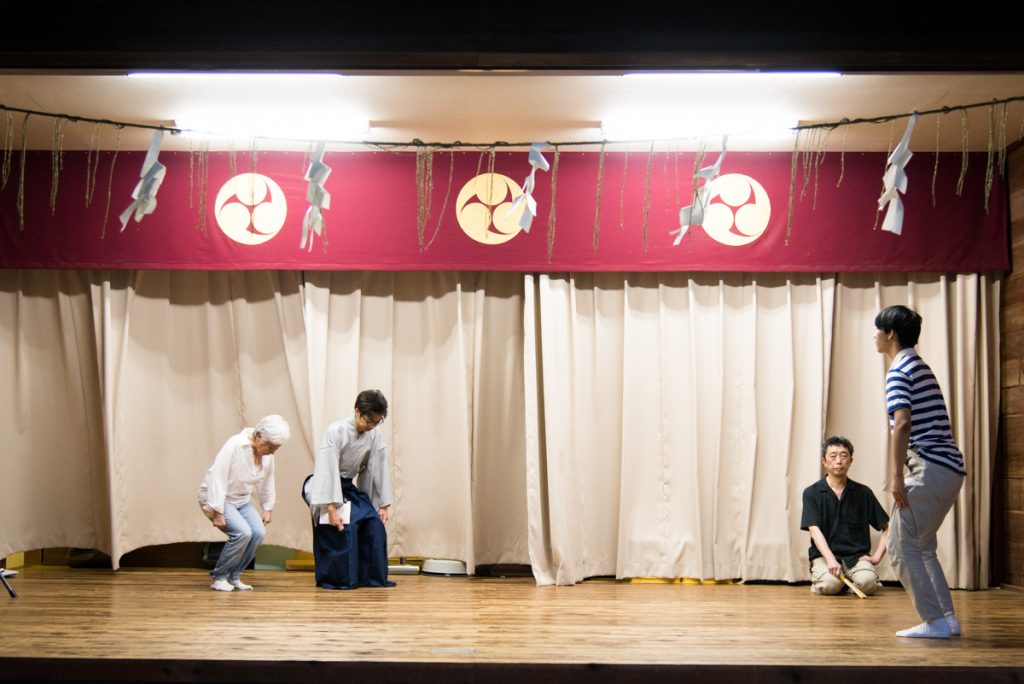
Furthermore, I want the children growing up there to experience a wealth of nature and culture. Exposure to culture opens the mind, fostering self-discovery, the discovery of others, and the development and respect for individuality. Starting the Kyogen (traditional Japanese comic theater) class in Nakanojima was driven by these various motivations.
At first, attracting students wasn't easy, but now we have seven students who are enjoying learning Kyogen (traditional Japanese comic theater).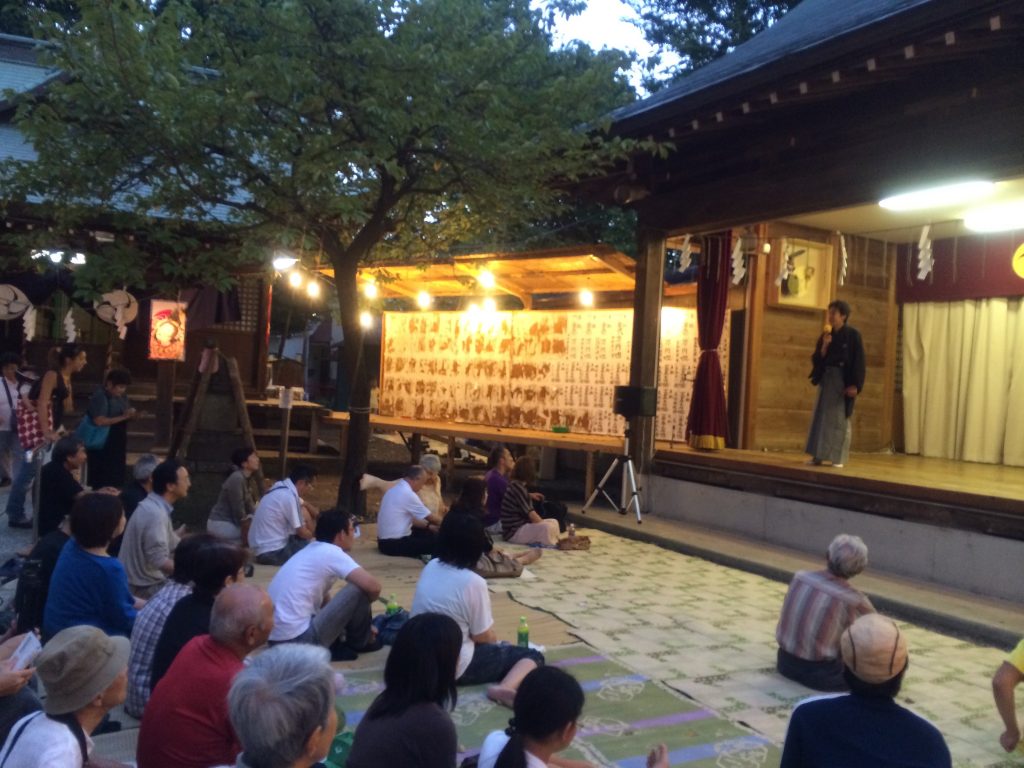 *The first Nakanojima Inari Shrine Kyogen performance
And this year again, on Saturday, October 6th, all the students of the class will perform a dedication Kyogen (traditional Japanese comic theater). This will be the sixth time we have done so, and we are proud to participate in this activity that is deeply rooted in the community. We hope to convey the generosity and humor that Kyogen offers to many people in the community.