Thoughts on "h.Imagine" and "Chigusa" on March 11th
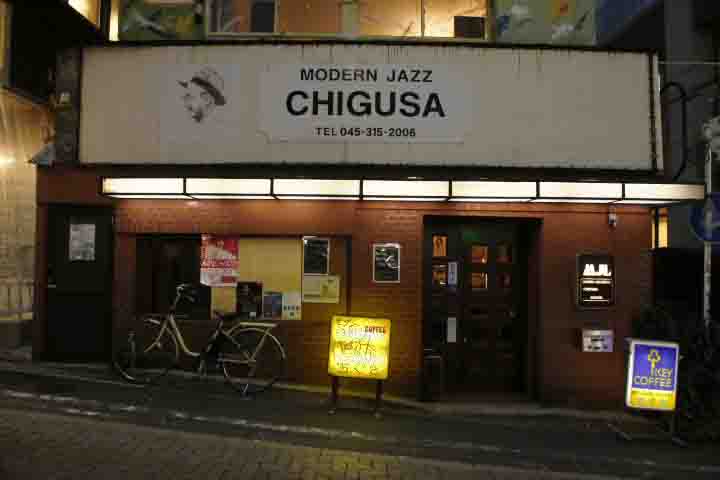
I'm completely immersed in jazz again tonight.
File.6 Rikuzentakata "h.Imagine"
Mayuko Niimura (Jazz Cafe Chigusa)
Chigusa closed down in 2007 due to urban redevelopment. In 2010, a three-day archive exhibition, "Chigusa Was in Noge !", sparked calls for its revival, but it lacked both money and manpower. Time passed with uncertainty, with people saying things like, "Someday..." and "If we can reopen someday..." until March 11, 2011, when the Great East Japan Earthquake struck.
On that day, the tsunami that struck the Tohoku region claimed many lives and completely destroyed towns.
Being in Noge, I witnessed the devastation firsthand, but there was nothing I could do; I was simply overwhelmed by a sense of powerlessness.
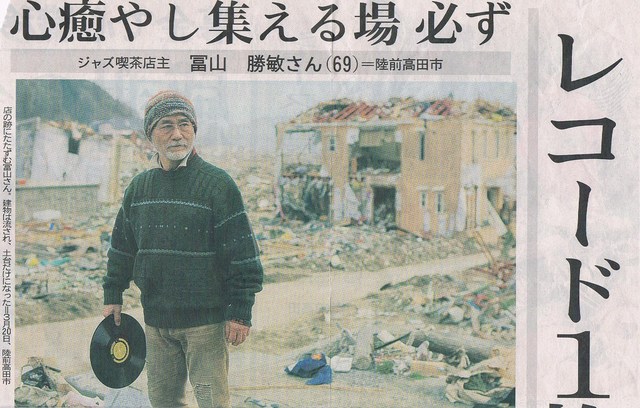
Then came April. Around the time the media began reporting the details, I came across a photograph. It was an article in the Kanagawa Shimbun reporting on a man standing amidst the rubble, holding a record in his hand. The article described how the owner of a jazz café called "h. Imagine" in Rikuzentakata had lost his shop, sound equipment, records, everything, to the tsunami, but was still clinging to hope for a comeback.
Seeing the words "jazz café" and "records," I couldn't sit still and immediately called upon people involved with Chigusa and the town to plan a charity event. We held a flea market and collected donations, and also asked for record donations. It was only a one-day event, but we received cooperation from many people, so I took the proceeds, donations, and records and immediately headed to Rikuzentakata. I was able to meet the owner at the gymnasium where the evacuation center was being held and hand them over in person.
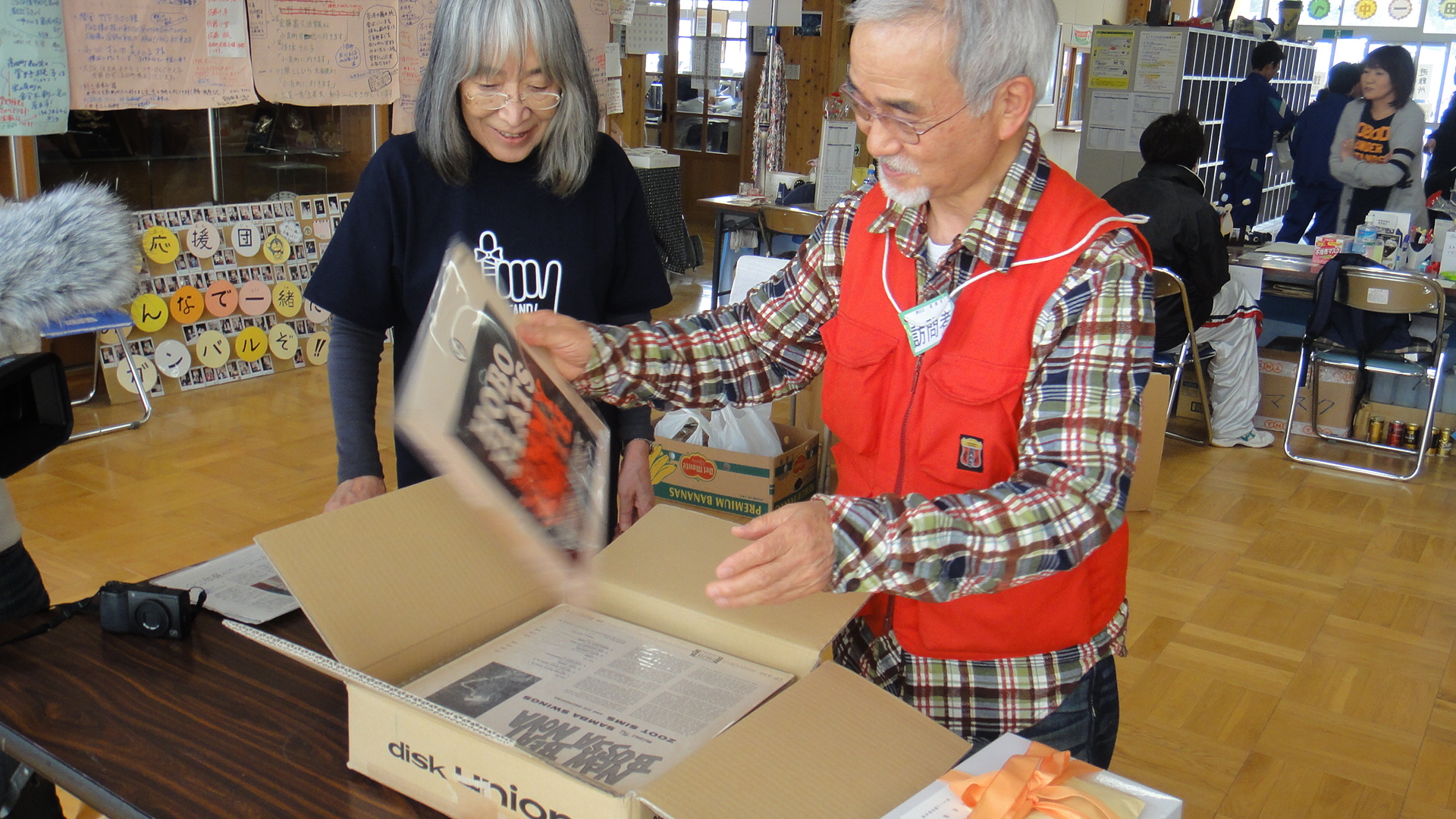
Guided by the owner, Mr. Tomiyama, we also visited the site where "h.Imagine" used to be. The situation, with tens of thousands of people still missing and the rubble still untouched, is beyond description and almost unbearable to look at. There was no trace of jazz music playing anywhere, and the dusty, stale smell made it impossible to take off my mask.
With the sole desire to play jazz in this place, I dropped the needle onto the record on the turntable I had brought all the way from Yokohama.
"Don't Be That Way" by Benny Goodman.
The cheerful sound of a big band and clarinet swing echoed loudly through the rubble-strewn town. It was a strange sight, but the sound reminded me of the stories of Mamoru Yoshida.
When Chigusa 's founder, Mamoru Yoshida, returned to Japan after being drafted into the military following the war, Yokohama was a burnt-out wasteland from the devastating air raids. He immediately headed to the site of his former shop, but the coffee shop, the precious records he had painstakingly collected, everything had been reduced to ashes and there was no trace of it left. However, the sound of jazz playing on the Allied occupation forces' radio rekindled his desire to revive the jazz coffee shop Chigusa .
This story is an excerpt from "The Yokohama Jazz Story," and it reminded me of Mamoru Yoshida at that time and of Mr. Tomiyama, who was affected by the disaster in Rikuzentakata.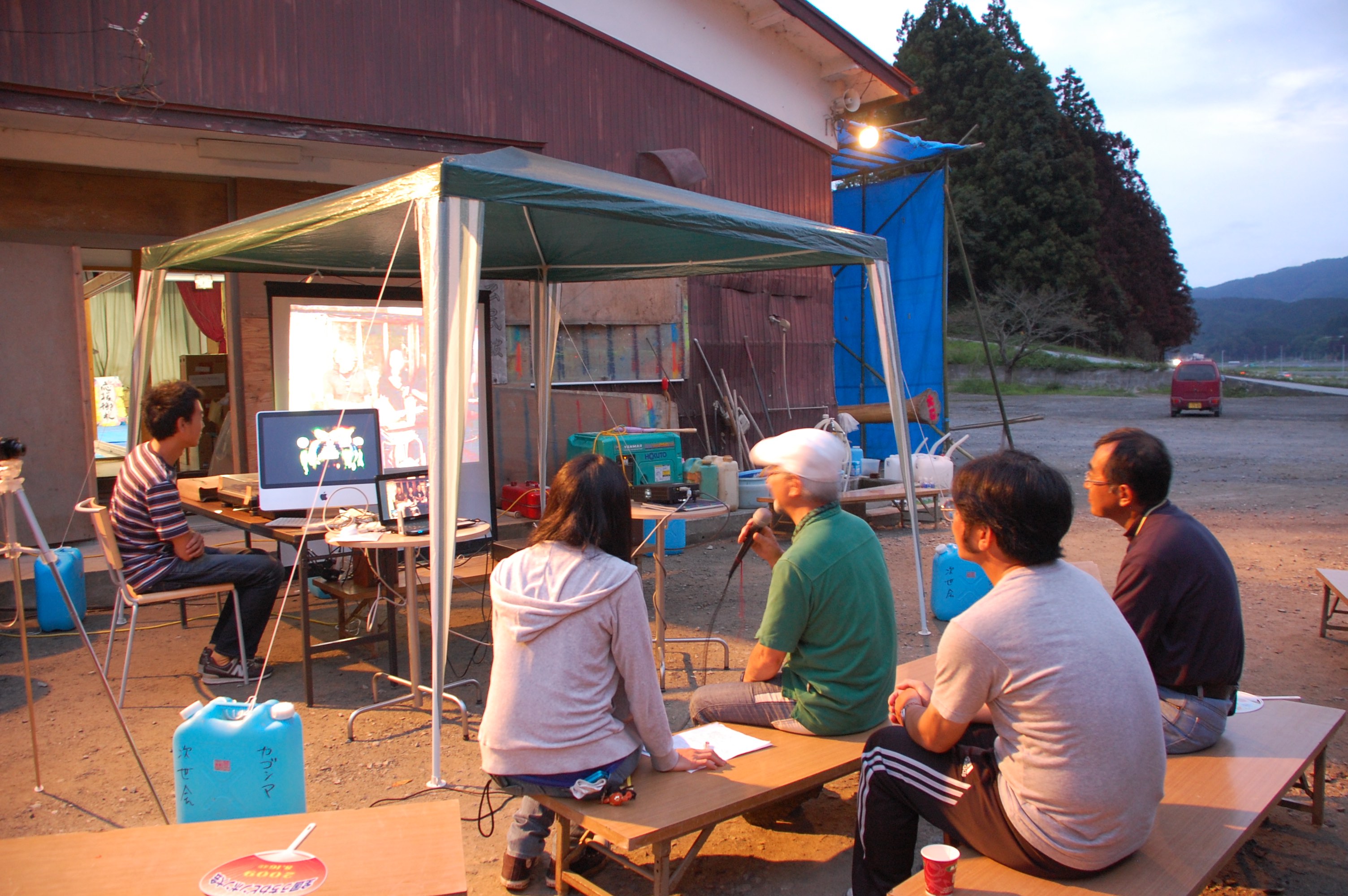
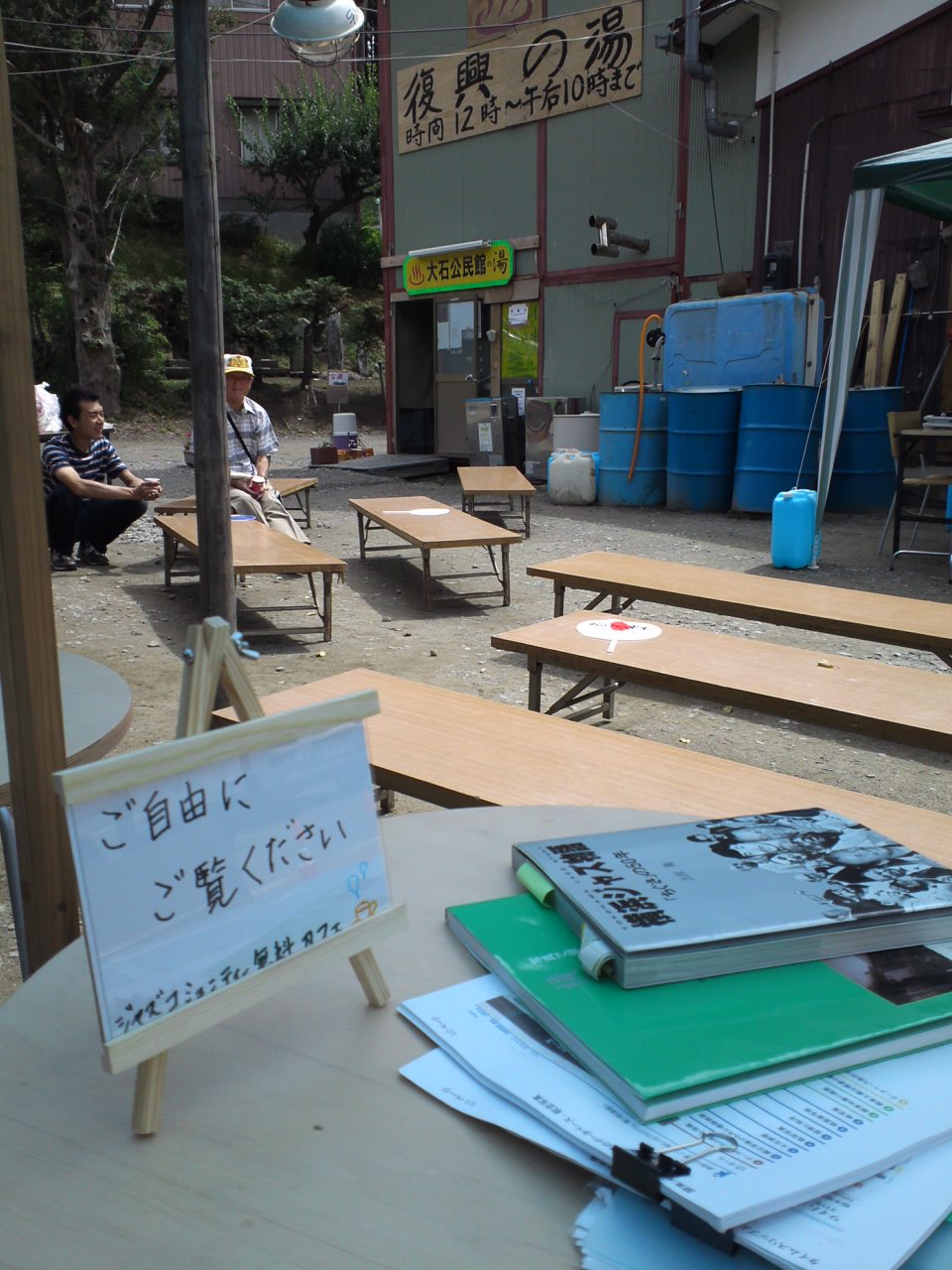
Afterward, while living in an evacuation center himself, Mr. Tomiyama continued to energetically visit other evacuation centers with his gramophone, records, and coffee set. His friends from Chigusa also revisited Rikuzentakata and held a "Chigusa Pop-Up Jazz Cafe" with Mr. Tomiyama. They connected with Yokohama via live internet broadcast, sharing and discussing the voices of Mr. Tomiyama and the people rising up for reconstruction.
At the time, I thought I was sending my support from Yokohama. But looking back, perhaps it was Chigusa who was receiving the support. She was telling us not to let the story of Chigusa , whom Mamoru Yoshida resurrected from the ashes of a wasteland where she had lost everything, come to an end.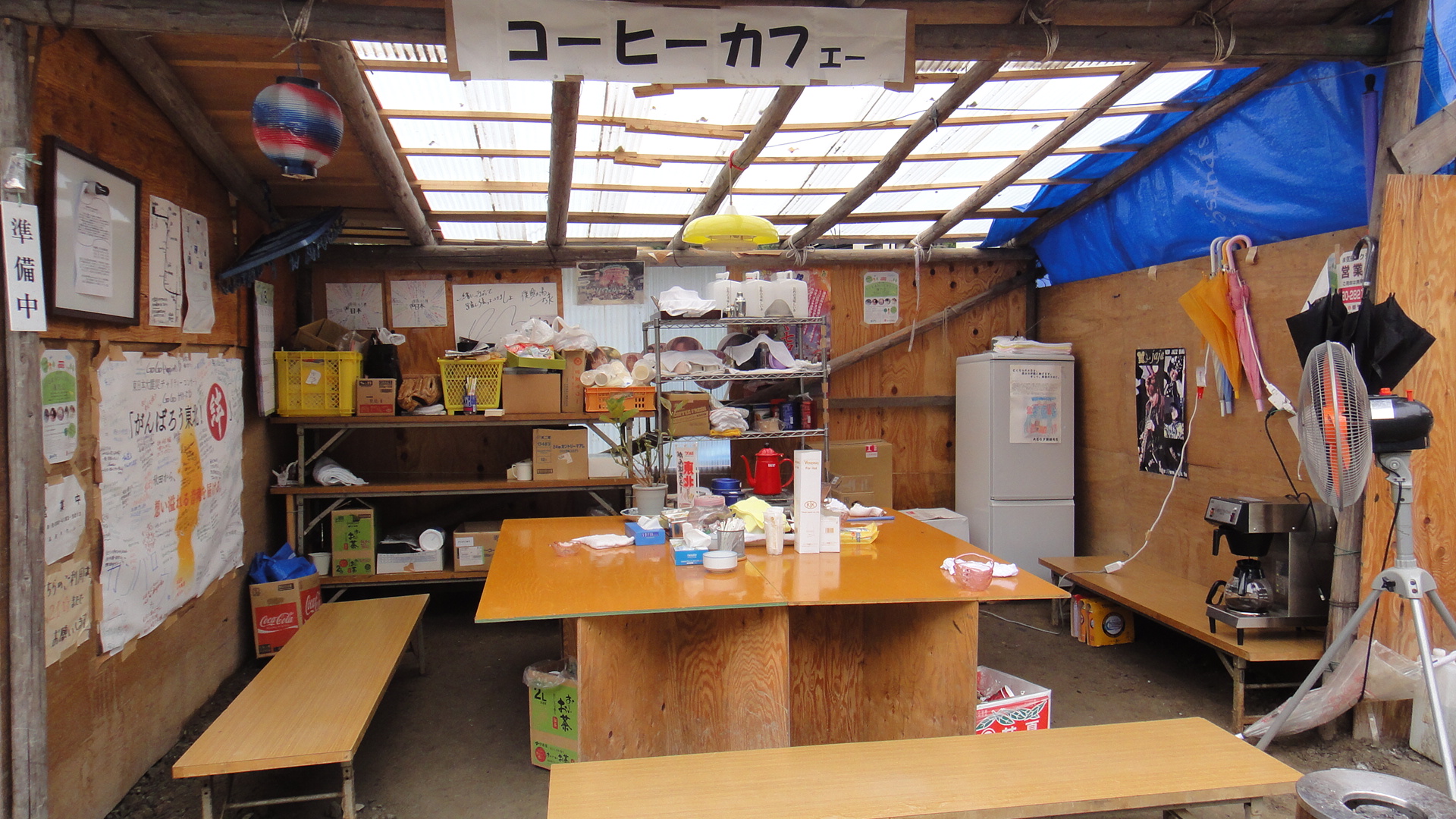
Thanks to the support of many people who love Chigusa , the restaurant managed to reopen on March 11th, the year after the earthquake. This date was deliberately chosen as the reopening date to ensure that the earthquake and the affected areas would not be forgotten. At Chigusa , they always report on the current situation of Mr. Tomiyama and other affected areas on each anniversary.
Apparently, the word "jazz" also has a colloquial meaning of "liveliness." This may refer not only to musical aspects, but also to life itself.
As jazz music fills the Tohoku region, we are approaching March 11th, marking the 8th anniversary of the earthquake and the 7th anniversary of Chigusa's reopening.