"Walk in THE Yokohama" THE 1st "Yokohama Neighbors" Series Part 2
<Series Lead>
"Yokohama, a port city where people gather, stop, and start walking again."
This is a series of articles that explore various locations in Yokohama through works of fiction set in the city.
Titled "Walk in THE Yokohama"
What kind of color does the city of Yokohama give to the work?
Also, what is Yokohama like from the author's perspective?
Here is the second part of the first installment of our series, "Yokohama Neighbors."
In the first part, we walked through various locations in Yokohama that served as the setting for "Yokohama Neighbors," from the Zenrin Gate in Chinatown to Minato Mirai and Noge. In the second part, we will hear from the author himself, Keiya Iwai. Why did he choose Yokohama, and Chinatown in particular, as the setting for this story? We will trace the "color" that Yokohama has given to the work through the author's own words.
The synopsis and the locations where the story takes place will be covered in the first part !
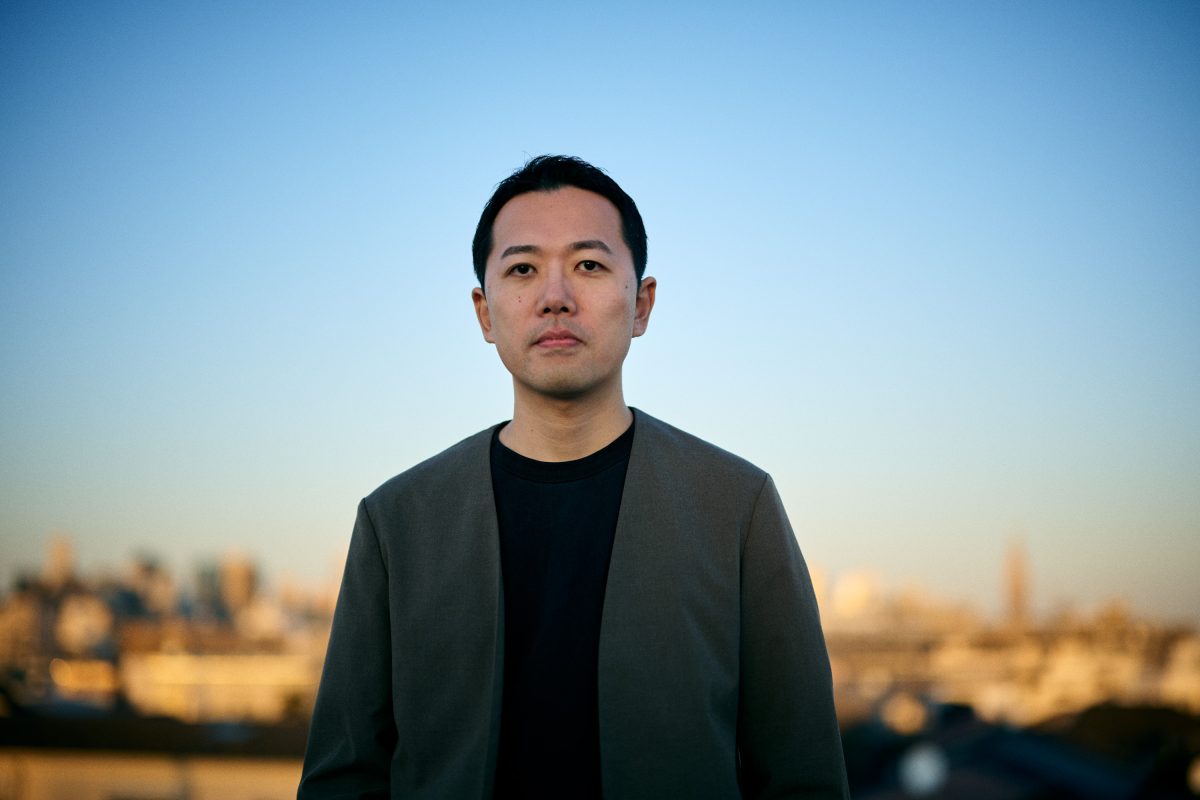
THE Yokohama by author Keiya Iwai
Iwai : That's right, I've been living in Yokohama since 2018, the year of my debut. Before that, I lived in Kawasaki and Fujisawa, so I've been a Kanagawa resident for about 14 years. Even when I lived in Kawasaki, I used to come to Chinatown to hang out, and I always had this longing to live in Yokohama someday.
In addition, Yokohama, while not as large as Tokyo, is a metropolitan city for a regional city. It has vibrant areas like Chinatown and quiet residential areas like Motomachi and Yamate, so I think it's a place where urban and local life coexist in just the right balance. I think that's what makes it a "vessel" that accepts diverse people.
I was born and raised in Hirakata, Osaka for 18 years, went to university in Hokkaido, lived in Sapporo for 8 years, and then came to Kanagawa for personal reasons. If things continue as they are, I think Kanagawa will be the place where I live the longest in my life.
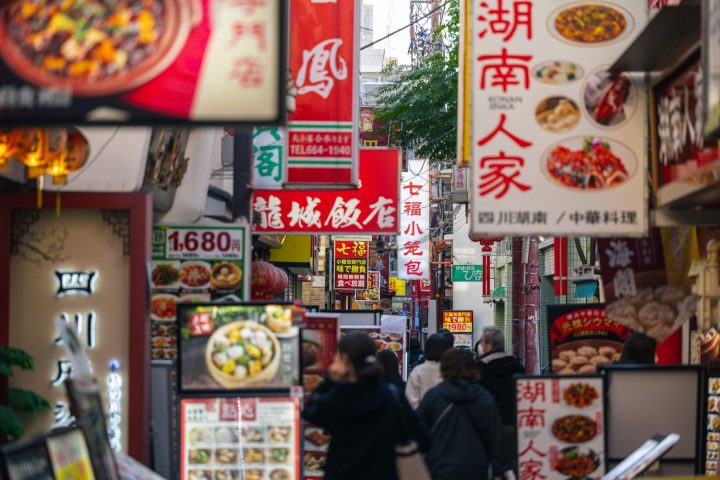
Iwai : When you think of Yokohama, you think of Chinatown! I had a strong image of it, so I didn't hesitate to choose Chinatown. There is also a Chinatown in Kobe, which is next to Osaka (in Hyogo Prefecture), but I have never been there, so I had no ties to it, and my image of Chinatown was synonymous with Yokohama.
It's called Chinatown because it's full of Chinese restaurants, but surprisingly, there are also Korean food stalls, general stores, shops selling daily necessities and food ingredients, so I think it's a town with many different faces. In that sense, it's a town that seems like it would be easy to create all sorts of incidents in a novel.
Iwai : Basically, the main reason is that it was easier for me to write. I could write from my own perspective. Also, I felt that a Chinese perspective in Chinatown would be too simplistic. I thought that having a Japanese protagonist coexisting with the Chinese would help convey what I wanted to say.
Iwai : Actually, although I had decided on the general framework of a detective/mystery story set in Chinatown, I couldn't see a central theme, so I couldn't start writing. It's my personal belief, but I think a good novel can be described in one sentence. That's when I was walking through Chinatown and saw the words "Shinjin Zenrin" written on the Zenrin Gate. I looked up the meaning and thought, "That's it!" This novel is a story about "helping your neighbors."
I've also been able to start writing about Ron's character, as his outline has become clearer.
Iwai: That's right. Originally, I was hesitant to write about social issues and themes that would eventually fade away, but when I saw "Oshi no Ko," I had an epiphany, and that's when I decided to write it as a novel. My sources of information are Yahoo News and talk shows.
Iwai : I recently had a conversation with author Satoshi Konno, and he said something similar to me. He said, "What's great about your work is that it's just the right amount of dry."
If Yokohama is a city that has an environment that accepts all kinds of people, I think it's because it's moderately detached. Also, this sense of distance is actually similar to how I interact with people myself.
The theme is heavy. I've tried to lighten it with some embellishments in the expression, but I wanted to convey the underlying weight of the theme, and I think there aren't many other works that do that. It's certainly not the kind of work that would be recommended as required reading at a library, but I wrote it hoping that young people, especially teenagers, would feel that it was a work directed at them.
Ron and the other main characters each have backgrounds that make them social minorities. This is either something they were born with or something they were forced into due to circumstances beyond their control. However, I think everyone experiences a certain degree of helplessness or difficulty in life, so I hope that through their individual circumstances, the story will resonate with a universal audience.
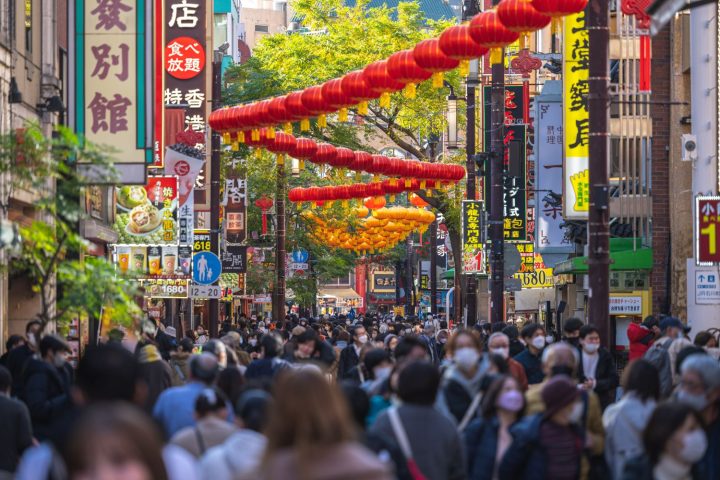
Iwai : When I was writing the first book in the spring of 2022 (it was published in 2023), Chinatown was still in the midst of the pandemic and not quite back to its normal state. However, I had decided not to write about the pandemic, so I wrote about what I wished Chinatown was like, how I wished it were bustling with activity. Since then, the pandemic has subsided, and recently it has become even more lively than I imagined.
Iwai : I think it's similar to what I feel. However, I think there's a difference between recognizing Yokohama as your hometown and perceiving it as a slightly different space.
This work features many familiar places for Yokohama residents, so I think they'll be able to read it with a sense of realism. For those who don't live in Yokohama, it makes it easy to go on a pilgrimage to the real-life locations.
A drama based on this work has also been broadcast, and it was filmed in Chinatown and the west exit of Yokohama Station, so if you watch that as well, I think you'll be able to feel the charm of Yokohama even more.
Iwai: That's right. I thought that by writing it in a paperback format, we could deliver entertainment novels in a way that would be easy for younger generations to pick up.
The distinction between what constitutes literary fiction and what constitutes entertainment is a topic that could be debated in depth and requires separate research, and I don't think there's any point in drawing a clear boundary between them. However, I consciously write in that intermediate realm.
Iwai : I do ask for feedback at autograph signings and things like that. But personally, I don't think I need any feedback other than "it was interesting." To be honest, I think it's a lie when someone says, "I learned something from this novel." There are some heavy themes I want to convey, but I don't want people to "decipher" them like they're studying. I'd rather they think, "Oh, I guess that's what it meant," later on. At the time they read it, I'd be happy if they just thought, "Wow, that was interesting." That's how I felt too.
Iwai : If the publisher would let me write it (laughs).
"Yokohama, a port city where people gather, stop, and start walking again." What kind of color does this city give to "Yokohama Neighbors"? What became clear through the interviews was the sheer size of Yokohama as a "vessel." Urban and local coexist in just the right balance, equally welcoming both those who grew up there and those who are just passing through. This moderate distance—this "dryness" of not prying too deeply into anyone's life—is the depth of Yokohama's tolerance that embraces people from diverse backgrounds, and it is the fertile ground for the story of "kindness and good neighborliness" to work without becoming preachy. The atmosphere of Yokohama that Ron and his friends see is a continuation of what author Keiya Iwai has felt firsthand. If you walk through the city with the book in hand, each and every scene will surely come alive, imbued with the meaning of the story.
<Author Keiya Iwai's Profile>
Keiya Iwai: Born in 1987 in Hirakata City, Osaka Prefecture. Graduated from Hokkaido University Graduate School. In 2018, he won the 9th Wild Era Frontier Literary Award for "Proof of Eternity," marking his debut as a writer. His numerous works include "Body Tattoo," "Poetry of the Living," "The Attendant," "I Am Kumagusu," "Windmill and Giant," the "Yokohama Neighbors" series, and the "Last Appraiser" series. His debut works, "Proof of Eternity" and "Last Appraiser," have both been adapted into films and TV shows. The "Yokohama Neighbors" series also saw its second season broadcast, a joint production between Tokai TV and WOWOW.