OTABISHO Yokohama Noh Theater, a facility introducing Noh and Kyogen performances.
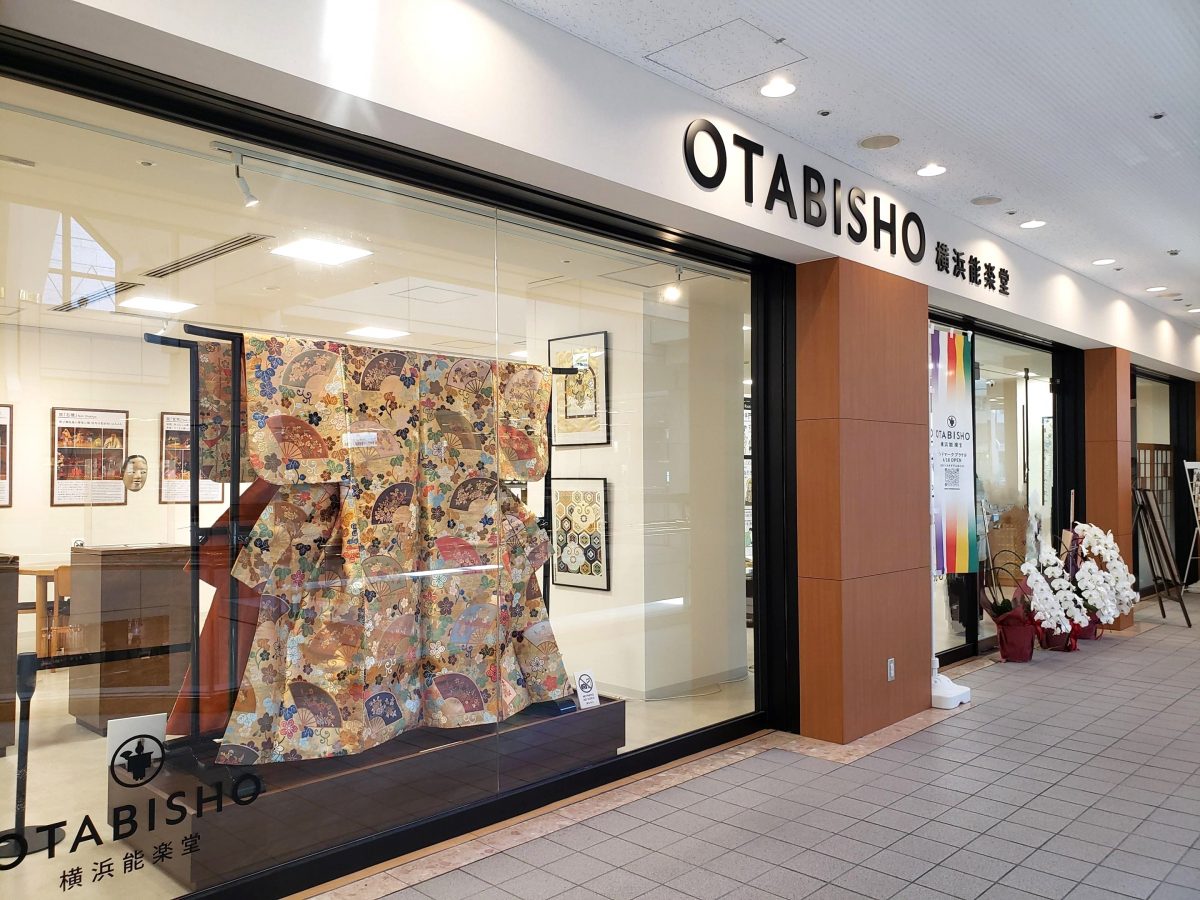
The Yokohama Noh Theatre, which has been closed for extensive renovations since January 2024, has opened "OTABISHO Yokohama Noh Theatre," a temporary base of operations in Minato Mirai's Landmark Plaza. This is the first time in Japan that a Noh and Kyogen venue has opened inside a commercial facility, and this new initiative is attracting attention.
The concept is to see, know, experience, and learn.
An otabisho is a place where a deity rests during a Shinto festival procession.
The name "OTABISHO Yokohama Noh Theater" reflects the hope that it will become a place where even those unfamiliar with Noh and Kyogen can easily drop by and experience classical performing arts.
The name OTABISHO, written in the Roman alphabet, is perfectly suited to the international city of Yokohama. Since its opening on April 18, 2024, it has attracted many visitors from both within Japan and overseas, expanding the base of Noh and Kyogen fans.
【entrance】
The "Noh and Kyogen Relationship Chart" was created by the staff to help people become more familiar with Noh and Kyogen. It clearly explains the history from its origins to the present day in both Japanese and English. The introduction of words that originated from Noh, such as "nori ga ii" (good rhythm), "sanbyoshi ga to shita" (all three beats are present), and "monbetsu" (program), is also unique.
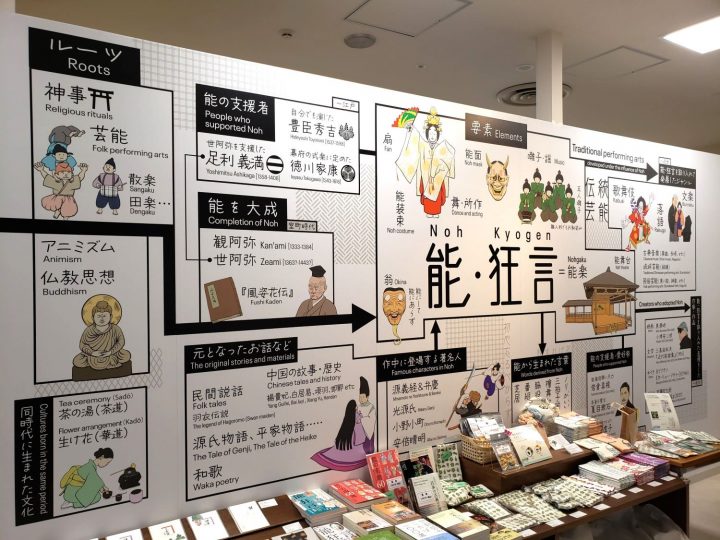
Noh and Kyogen Relationship Chart
[Exhibition Space]
In the center of the gallery are actual Noh and Kyogen masks and costumes. The three masks displayed change approximately every month, while the vibrant Noh costumes change every two months.
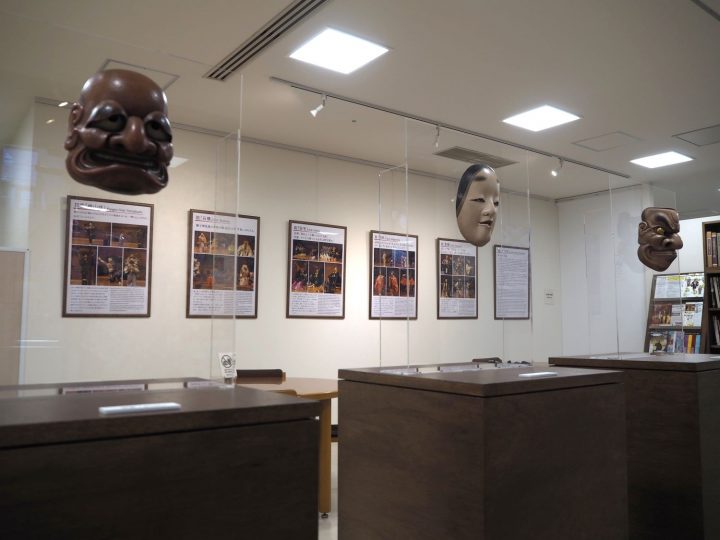
Noh and Kyogen masks @ From left: Buaku, Ko-omote, Oobeshimi
The mask displayed during the interview (center) is the "Ko-omote," which represents a young woman. It is a representative Noh mask characterized by its plump skin and lustrous black hair.
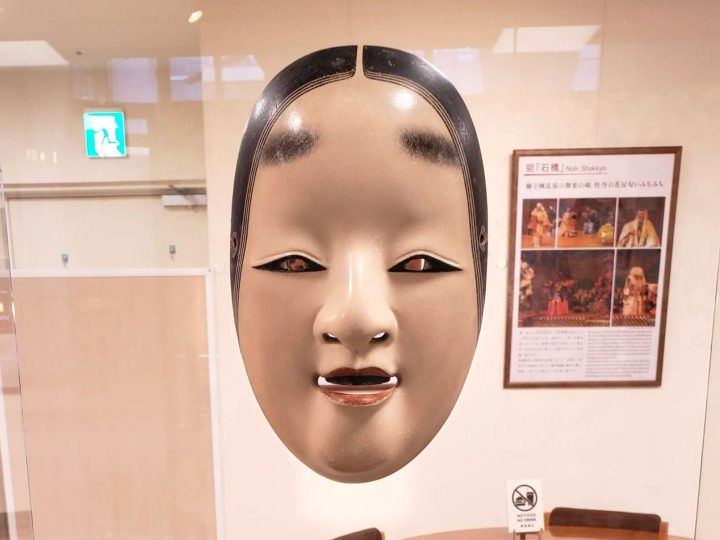
Ko-omote (a type of mask)
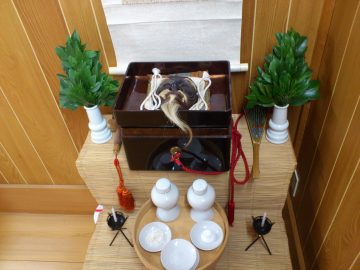
I was surprised to be able to see the inside of the mask, something you rarely get to see elsewhere. Looking through the holes near the eyes on the clear panel gives you a simulated experience of the performer's perspective.
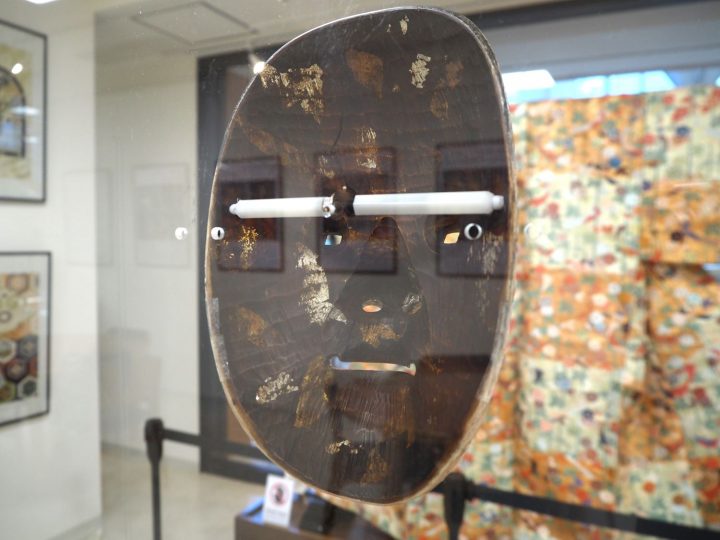
The inside of the Ko-omote mask
Noh costumes are stage costumes specifically designed for Noh theater, expressing various roles and even the inner lives of those characters through their different types and combinations. The photo shows one example of a gorgeous Tang-style brocade jacket, mainly used for female roles.
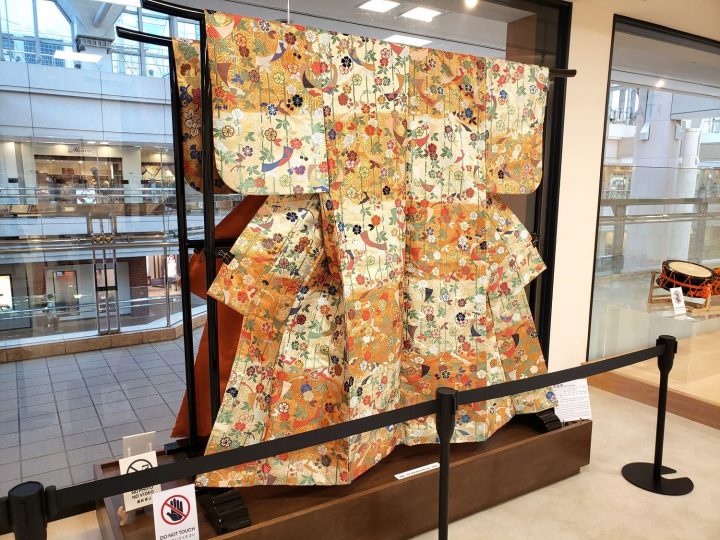
Tang-style woven fabric with hemp leaf and weeping cherry blossom pattern, alternating sections.
The Sato Yoshihiko Memorial Yamaguchi Noh Costume Research Institute, world-renowned for its meticulous restoration of Edo-period Noh costumes, has created a piece that pays close attention not only to the patterns and techniques but also to the materials, such as the silk threads. Looking at the delicate weaving, it's easy to understand why some people become interested in Noh and Kyogen after seeing Noh costumes.
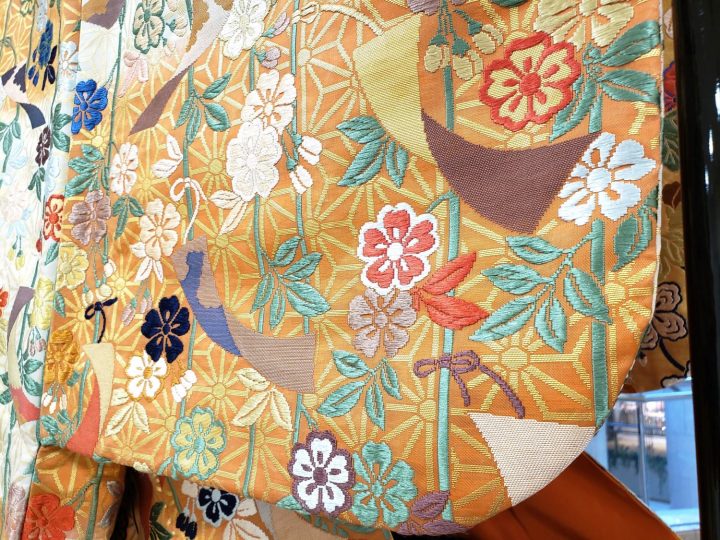
Tang-style woven fabric with hemp leaf and weeping cherry blossom pattern, alternating sections.
[Raised seating area]
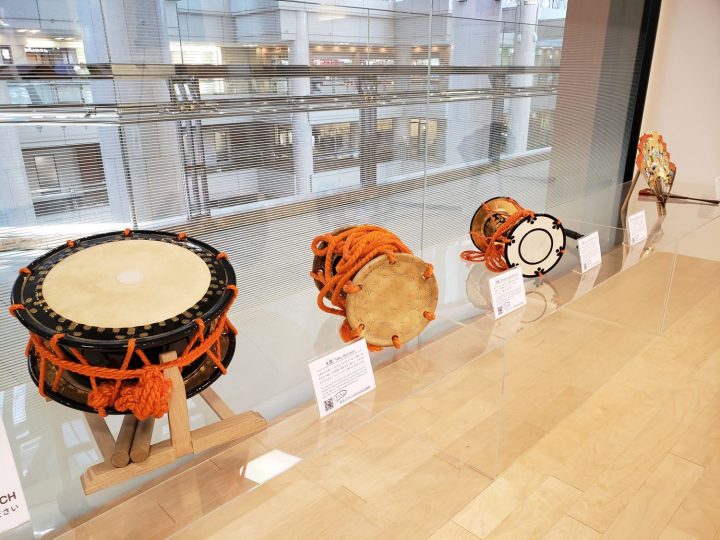
At the back of the gallery was a raised platform with wooden flooring reminiscent of a Noh stage. It was a photo spot modeled after the stage of the Noh play "Dojoji." There was also an exhibit of the fan (ogi), which is essential for Noh, and the four instruments that support the music. I found the QR code service, which allowed you to listen to the sounds of each instrument—taiko drum, otsuzumi drum, kotsuzumi drum, and flute—and the music (hayashi) that comes from combining them, particularly interesting.
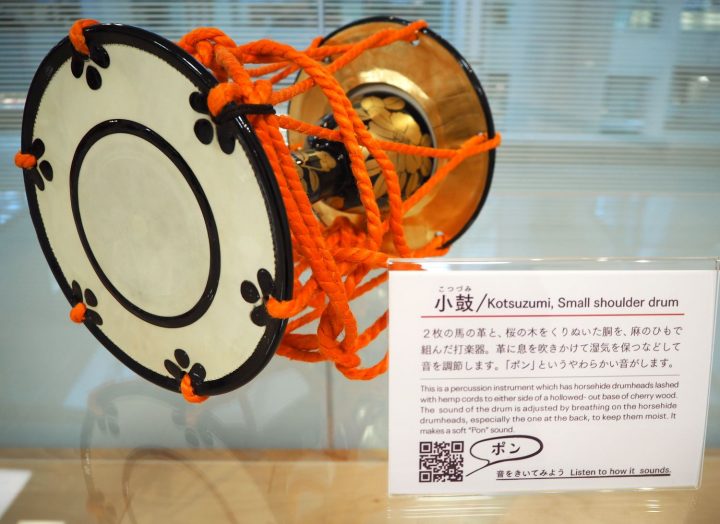
small drum
Personally, I liked the elaborate and beautiful decorations on the kotsuzumi (small hand drum). Seeing these valuable exhibits made me want to hear the real sounds and music on a Noh or Kyogen stage.
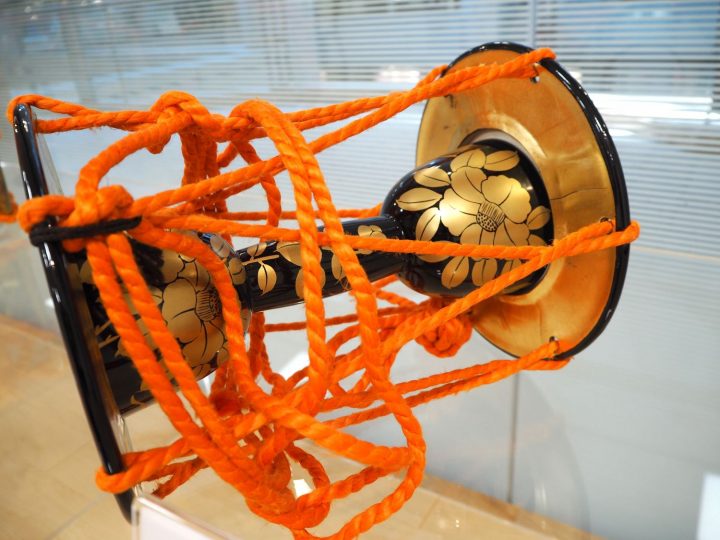
small drum
Leaving Yokohama Noh Theater
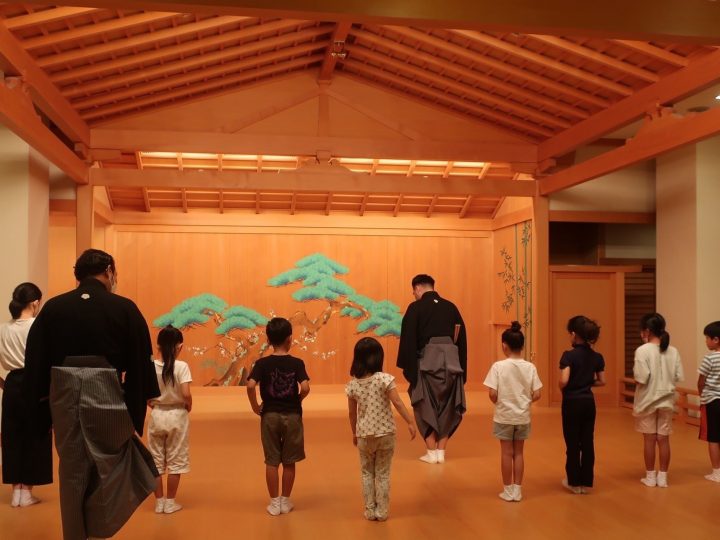
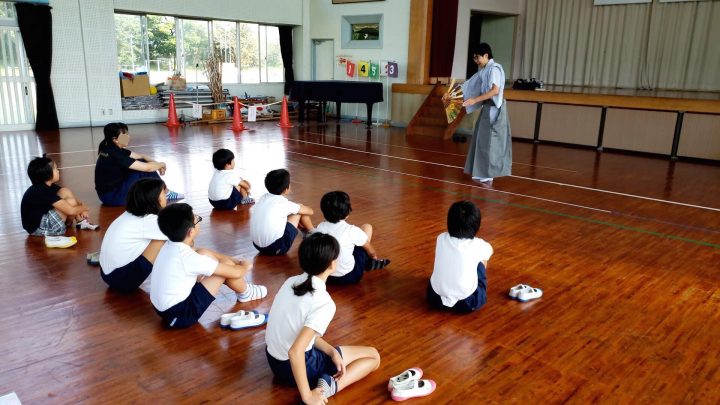
Scenes from the 2023 Children's Kyogen Workshop (Photo courtesy of Yokohama Noh Theatre)
In addition to its creatively designed exhibits, OTABISHO Yokohama Noh Theatre also plays a role in hosting various performances and workshops. We are planning a variety of events and workshops that offer a different experience from the solemn atmosphere of the Yokohama Noh Theatre.
This summer, we will be holding a "Children's Kyogen Workshop" at the Sugita Theater, which will include both a Kyogen performance and practical instruction. The performance will be accompanied by commentary, and the practical instruction will cover everything from proper etiquette such as sitting properly, greetings, and manners, to the basics of Kyogen. The workshop is open to elementary school first graders through junior high school third graders.
Noh and Kyogen will continue to be performed in Yokohama.
The Yokohama Noh Theatre is scheduled to be reborn in June 2026. While we wait two years for the grand opening, why not explore opportunities to experience Noh and Kyogen up close at "OTABISHO Yokohama Noh Theatre"?
Text by Mai Shimura (Editor/Writer)
OTABISHO Yokohama Noh Theater
Address: Landmark Plaza 5th Floor, 2-2-1 Minatomirai, Nishi-ku, Yokohama City
Opening hours: 11:00-20:00 (Open all year round) *Free admission, no reservation required
Telephone number: 045-263-3055 (Yokohama Noh Theater)
Operated by: Yokohama Noh Theatre, Yokohama Arts and Culture Foundation
Official website: Click here (Yokohama Noh Theatre)