[Traditional Performing Arts] Noh Masks and Kyogen Masks: Beautiful "Tools" that Show a Wide Range of Expressions

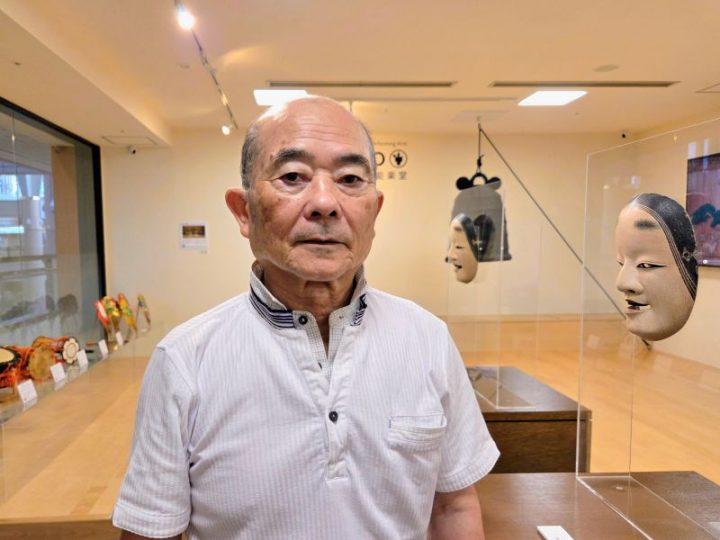
Noh and Kyogen, traditional Japanese performing arts, are also known as masked dramas. This is because in many of the plays, approximately 80% of Noh performances, the performers wear masks while dancing. This time, we interviewed Hisato Iwasaki, a Noh and Kyogen mask maker who has been creating masks essential to the stage in Kanagawa Prefecture for about 50 years.
(Interview cooperation: OTABISHO Yokohama Noh Theatre)
Enchanted by the female face
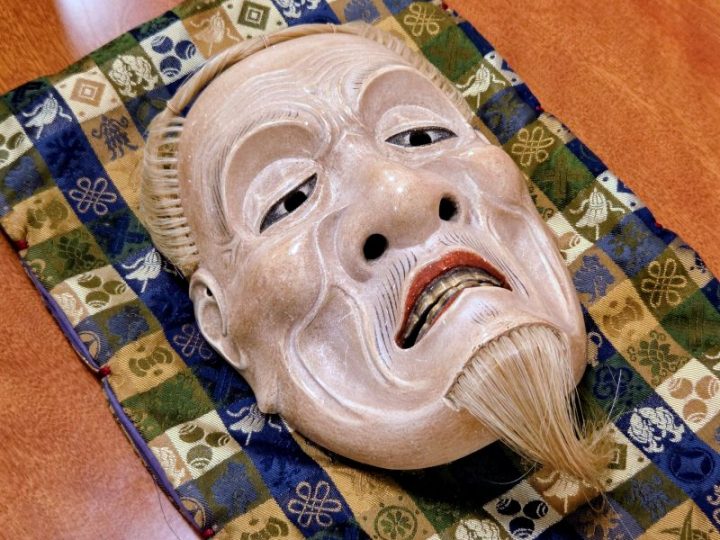
There are over 50 representative types of Noh masks, and if you break them down further, there are about 250 different types. Historically significant Noh masks made from the Muromachi period to the early Edo period are called "honmen" and are cherished by each family.
—Could you tell us what got you started making Noh masks, Mr. Iwasaki?
I saw a Noh performance on TV and thought the female masks were beautiful and I wanted one. Since I've been good with my hands since I was a child, I decided to try making one myself and started looking for a wood carving class. However, the teacher also had no experience making masks, so he taught me in a way that allowed me to create freely. I went every week for about three years and taught myself to make Noh-like masks using raw wood such as willow, and then I exhibited my work. At that time, I saw Noh masks being sold in a department store and was shocked at how expensive they were. I thought that I could do that too, and just before turning 30, I became a full-fledged mask maker.
—Many Noh masks are said to be "copies," made by using the original mask as a model. What is your method of creation, Mr. Iwasaki?
Iwasaki: For hundreds of years, many artists have created patterns based on the dimensions of the original masks, and have continued to make "copies" that are exactly the same. However, I don't use patterns, and I hardly ever measure the dimensions. I draw the outline directly onto cypress wood, roughly shape it with a chisel, take the dimensions, and then shape it by looking at it from the front and the side. Depending on the type of mask, I can sometimes finish the surface in a single day.
—That's quite fast. How many works do you have?
Once the surface of the Iwasaki mask is complete, the back is finished by carving out the back with a chisel and shaping it. The process continues with removing the resin from the cypress wood, lacquering the back of the mask, applying a base coat, a top coat, and coloring. For a female mask, it takes about a month to complete. I probably have around 200 to 300 masks at home. When I carry them around, I put them in bags made from old Noh costume fabrics like this.
A luxury to see up close, with a different theme each month.

"OTABISHO Yokohama Noh Theater," a gallery and shop introducing Noh and Kyogen, is open on the 5th floor of Landmark Plaza for a limited time until March 2026. Ms. Iwasaki exhibits three Noh masks there each month.
—This month's exhibition is "Ko-omote" (a type of traditional Japanese mask).
Iwasaki So's mask is one of the representative female masks, known alongside "Waka Onna" and "Manbi." It depicts a young woman with plump, lustrous skin and long, flowing hair. When you visit the exhibition, be sure to compare all three masks. You'll notice the differences in age and expression, even within the group of young women depicted.
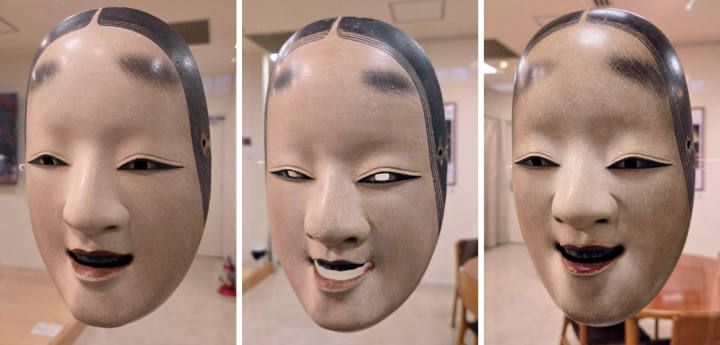
Iwasaki: I see Noh masks not as works of art but as tools, and the makers are not artists but craftsmen. The mask is the director itself, and the moment the lead actor chooses the mask, the stage is set. So, although there is a phrase like "a face like a Noh mask," I would rather create a "mask that moves on stage."
—Ms. Iwasaki, you also perform on the Noh stage, don't you?
I was advised that if I were to make Iwasaki masks, it would be good to also perform Noh chanting and Noh dance, so I studied under Yoshimi Moriya, a Shite (lead actor) of the Konparu school, and have performed three times so far. Previously, I created works by drawing on my memories of Noh and Kyogen, which I had seen 3,000 to 4,000 times, including Kagura and Takigi Noh that I saw in my childhood. Now, my mindset as a craftsman has changed, and I think about what kind of mask I would want to wear if I were to dance myself. I am proud to say that I am the only Shite who dances wearing a mask that I made myself.
Eighty years old, and what lies ahead
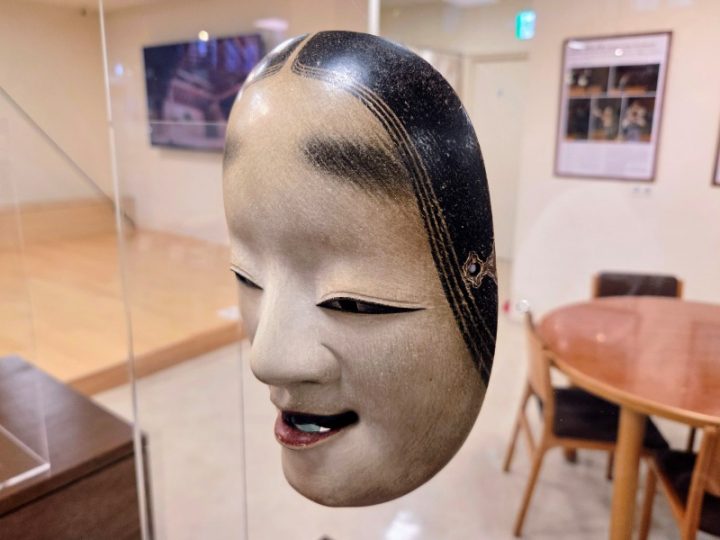
Three strands of hair are painted with a brush, flowing from the forehead of the Ko-omote mask. This is a testament to Mr. Iwasaki's skill, as he personally handles every step of the process. At the OTABISHO Yokohama Noh Theater exhibition, you can see these details up close that you wouldn't normally get to see.
—The back side, with its remaining chisel marks, was also fascinating. What kind of surface would you like to work on next?
From November 4th to 9th, Iwasaki held a Noh mask exhibition in his hometown of Isogo Ward, Yokohama City, to commemorate his 80th birthday, displaying and selling 20 masks, including the "Doji" mask. Regarding Noh mask making, he is drawn to both masks that put the lead actor at ease, to the point where it is said the actor is "dancing in the mask," and those with expressions that are so realistic that they are difficult to perform. He hopes to encounter masks that will give him new inspiration and serve as reference.
Text by Mai Shimura (Editor/Writer)
Hisato Iwasaki (Noh and Kyogen mask maker)
Official website: Click here
Interview cooperation: OTABISHO Yokohama Noh Theater ( link here)