Celebrating the New Year ~A Kyogen Performer's New Year with Laughter~
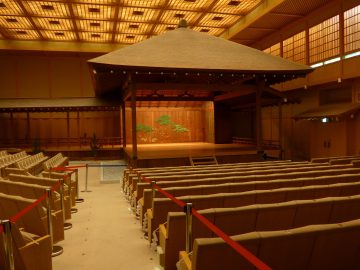
The grand stage for Kyogen performers living in the 21st century
Vol.5 Happy New Year
Ozo doctrine (Noh performer Kyogen style Ozo school)
The big cleaning of the practice studio begins at the end of the year, and New Year's decorations are put up to welcome the Toshigami (New Year's god)...this is the same in every household.
Ordering daikon shimenawa, kadomatsu, yuzuriha, urajiro, shide, ring decorations, ball decorations, and shimenawa... these are all necessary decorations for the practice room.
Shimenawa ropes are stretched across the four sides of the upper part of the practice room, a daikon shimenawa rope is placed on the Shinto altar, and a ball decoration and kadomatsu (pine and bamboo decoration) are placed at the entrance. Ring decorations and mochi rice cakes are placed on yuzuriha and urajiro leaves in important places such as the tokonoma (alcove). These are the New Year's decorations.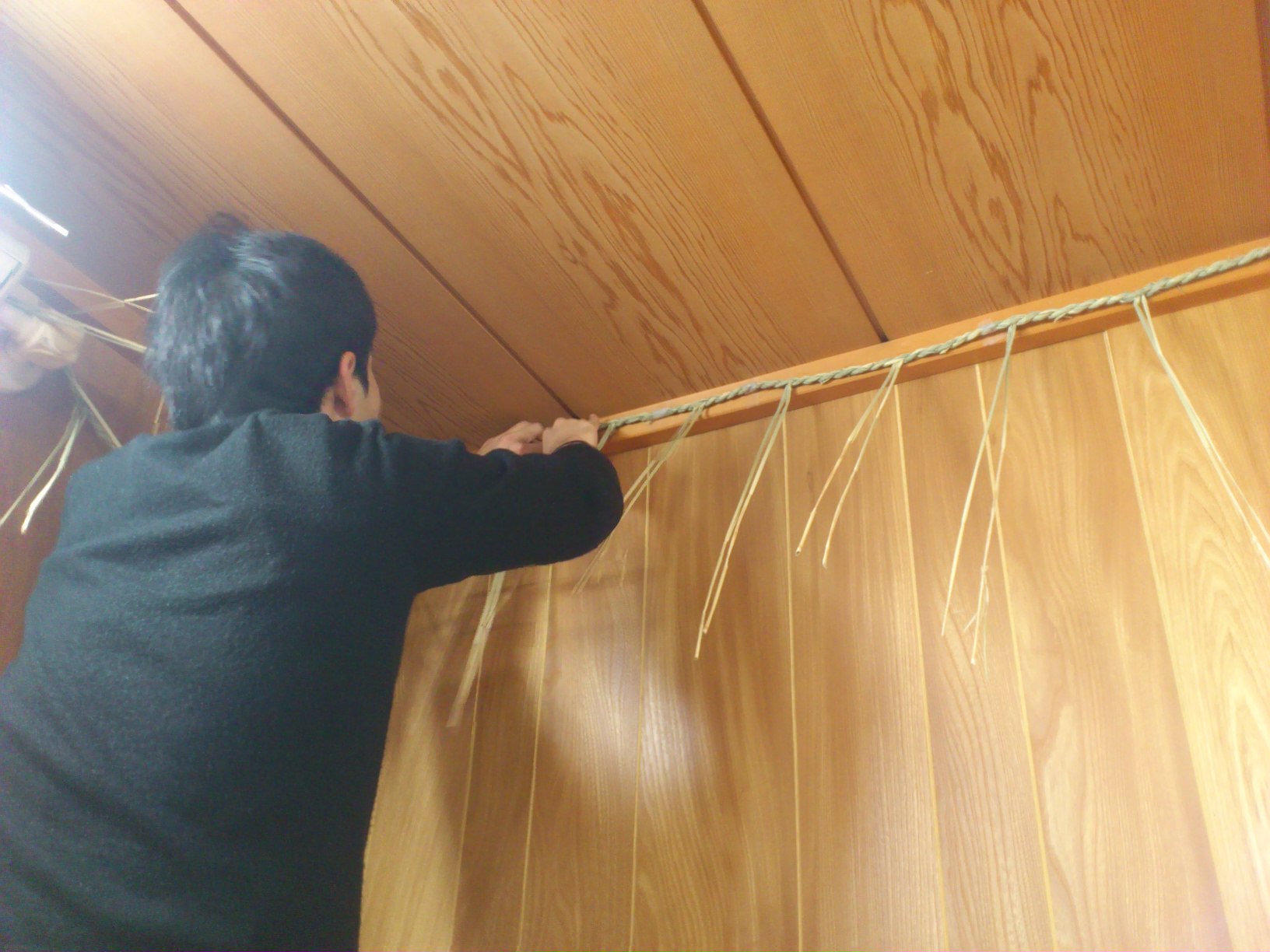
On New Year's Day, the disciples gather at the training hall to perform the "first chanting ceremony of the year."
On a different day, the entire group (students of the class) gathers together for the "first dance ceremony."
This is a customary practice and likely a unique event within the world of Noh theater.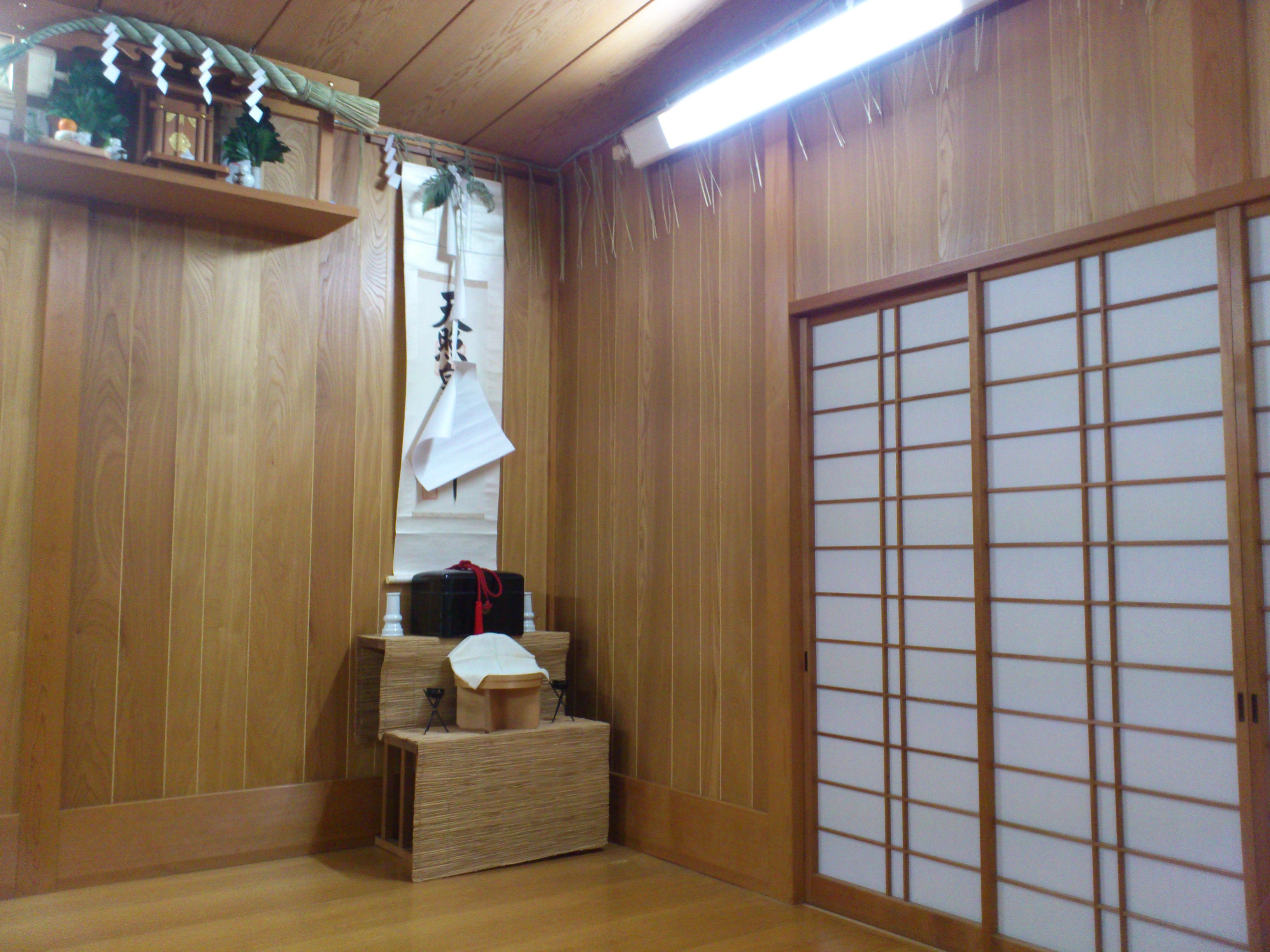
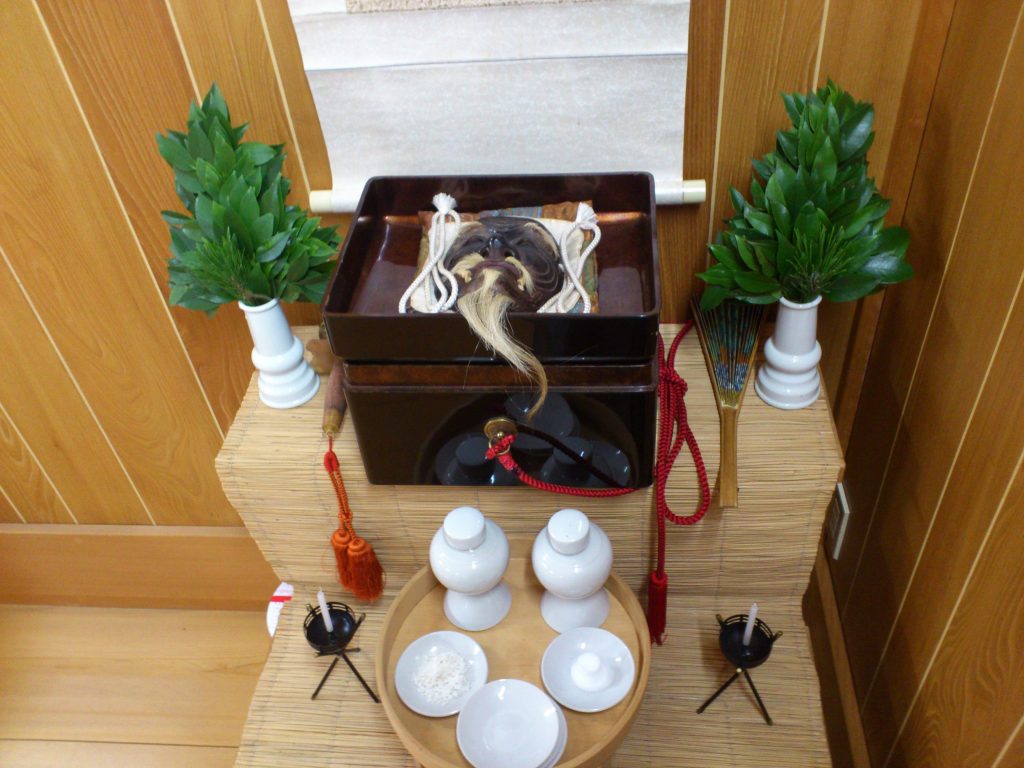
On the stage are a hanging scroll of the imperial ancestral deities, the "Kuroiro-jō" mask and bell used by the Kyōgen performers in "Okina," the most sacred Noh play, and a sacred sakaki branch, along with salt, rice, and sake, brought down from the household shrine. These are placed on a special altar, and the ceremony takes place in front of it. It is a celebration of the New Year and a prayer for a safe year of performances.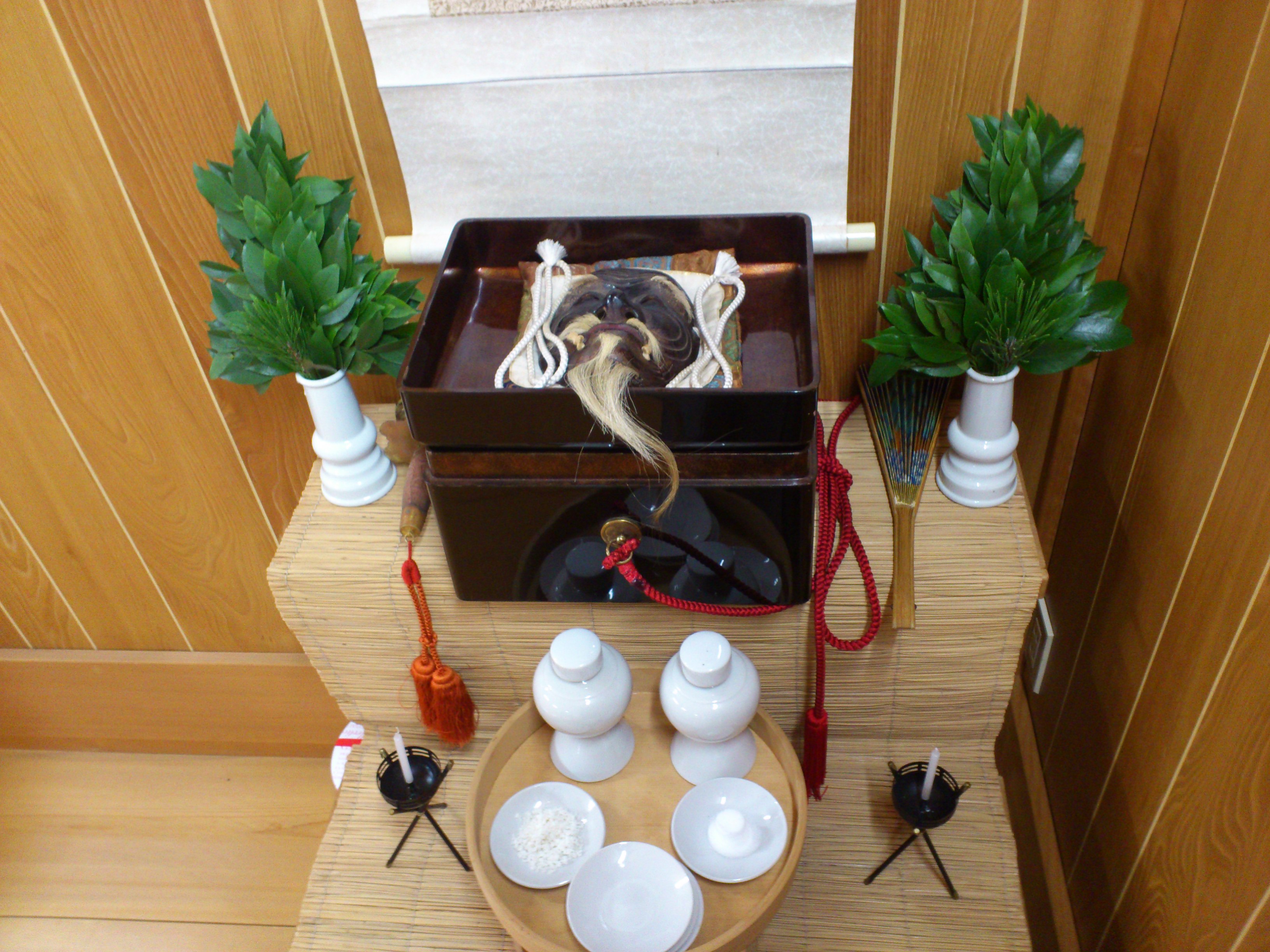
Finally, we purified ourselves by receiving sacred sake, salt, and rice placed on a sanbo (a type of offering stand), and then proceeded to the New Year's party.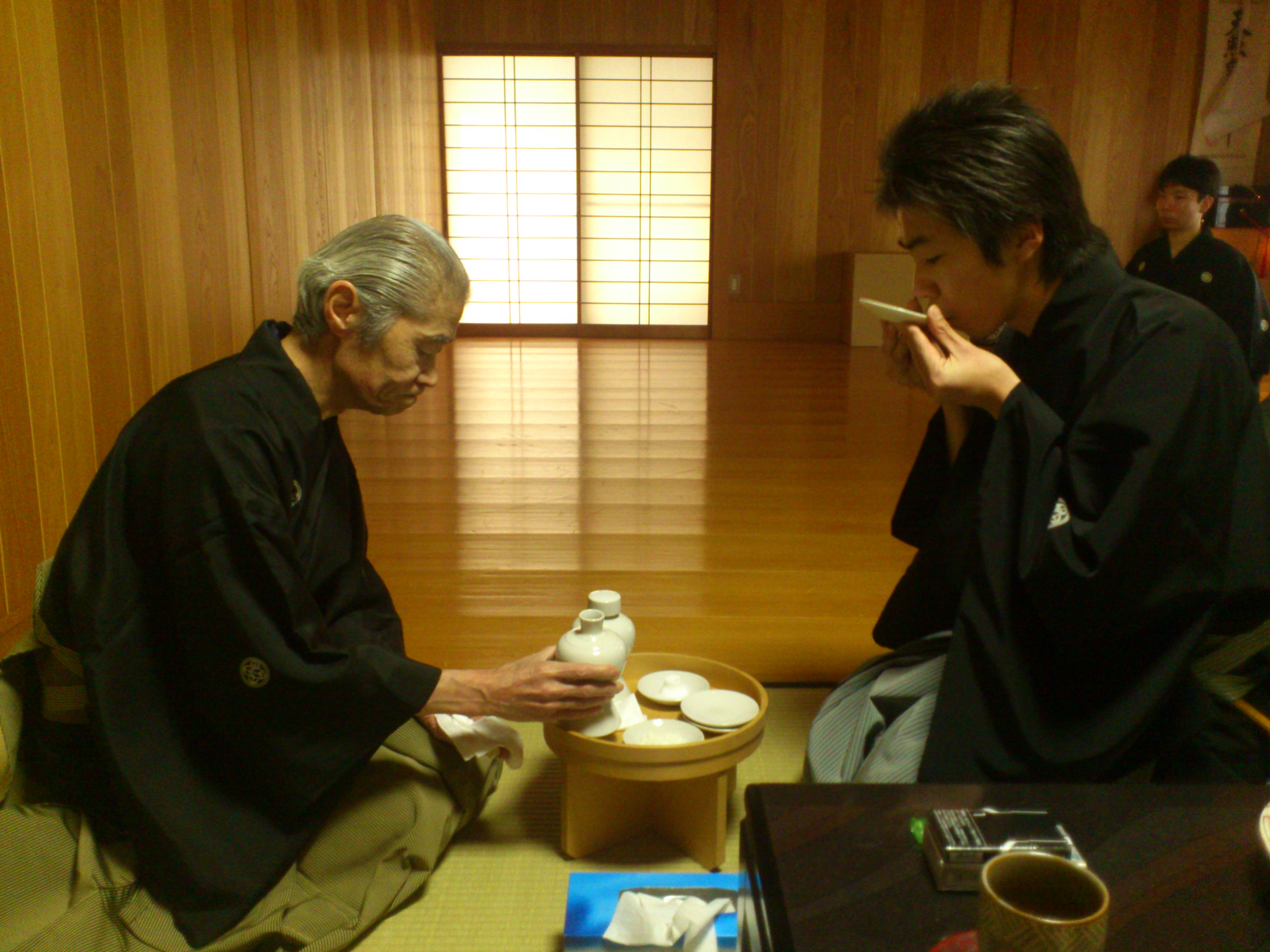 The most exciting part of a New Year's party is the "raffle." It might be something you do everywhere, but there's a unique and interesting "game" that's specific to Kyogen. The key is for the participants to write a line from a Kyogen play that matches the raffle prize (generally around 500 yen) on a decorative paper wrapping and attach it to the prize.
"And now, it's time for the raffle!"
We started off with a spirited voice from those of us in charge.
"The item that went to Mr./Ms. XX is from Mr./Ms. XX. It features the line 'Go on, suck it up, suck it up' from 'Ointment Mixing,' but what do you think is inside?"
Incidentally, "koyaku" refers to an external medicine that is applied to a piece of paper or cloth and stuck to the affected area to draw out the poison. The Kyogen play "Koyaku-neri" is a story about two koyaku-neri from Kamakura and Kyoto competing to see who can draw out the poison the most.
So, the prize in the raffle was a "desktop cleaner."
The gift exchange, featuring witty wordplay typical of Kyogen performers, was filled with laughter, with some gifts being well-crafted and others being so elaborate they were incomprehensible.
Nowadays, I think this is a fitting start to the year for a Kyogen performer, but when I was a child, I absolutely hated this whole series of events that took place around the New Year.
I seriously used to think, "I don't need New Year's money, I just want to have a 'normal' New Year's!"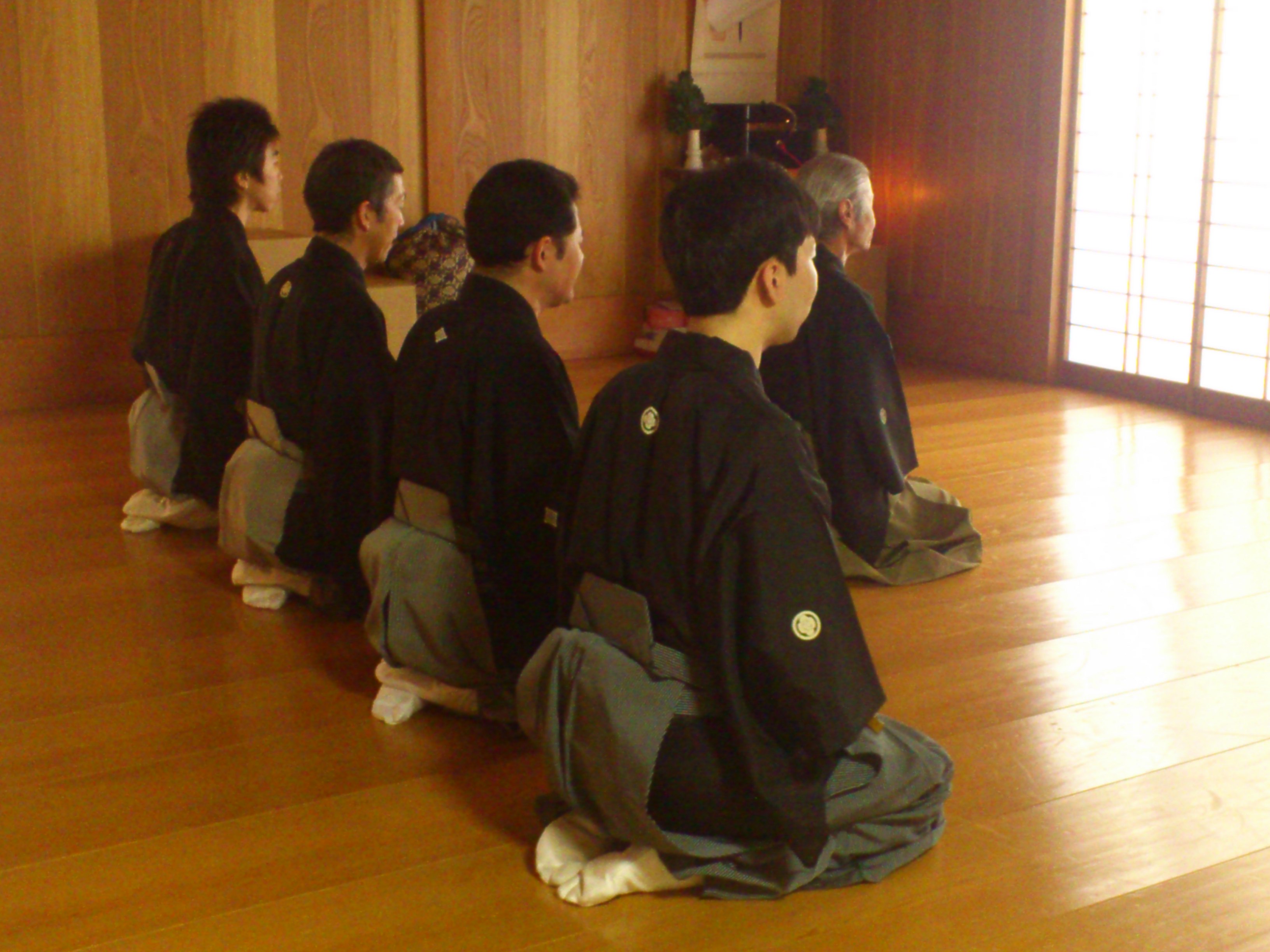
Well, there's only a little time left in the year.
During spring cleaning, I reflect on the past year, dwelling on my mistakes while expressing gratitude for new encounters and successes.
As the new year begins, I pray for the happiness and prosperity of the many people who support us.
Although it's said to be the "last year of the Heisei era," I want to welcome the new year with a smile and a feeling of gratitude, just like every year.