From aspiring artist to director! A place where I settled down, following my heart.
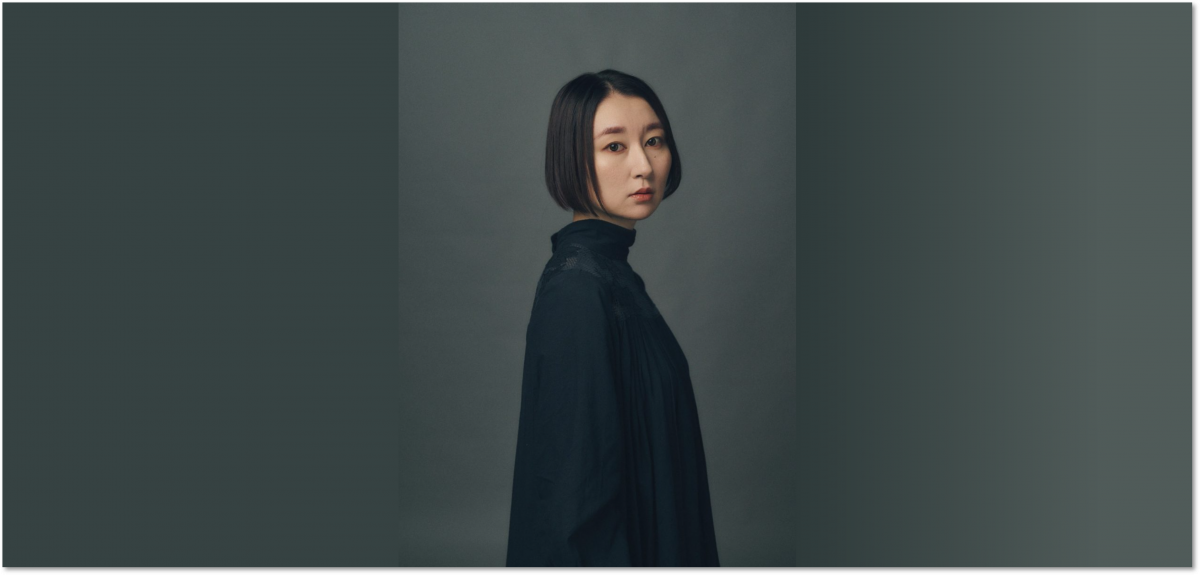
Having won the Best Director Award at the 33rd Yomiuri Theater Awards, Yoshie Inaba is widely considered the No. 1 young director in both name and reality. In the first part of this interview , we asked her about her direction of the 311th Kanagawa Prefectural Youth Arts Theater production, "The Endless Room" (February 20-23, 2026 @ Studio HIKARI). In this second part, we asked her about her journey to becoming a director, her future prospects, and her thoughts on the future of theater and theatre, as she also serves as a judge for the Kanagawa Performing Arts Award, which aims to discover the next generation of artists.
—Since this performance is being held at a youth center, I'd like to ask about your own background, Mr. Inaba, for the benefit of young people who may be feeling uncertain about their future paths. First of all, what led you to enroll in the directing course at the Department of Film at Nihon University College of Art?
Originally, I loved drawing and wanted to become an artist. I'm an only child, and both my parents worked, so I was often alone. Drawing was my favorite way to play by myself. So, when I was in middle school and looking for a cram school to prepare for art school, I came across sculpture and thought, "Sculpture is nice too," and my thoughts shifted towards sculpture. Around the same time, my father bought a video camera to record events like my school sports day. I'm still a "record-keeping fanatic" to this day, but I was completely hooked on that video camera. I would film my friends during recess and after school, and since iMovie editing software had just come out, I found editing fun and thought, "Video is great, I'll aim for video!"
I was determined to shoot my videos on film, so I ultimately chose Nihon University College of Art because it had the necessary equipment and facilities.
—So you changed direction from there to stage direction and joined the Bungakuza theater company?
I wasn't exactly a huge movie fanatic or movie buff, so I felt inferior to my movie-obsessed classmates. I did get influenced by them and started watching tons of movies, though...
When I was in my second year of university, I did an internship on a film set, and I spent the whole day directing traffic, blocking off cars about 100 meters away from the set. I was a student, so I couldn't help it, but at the same time, I wanted to see the actual filming, and I was overwhelmed by the realization that so many people were involved that some of them didn't even know what was going on.
Also, as part of a class project, I had the opportunity to shoot my own film, and even though the shooting period and the actors' time commitments were short, I felt the urge to rehearse. I wanted to nitpick the actors' performances (laughs). So I went over the time limit, and since I was shooting on film, I ended up spending a lot of money.
In filmmaking, the director edits the film after it's shot, so while the actors' performances are important, they can also be cut. But I'm interested in the acting that happens in the moment. I realized, "Ah, I'm interested in the process of creating a play with the actors."
Then my professor said to me, "Isn't that theater, not film?" So I looked into career options after graduation, and I found that Bungakuza was a place where I could learn a wide range of things about theater in one year (as an intern) and it was reasonably priced.
Just like when I entered university, I didn't choose Bungakuza because I "loved it!", so I couldn't answer the "standard questions that you'd expect anyone doing acting to know" that I was asked during the interview. However, I was able to passionately convey why I wanted to do theater, so I think that's what they saw in me and why I was chosen.
—So you're deliberately focusing on directing rather than acting?
That's right. Creating something is the same for both actors and directors, but I was more interested in creating works with objectivity rather than expressing something with my own body. I wanted to maintain a certain distance from the audience's reactions. Also, I think there's a subjective desire to design places and spaces where people gather.
A senior director once said something that I consider a great quote: "Being a director is a profession for people who couldn't become anything else." For example, I can't be a sound designer, a lighting designer, or an actor. I have to ask people who can do what I envision to create it. A director is like someone who is constantly asking others to do things for them.
I'm the complete opposite of someone who "likes communicating with people and always wants to be with someone," so why do I ask so many people to collaborate with me on projects? I guess it's because I believe that "things are far more interesting when created with others."
I'm a person with quite strong convictions, so I want to do what I want to do, with people I like and have chosen myself. However, I don't want to be in a position to control everything; I want to be more of a mediator or a midwife. With that in mind, I naturally ended up in the directing section.
Just as he settled on theater after spending time from childhood through university, I think his directing style is the result of being drawn to various directions.
So, I'm not still choosing theater as my medium of expression because I think "theater is the only option!"
—I see. So it's the result of following your own interests. And you haven't decided on just one medium of expression, whether it's two-dimensional or three-dimensional, so there's a possibility that it might change in the future, right? This year marks the 15th anniversary since your first directorial work, is there anything in particular you're thinking about for the future?
Up until now, I've always felt like I was just putting my all into whatever work I was given, but what I mentioned earlier about "choosing the people I want to create with" is something I've only recently started to be able to do in the last few years. Not just in theater, but also in music and other fields, I've recently started to think, "If I want to collaborate with this person, I should just say so!" This project is a good example, but even with people I think "it might not work out," I reach out to them and I feel like I've entered a phase where I'm taking the initiative to make the things I truly want to create a reality.
This time the theme was "sound," but I would like to continue this style of creating works by discussing various themes and seeking solutions together.
Also, the Japanese theater world is small, so I hope to connect seamlessly with people from other genres. Actually, most of my friends from the film department are in the film industry, and there was a time when I couldn't meet with them because I felt inferior or jealous of them. But now, I think I've gained a little more confidence in myself, and I feel like I can allow myself to try making movies or painting. I want to choose the medium I want to express myself through, without being limited to theater.
Also, I'd like to know what people my age overseas are thinking. I want to see their perspective and venture out into the world!
—What are your thoughts on the future of theater that you yourself are creating, as well as the future that the next generation is creating, such as the works submitted to the Kanagawa Performing Arts Award, where you serve as a judge?
The Kanagawa Performing Arts Awards give groups selected through a preliminary screening process the opportunity to perform at KAAT (Kanagawa Arts Theatre).
I believe it's important to have young people in a place where everyone can showcase their performances, and I think the next generation won't be able to grow unless the doors are open.
Both those who create and those who watch plays believe that the design of the theater space is crucial in lowering the barrier to entry for theater, but in reality, many theaters are like fortresses. In that respect, I like KAAT because it has a spacious foyer with chairs placed here and there, creating an atmosphere where it's perfectly fine to chat, giving it the feel of an "open theater."
—You've mentioned the concept of "place" several times already. Does that connect to your desire to design spaces?
That's right. I hope that theaters can become places where people can connect and where the base of theater can expand, and I'm thinking about who should do what to make that happen. The Performing Arts Awards, which give us the opportunity to see next-generation works once a year, also serves as a place where communication can be generated and everyone can think about it.
I envision this style of communication, which we explored in "The Endless Room," continuing for the next 10 or 20 years, addressing various challenges, including themes such as how to create this "space" and how to broaden its "accessibility."
Post-interview notes
"A woman with a gentle and soft demeanor." That was my first impression of Ms. Inaba. However, as she carefully chose her words to convey her thoughts, I sensed a certain inner strength. I became convinced that she will surely have a significant impact on the Japanese theater and arts world in the future. I look forward to watching Ms. Inaba's activities in the future.